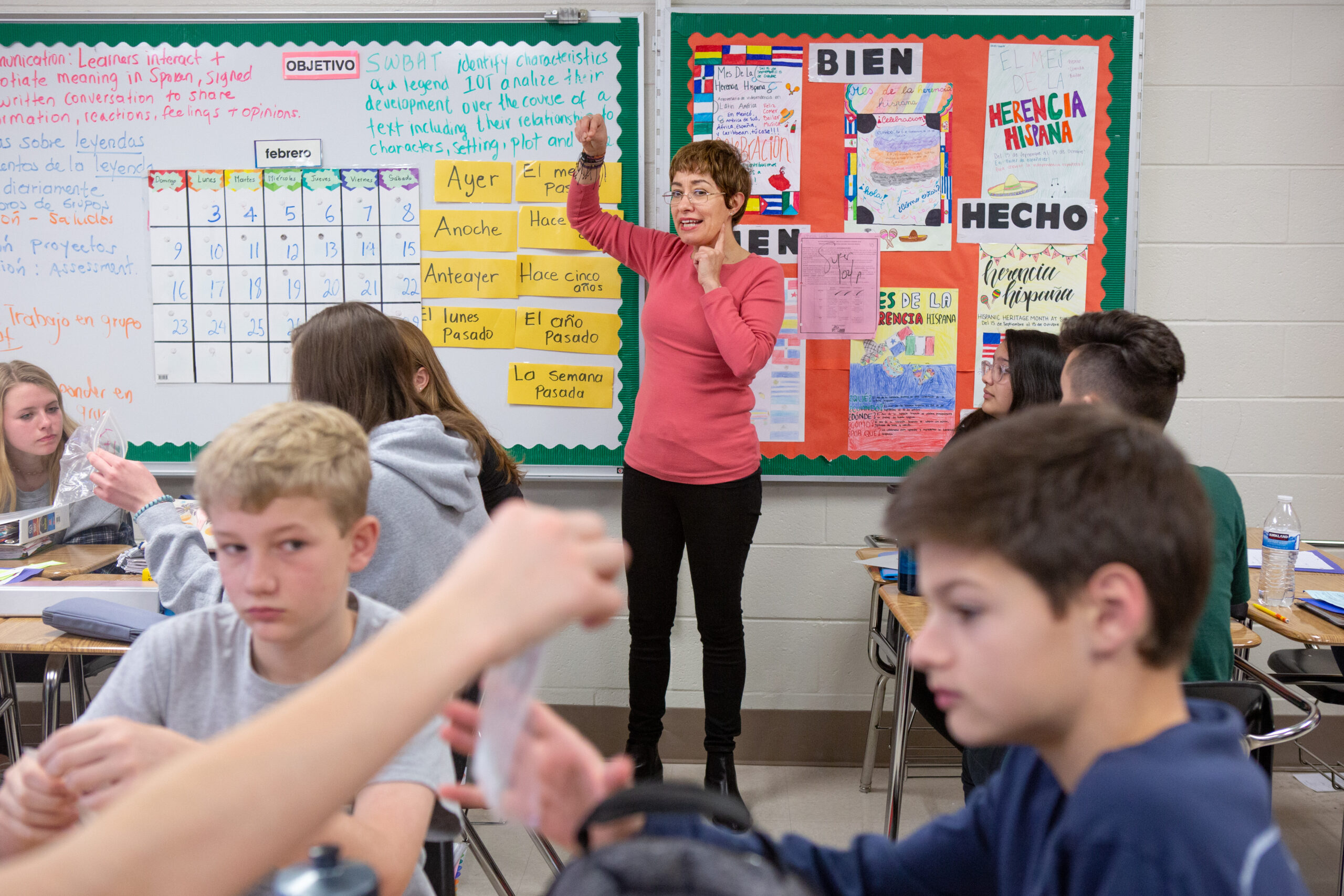
Researchers at the UCLA Center for the Transformation of Schools have published a new analysis of the readiness of California’s teaching workforce to fulfill the state’s ambitious goals for student participation in dual language immersion programs.
While acknowledging important strengths and progress toward the dual language immersion program goals of the Global California 2030 initiative set forth by the California Department of Education, a new analysis highlights concerns that the existing bilingual teacher pipeline may not be sufficient to staff all new and expanding dual language immersion programs with well-prepared teachers.
The policy brief, “Building a Robust Bilingual Teacher Workforce for California: Teacher Preparation for Dual Language Immersion Programs,” details the characteristics of high-quality dual language immersion teacher preparation in comparison with current requirements for bilingual authorization in California. It also examines the supply of teachers, looking at how many teachers are required for the 2030 bilingual education expansion and the alignment between the Bilingual Authorization (BILA) program’s teacher supply and demand. Key among the findings:
- Concerns over instructional quality persist despite new and improved state teacher preparation standards. Some districts report hiring teachers whose perceived language and other skills fall short of classroom demands.
- While California appears to have enough bilingual-authorized teachers to staff a growing number of DLI programs, significant numbers of bilingual educators are teaching with emergency credentials, suggesting many districts are unable to fill vacancies with fully authorized teachers.
- There is a geographic misalignment between the supply and demand for bilingual-certified teachers. Bilingual teacher shortages are geographic, not statewide. In some areas of the state, particularly those with a concentration of teacher preparation programs, there appears to be an oversupply of teachers for bilingual programs. In other areas of the state, and especially in “teacher preparation deserts” in rural, border, and inland regions there is demand for bilingual programs, but not enough teachers with bilingual authorizations to staff them.
To meet Global California 2030 goals for expansion of dual language immersion programs, the researchers estimate the state will require thousands of new bilingual teachers and current supply may not be able to meet demand.
The authors also highlight the challenges and opportunities in achieving the states ambitious goals and offer specific recommendations to meaningfully strengthen California’s capacity to meet its multilingual education goals. Key among the recommendations:
- Address geographic gaps in teacher preparation
- Sustain financial support for candidates, especially heritage speakers
- Move from grant-based to formula-based DLI funding
- Build a quality-assurance infrastructure for BILA programs
- Strengthen the infrastructure for field experience and clinical preparation
“Building a Robust Bilingual Teacher Workforce for California: Teacher Preparation for Dual Language Immersion Programs,” is authored by UCLA Education Professor Lucrecia Santibañez with Nicole Pina and Alicia Ferraez for the UCLA Center for the Transformation of Schools. The full policy brief, including detailed recommendations is available on the UCLA CTS website.