From renowned faculty to future scholars from UCLA’s Community Schools, UCLA’s excellence and vision was represented at the Annual Meeting, Apr. 8-12.
The UCLA School of Education and Information Studies showcased innovative research and globally renowned expertise at the Annual Meeting of the American Educational Research Association (AERA), held Apr. 8-12 in downtown Los Angeles. Honoring this year’s conference theme of “Unforgetting Histories and Imagining Futures: Constructing a New Vision for Education Research,” UCLA students, faculty, and researchers shared work to recognize the cultural capital of students and their communities while transforming education for all.
Unforgetting History, Shaping the Future
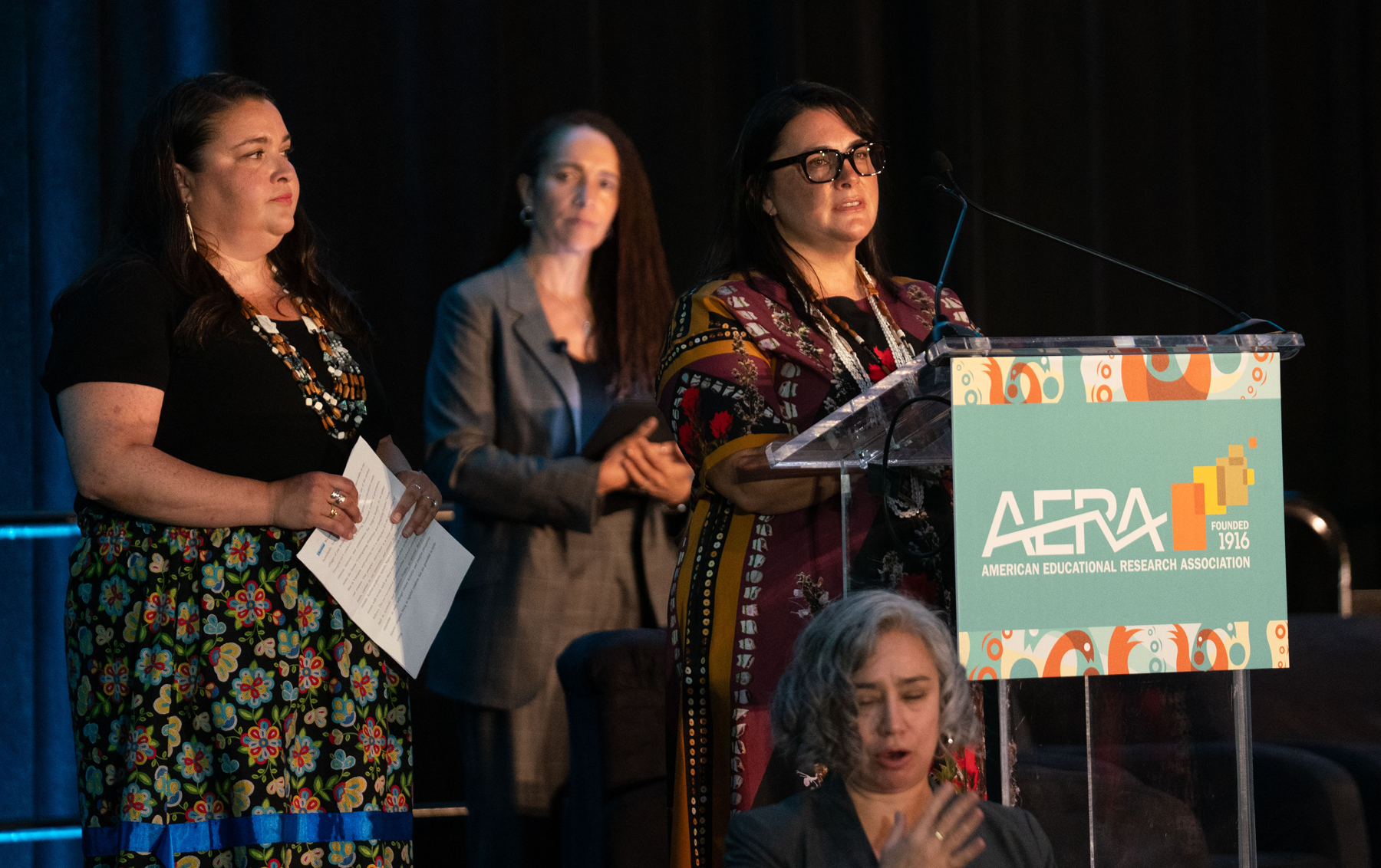
The Opening Plenary at AERA on Apr. 8 featured a land acknowledgement given by Kelly Leah Stewart, Chancellor’s Postdoctoral Fellow in Education at UCLA, and Theresa Ambo, associate professor in UCLA American Indian studies.
“We wanted to recognize the strength of our ancestors who survived all of this and give people hope,” said Ambo and Stewart, who are sisters and descendants of the Gabrielino and Tongva tribes of California.
Daniel Solórzano, UCLA professor of education, took part in the plenary panel, sharing his perspectives on the history of activism in his native Los Angeles. In addition, it was announced that Professor Solórzano will deliver this year’s Annual Brown Lecture in Education Research, which will be livestreamed on Nov. 5.
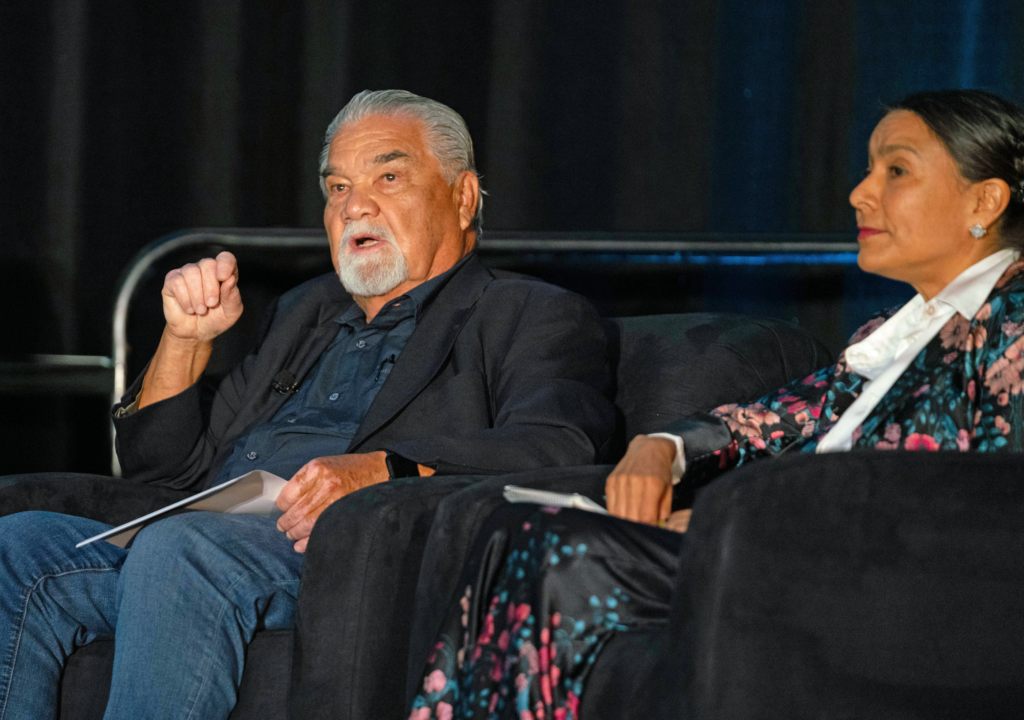
Continuing the conference theme of valuing histories, representatives of the History-Geography Project at UCLA, presented “Unforgetting Histories, Shaping Futures: AAPI Studies in K-12 Classrooms,” during a Presidential Session. Amparo Chavez-Gonzalez, lead facilitator and coach, and Danny Diaz, director of the History-Geography Project at UCLA, shared their contributions to a five-state study of the challenges and triumphs of establishing Asian American studies in K-12 amid national politics, budget cuts, and underprepared teachers.
Lori Patton Davis, UCLA professor of education and faculty director, UCLA Educational Leadership Program, served as a panelist for a Presidential Session titled, “AERA Tiny Desk Scholarly Discographies,” moderated by Shaun Harper, provost professor of education, business, and public policy at the University of Southern California. In homage to NPR’s “Tiny Desk” concert series, Harper invited Patton Davis and five other nationally renowned scholars to share their favorite songs and how the tracks relate to their research, philosophical stances on education, and significant career moments.
Harper, who was in Professor Patton Davis’ PhD cohort at Indiana University, paid tribute to his longtime friend and colleague, who was honored at AERA this year with the Henry T. Trueba Award for Research Leading to the Transformation of the Social Contexts of Education.
“I’ve had the enormous privilege of seeing Lori become the biggest, the largest, most influential scholar in our field,” he said. “She was the first Black woman elected to the presidency of [the Association for the Study of Higher Education]… the major association in our field. And to see … my cohort mate, my collaborator, my best friend … get elected to the National Academy of Education and to have an endowed chair at UCLA, I’m like [sic] she is the biggest and the largest.”
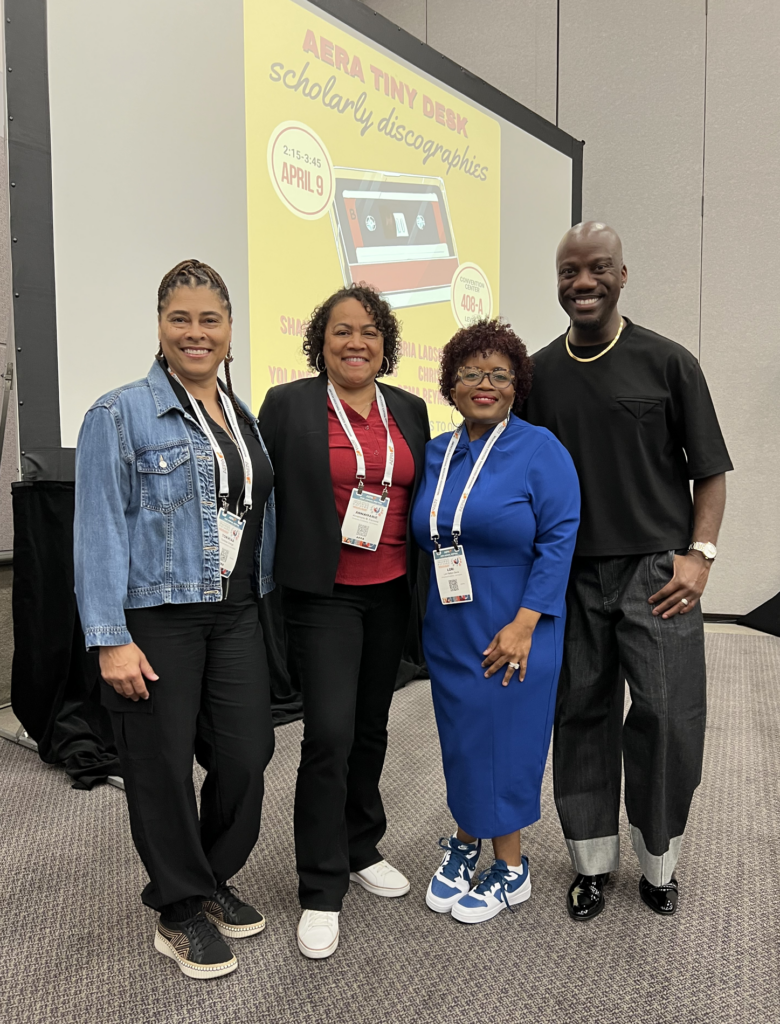
Patton Davis, who is the Heyman Endowed Chair of Education at UCLA, also presented “Theorizing Spiritual Capital Through the Lived Experiences of Black Women Doctoral Students,” with her sister, Jodi Lynne Patton-Jordan, assistant professor of education at Southern Illinois University Edwardsville, on the impact of spirituality on the doctoral journeys and faculty aspirations of Black women. Professor Patton Davis says that the research draws upon the sisters’ own upbringing in a church community, and that interviewing Black women as part of their research is a communal act.
“Our mother was the spiritual guide in our family so, going to church, feeling ingrained in the church community; being involved; having our first leadership roles – all of these… shaped us as women and as professionals,” she said. “Having that foundation gives you a keen awareness when it comes up in research and in other spaces.
“When we interview other Black women, the research process in and of itself becomes a community space,” said Patton Davis. “I think it’s validating being able to talk with someone and they get it, without a lot of explanation. It helps to fuel us as researchers and validates the experience for those who talk to us.”
Transforming the Profession
Hailing back to UCLA’s origins in teacher preparation in the early 20th century as the Los Angeles State Normal School, Ed&IS researchers presented work on the most current issues facing the workforce.
Imelda Nava-Landeros, faculty advisor for UCLA’s Teacher Education Program (TEP); Emma Hipolito, TEP director, and Melissa Sachi Arias, TEP faculty advisor, presented their paper, “Reimagining Teaching Retention by Supporting Mentor Teachers,” delineating how state and federally-funded teacher residency pathways diversify the workforce and retain teachers in the profession, particularly teachers of color.
Hipolito also participated in a Presidential Session on “Designing Transformative Research for Systemic Change in Teaching and Learning,” and Nava-Landeros presented her work on “Remedy & Renewal in Northern California’s Rural Teacher Residencies.” In addition, Nava-Landeros addressed the impacts of cuts to the Teacher Quality Partnership (TQP) grant with Center X’s Theodore Sagun, sharing how UCLA continues moving forward in preparing educators grounded in equity in a symposium titled, “A Rallying Cry: Sustaining Equity-Centered Teacher Preparation in Light of TQP Grant Terminations.”
STEM Teaching and Learning
Megan Franke, UCLA professor of education and Ed&IS vice chair of professional programs, chaired a Presidential Session on “Unforgetting Histories and Dreaming for the Future of Mathematics Education,” with national experts who discussed the most significant concerns in mathematics education at this moment and how to support mathematics education researchers across methodological, theoretical, and philosophical perspectives.
Kyndall Brown, executive director of the California Mathematics Project, shared his work on, “Focal Students as Catalysts for Equity in Mathematics Lesson Study,” exploring how the use of focal students in lesson study supports teachers in advancing equity, shifting teacher perceptions, and fostering more inclusive instructional practices.
“One thing I want people to understand is that focus students are a very powerful way to operationalize equity in math class,” said Brown. “There are students that you want to know about in your classroom; hold them to the side, interview them, but then take the information that you learn to design lessons to meet their needs.”
Environmental Education
Chris Jadallah, UCLA assistant professor of education, Sara Jasmin Diaz-Montejano, Ed&IS alumna and assistant professor of education at CSU Dominguez Hills; doctoral student Michelle Hernandez Romero; and PhD candidate Lauren Arzaga Daus, took part in the Presidential Session, “Building the World Anew: Historically-Responsive Educational Approaches Towards just and Sustainable Climate Futures.” Professor Jadallah also presented his work on “Engaging local expertise in community science,” in a roundtable session, questioning what it means to democratize knowledge, and how community science can center lived experiences, not just participation.
“I think we sometimes question if we are truly democratizing scientific knowledge production just by bringing lay people into these projects without actually engaging their stories and experiences and their local knowledge,” said Jadallah.
UCLA PhD student Michelle Hernandez Romero presented her research conducted with Linnea Beckett of Michigan State University and Samuel Severance of Northern Arizona University on “Expanding Avenues for Science Learning: Toward Socio-Ecological Thriving in a Mexican Immigrant-Led Community Garden.” Their study highlighted how immigrant-led community gardens can foster belonging, learning, and socio-ecological thriving, and how science can emerge through culturally meaningful practices in support of thriving, justice, and equity for non-dominant communities.
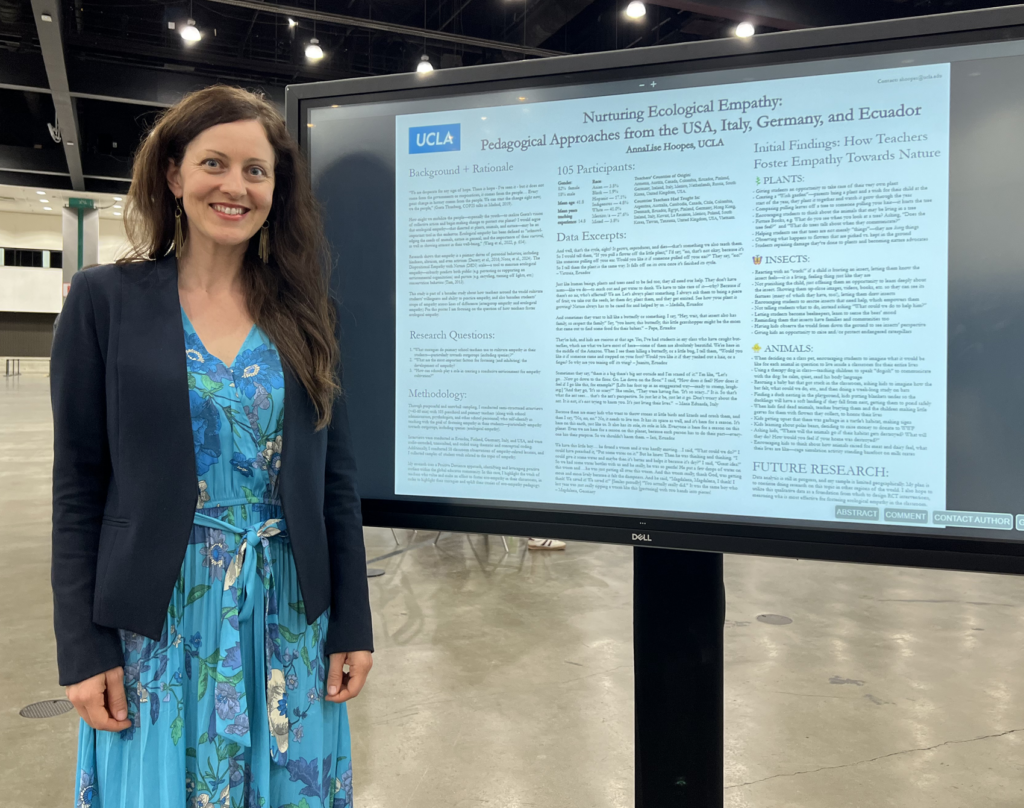
Doctoral candidate AnnaLise Hoopes presented, “Nurturing Ecological Empathy: Pedagogical Approaches from the US, Italy, Germany, and Ecuador.” Hoopes studies how teachers foster empathy in the classroom toward outgroups across lines of difference such as race, politics, ability, appearance, and even species. Her poster, a subset of that research, correlates with conservation, sharing examples of how teachers have shown their students to treat plants, animals, and insects with respect and compassion.
“I believe teachers can and should play a powerful role in fostering that empathy and that expansion of our circle of empathy,” Hoopes said.
Youth Participatory Action Research (YPAR) at UCLA Community Schools
High school students from UCLA Community School and Mann UCLA Community School presented their research in the Research Engagement and Youth Development program at AERA. Their poster presentation topics included research on mental health, immigration policy, housing inequality, college access and the school-to-prison pipeline, illustrating the fact that youth are not just research subjects but lead research as well. Read the full story here.
Serving the Underserved by Unlocking Their Potential
Laura Chavez-Moreno, assistant professor of education and Chicana/o & Central American studies at UCLA, shared findings from her award-winning book, “How Schools Make Race: Teaching Latinx Racialization in America,” which grounds discussions in how systems actively shape racial meaning in education.
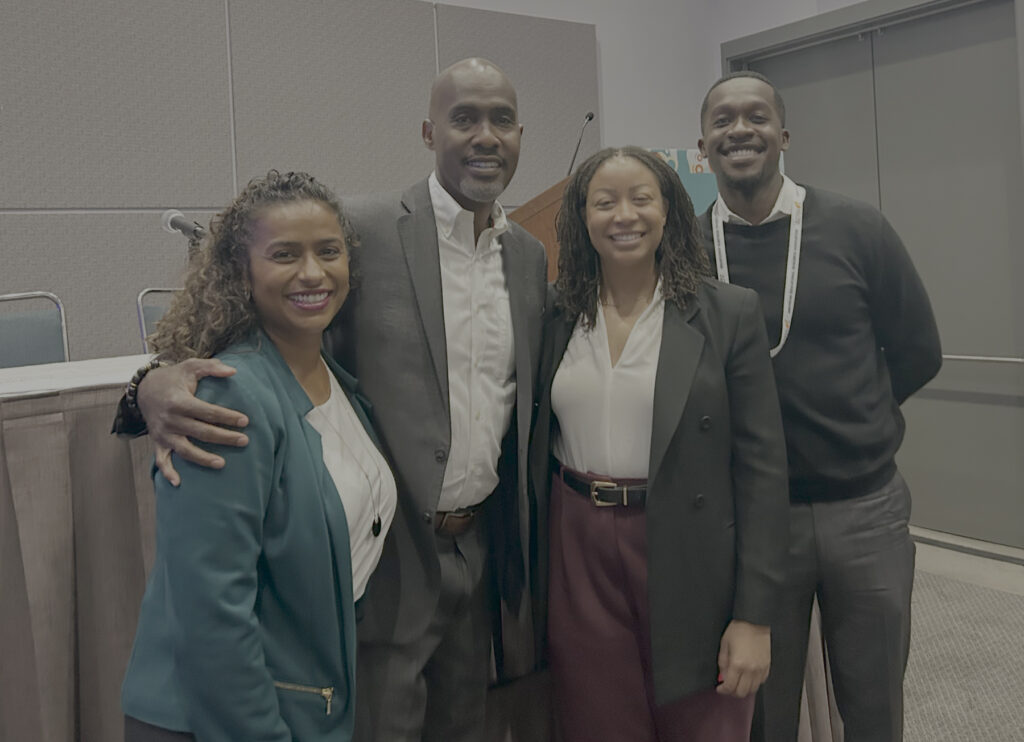
Tyrone Howard, past AERA president and UCLA professor of education, and Julissa Muñiz, assistant professor of education, presented “Unforgetting Deficit Depictions: Disrupting Education Systems of Injustice to Unlock the Hidden Geniuses,” with UCLA Education alumni Brianna Marche and Jaleel Howard. The four scholars shone a light on students who are the most overlooked, over-surveilled, persistently punished, consistently reviled and misunderstood in schools in order to reveal the students’ hidden genius, often labeled as unworthy of affirmation, and discussed teaching in schools and the pedagogies, practices, principles, and policies essential to creating the schools that best serve and support these students.
Professor Muñiz also centered the experiences of formerly incarcerated Latinas with, “Babe, I finally feel proud of myself:” Formerly Incarcerated Latinas and their Postsecondary Educational Pursuits,” during a symposium on research at the intersection of education, carcerality, and abolition.
“California is the leading jailer of women in the world,” said Muñiz. “We continue to see gender disparities, the continuation of gender-based violence across institutions, not just carceral institutions but also in higher education, that reinforce and exacerbate the disparities connected to women’s access and opportunity… we need to think more about what are we creating and being responsive to the needs and supports that women and gender expansive folks need to thrive.”
Jonli Tunstall, director of the UCLA Academic Advancement Program and Seth Duncan, graduate student researcher discussed, “Reimagining Retention: A Social Justice Model for Black Undergraduates in the “College-to-and-through” Movement” at a roundtable session. Both UCLA alumni, Tunstall and Duncan shared the Vice-Provost’s Initiative for Pre-College Scholars (VIPS) program, aimed at promoting college equity, access, and retention for Black students in Los Angeles County.
“The program isn’t just about getting students into college,” said Duncan. “It’s about keeping them there as well. It’s also about helping them develop a way, a political orientation that empowers them to be a Black student in the world.”
In a roundtable discussion, doctoral candidate Keara Williams and PhD student Neven Matthew Holland shared their research on “Learning to Teach Under Fire: Fostering Democratic Classrooms Through Sustaining Black Fugitive Pedagogies.”
“Be unapologetic in your quest to teach the truth,” said the researchers as they discussed the ability for educators to engage in pedagogical practices centering marginalized students in politically tense spaces by unlocking principled resistance, adapting curriculum for critical consciousness, sustaining Black fugitive pedagogical practices, and engaging in union and community involvement. Duncan also joined doctoral candidate Gene McAdoo to present “Black Male Black-Male-Centered Counter-spaces: Utilizing Abolitionist Teaching & Black Trans Feminist to Disrupt Patriarchal Norms,”
Professor Solórzano and UCLA alumna Lindsay Pérez Huber presented “Racial Microaffirmations: Assessing the Field for Research on Affirmations and Healing for People of Color in Education” in a paper session on critical race theory and epistemic mechanisms. Their conceptual study reflected on racial microaffirmations that affirm the dignity and humanity of people of color function as acts of care, resistance, and healing within educational settings.
Tim Herd, a fifth-year doctoral student at UCLA and Da’Ja’Nay Askew, assistant professor of education and human development at Jackson State University, presented, “We Wrote Ourselves In: The Doctoral Student Writing Collective (DSWC) as a Blueprint for Belonging,” based on their co-founding of a national, affinity-based writing group. Askew and Herd created the DSWC in 2024, in order to address the unique challenges to Black doctoral students of academic isolation, systemic marginalization, and a lack of culturally affirming support systems, with community, accountability, and liberation-centered scholarship.
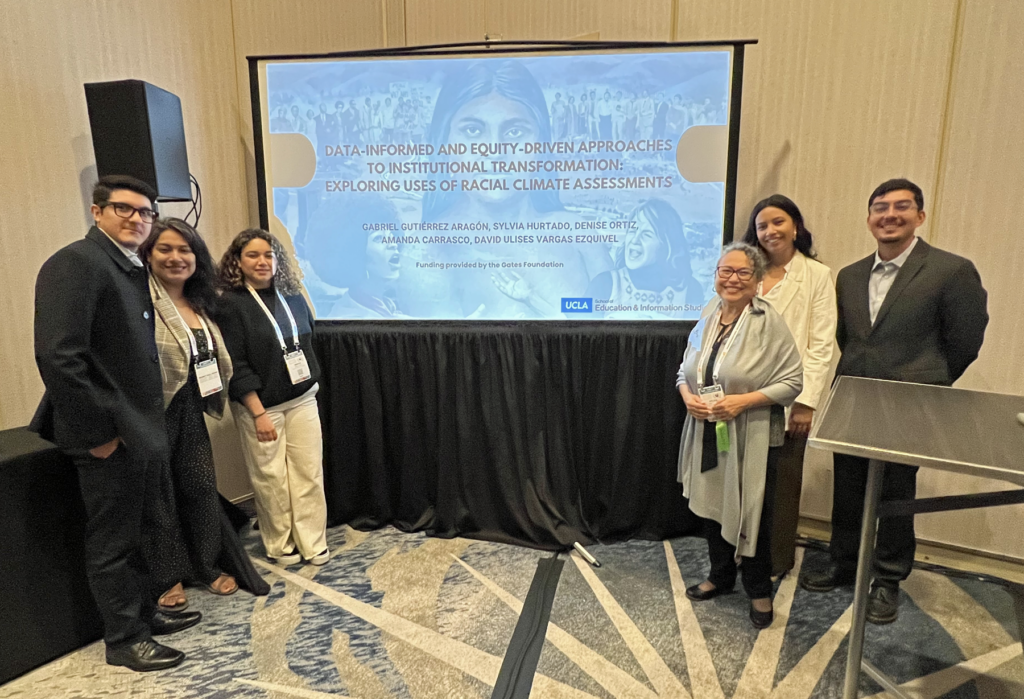
AERA President-Elect and UCLA Distinguished Professor of Education Sylvia Hurtado (above, second from right) and her students shared their work on, “Data-Informed and Equity-Driven Approaches to Institutional Transformation: Exploring Uses of Racial Climate Assessments.” Their study revealed findings from case studies that explore exemplary uses of climate assessment results to drive institutional transformation, and strategies for leveraging assessment data to confront exclusionary histories and realign institutional structures to improve conditions.
“The team has worked very hard with strong support from the Gates Foundation to help support them in doing this work,” said Professor Hurtado. “They’re all brilliant. Three of them are working on their dissertation. I’m so proud of them. I think they’re the future.”
Community colleges
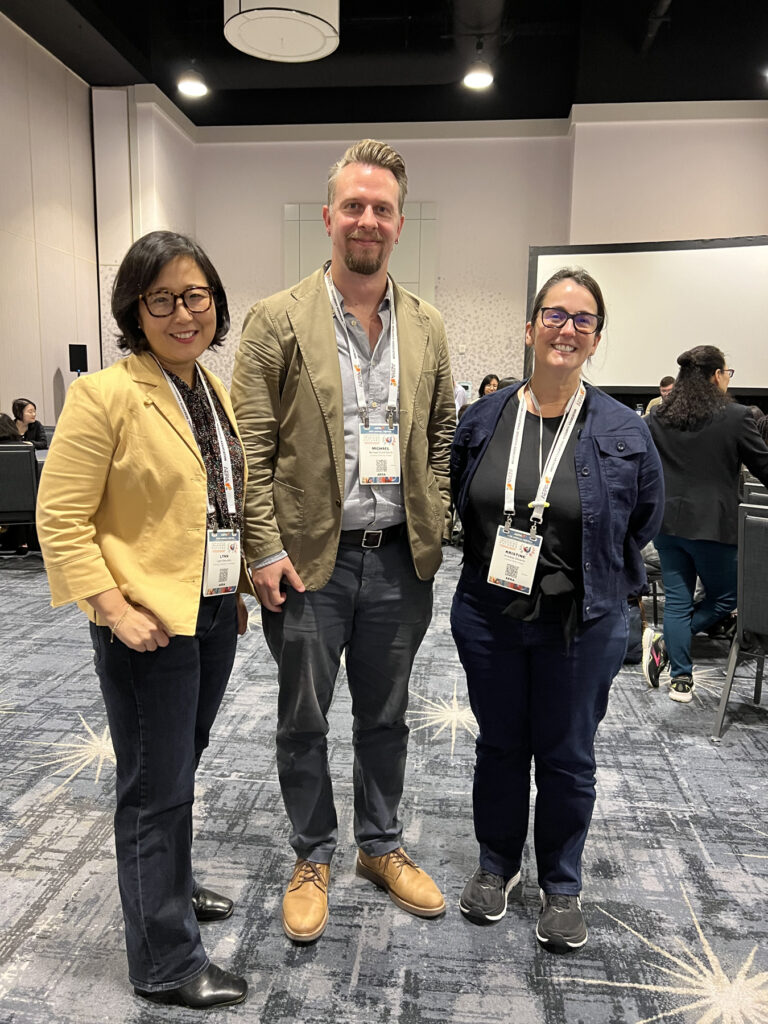
Lynn Kim-John, executive director of UCLA Center X, doctoral student Kristine Oliveira, and Mike Davis, research, planning, and grants at Glendale Community College, presented their collaborative work in a roundtable on “Learning in Practice: Student Voices, Shared Governance, and Organizational Learning in a Multi-College Research Practice Partnership.”
Community Schooling
Karen Hunter Quartz, director of the UCLA Center for Community Schooling, offered hope amid harmful immigration policies in a Presidential Session on “Reimagining Educational Possibilities for Immigrant-Origin Students in an Era of Exclusion,” where she shared how UCLA Community Schools center care, belonging and family engagement to support students.
The UCLA Center for Community Schools was further represented by Dandan Yang, research and evaluation specialist, and Marisa Saunders, associate director of research, who presented, “Family and Community Engagement as a Key Driver of Reduced Chronic Absenteeism in Community Schools.” Their study asserts that increased implementation of Community, Family, and Student Engagement significantly correlates with reduced absenteeism, with findings highlighting the crucial role of family-school partnerships in improving attendance, and the offer of actionable insights for policymakers prioritizing effective elements of complex community school interventions.
“I think the main takeaway from this study is that we found community and family engagement is the key driver for reducing chronic absenteeism for public schools in California,” said Yang.
School Safety
Critical conversations around safety and well-being continued with Ron Avi Astor, UCLA professor of education and social welfare, who served as discussant for an invited speaker session on “School Active Shooter Drills: Mitigating Risks to Mental, Emotional, and Behavioral Health – A Report from the National Academies of Sciences, Engineering, and Medicine.” Professor Astor noted that future research should examine the role of media and social media in coverage of shooter events; multiple perspectives on arming school staff and school shooter drills; and the effects of racism and hate – inside and outside of schools – on perpetuating school shootings.
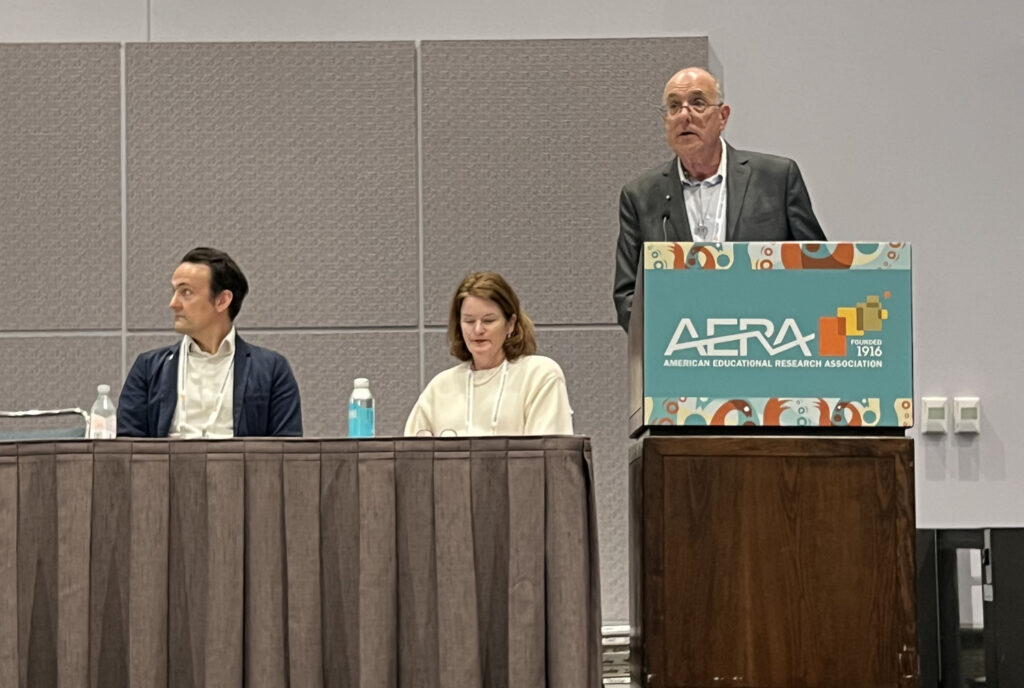
Professor Astor was honored at the conference with this year’s AERA Division E Distinguished Research Award in Human Development for his co-written article, “The Contribution of School Victimization to Sadness, Hopelessness, and Suicidal Ideation Among Bias-Based and Non-Bias-Based Victims and the Moderating Role of School Climate,” published last year in Educational Researcher.
English Learners
PhD candidate Marlene Saint Martin shared her research on “The New Normal: A Cohort Analysis of How COVID-19 Disruptions Altered English Language Proficiency in California,” with an examination of changes in the proficiency of English language learners following the COVID-19 pandemic. Post-2020 cohorts of kindergarten students were shown with 20-30% of students at the lowest proficiency level, compared to the pre-pandemic rate of approximately 12%, suggesting a fundamental shift in California’s EL population, with significant implications for district planning and service delivery.
Supporting Educators and Leaders of Color
Deborah Southern, an Ed&IS postdoctoral scholar, shared her research on, “Racialized power and whiteness: Leveraging whiteness as a credential to support or resist faculty diversity” during a roundtable discussion. Southern examined how whiteness operates within faculty diversity efforts, highlighting the complexities of power in academia during shifting political times, amid demands from student activists to increase faculty racial diversity.
The City of Angels: Histories and Futures of Activism and Educational Vision
On Tuesday night before the “official” start of AERA, Annamarie Francois, Ed&IS associate dean of public engagement, joined colleagues on a panel exploring the storied history of education and activism in Los Angeles.
Cecilia Rios-Aguilar, chair of the UCLA Department of Education, presented, “Holding Complexity, Weaving New Worlds: How Latinx Epistemologies Transform Convivencia and Solidarity” during a Presidential Session on “Historicizing Los Angeles: Envisioning New Educational Futures in Latinx Radical Imaginations.” Her call for “convivencia” (coexistence) posed the challenge to see research as relational, accountable, and transformative.
“Convivencia research is not neutral,” said Professor Rios-Aguilar. “It takes a position. To do convivencia research is to name that history and refuse to reproduce it. It’s a way of being in our classrooms, in the community, and in the academy, oriented towards relationship, accountable to community, politically clear about what knowledge is for, and pedagogically committed to creating conditions where all of us … can fully appear.”
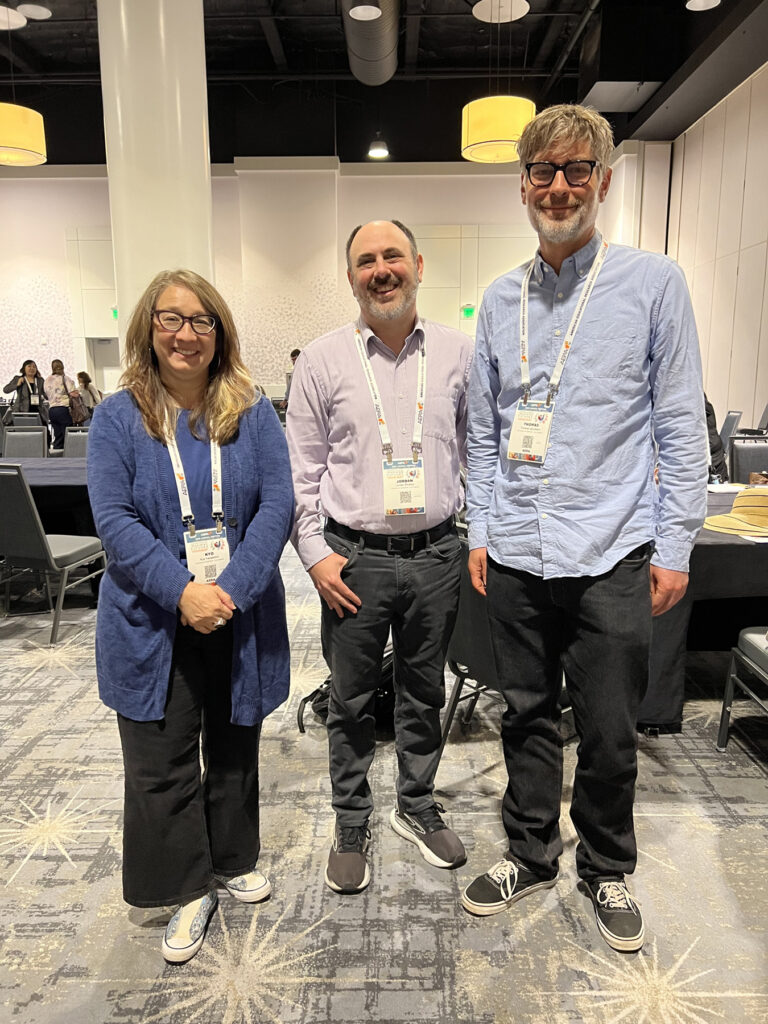
Jordan Rickles, assistant professor of education and co-director of UCLA’s Los Angeles Education Research Institute (LAERI), chaired a roundtable on “How Research-Practice Partnership Collaboration Can Inform Education Policy and Practice: Examples from Los Angeles.” The discussion included research by UCLA alumna Kyo Yamashiro, now an assistant professor of education at Loyola Marymount University, on “Supporting Implementation of an Ethnic Studies Policy Using Research from a Long-Term Research-Practice Partnership.” Yamashiro serves as co-PI with Lucrecia Santibañez, UCLA professor of education, on the ongoing study, which addresses how RPPs examine school transportation, ethnic studies courses, and middle school math tracking.
Rickles says that LAERI aims to “make our research in a way that will inform practice and policy, particularly in the Los Angeles community.”
Looking Forward
Professor Hurtado, who will serve as AERA president-elect during the 2027 Annual Meeting in Toronto, said that she was inspired by this year’s conference.
“[AERA President] Maisha Winn did a fabulous job of combining intellectual strength and also, the joy we get from the work and commitment to social justice,” said Hurtado. It gives me ideas on how I’m going to build on that.”
Hurtado will preside over the 2028 Annual Meeting, which will take place in Philadelphia, seven months before the U.S. national election.
“It’s going to be very exciting to talk about democracy and research, in terms of research for impact and research to make change,” she said.
Paolo Cantos and Joanie Harmon contributed to this report.
Above: UCLA kicked off the Annual Meeting of the American Educational Research Association (AERA), Apr. 8-12, with a land acknowledgment at the Opening Plenary by Kelly Leah Stewart, Chancellor’s Postdoctoral Fellow in Education at UCLA (at left), and her sister Theresa Ambo, associate professor in UCLA American Indian studies (at right). Pictured with AERA Executive Director Tabbye Chavous