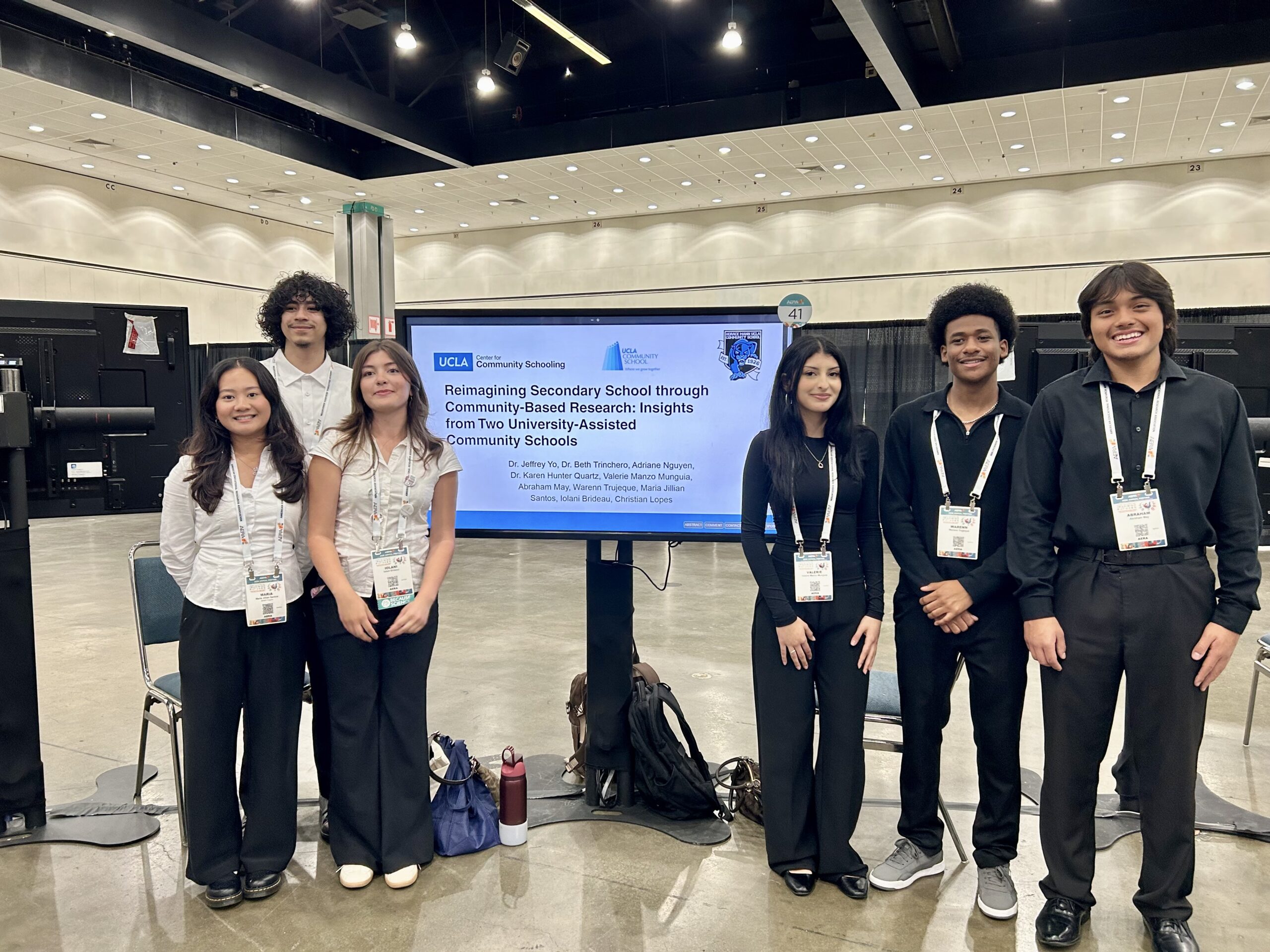
Thousands of researchers gathered in Los Angeles in April for the American Education Research Association’s (AERA) annual meeting. There were hundreds of important presentations from researchers ranging from newly minted graduated students to internationally recognized scholars. This year, among those scholars were six high school students from the UCLA community schools who shared their own research projects.
Those students, Warenn Trujeque, Valerie Manzo Munguia, and Abraham May from the Mann UCLA Community School, and Iolani Brideau, Jillian Santos and Christian Lopes from the UCLA Community School on the RFK Community Schools campus, joined in the meeting as part of the AERA Research Engagement and Development with Youth (READY) program, which is designed to showcase the work of high school youth using research tools to answer critical questions about education.
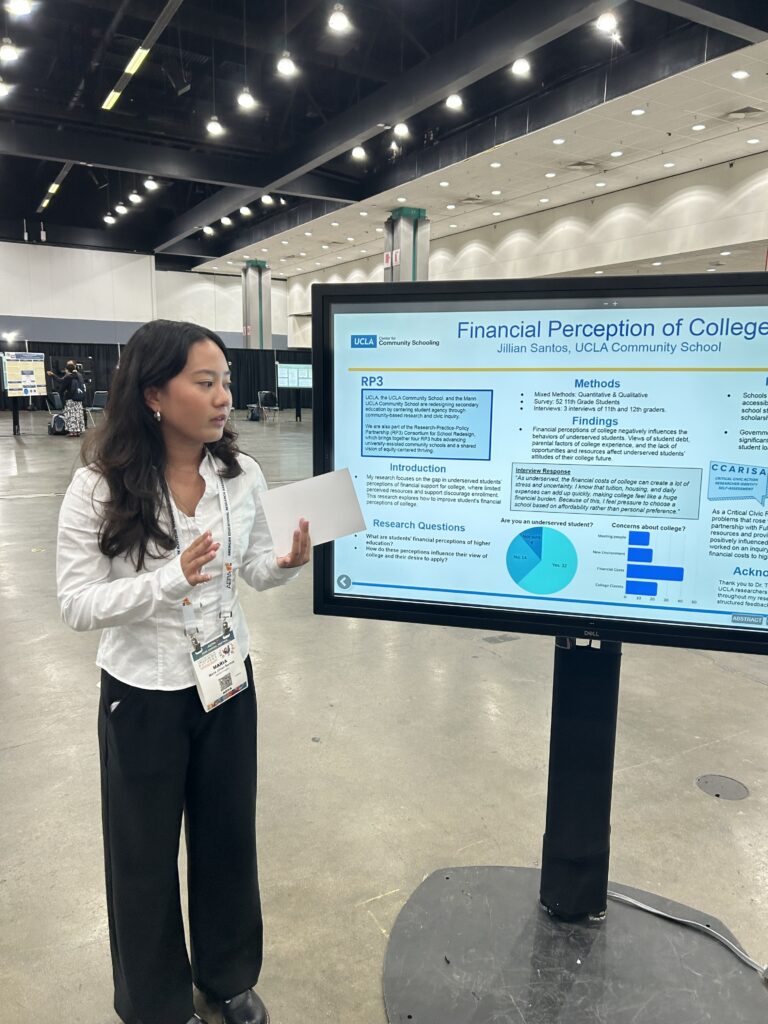
“It’s been really exciting, I’ve met a lot of people from all over the world, said Santos. “Participating in AERA has allowed me to network with a lot of people. It was nice hearing about a lot of their research and their process of doing their research. I feel like learning about their experiences is going to help me with my future.”
The students had the opportunity to present research gathered for a project with the UCLA Center for Community Schooling, “Reimagining Secondary School through Community-Based Research: Insights from Two University-Assisted Community Schools,” a project that seeks to redesign secondary education by encouraging student power and civic engagement through research with their community. Each student conducted and presented their own study, focusing on topics personal to themselves and their community. The projects were shared in a symposium with student researchers from other high schools and in a Thursday afternoon AERA poster session.
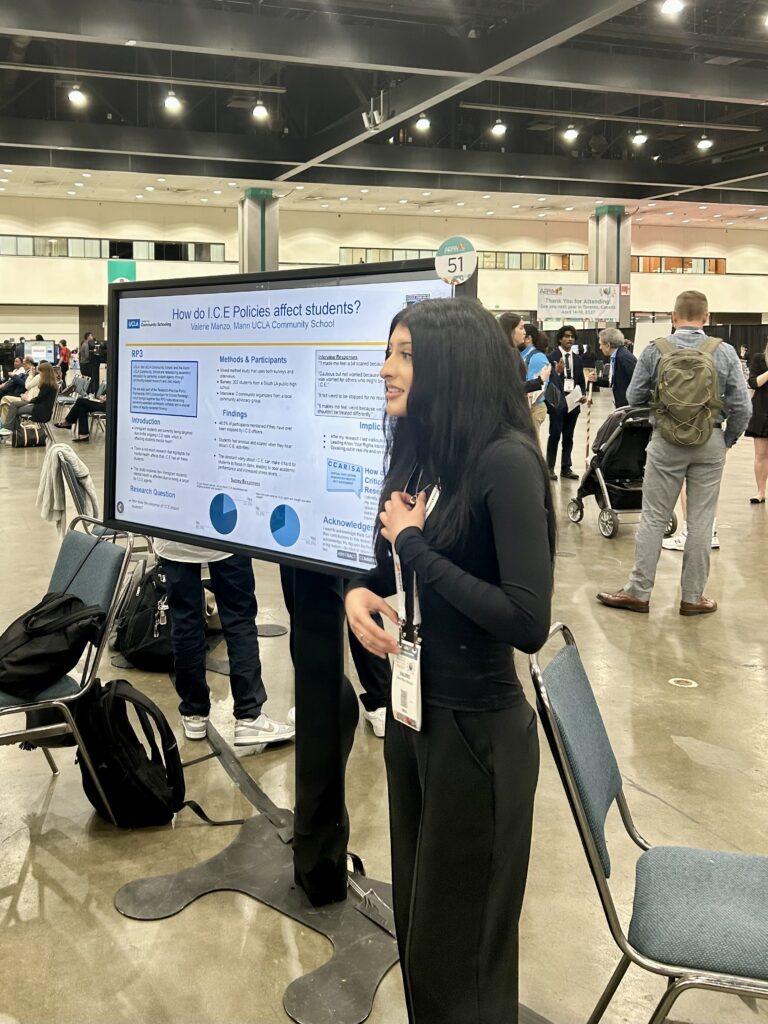
A junior at Mann UCLA, Munguia presented her study, “How do ICE Policies Affect Students.” A mixed methods study including interviews with community organizers and a survey of 202 students from a high school in south Los Angeles, her research plumbed the impact of recent ICE activities in Los Angeles. Among her findings, students feel anxious and scared when they hear about ICE activities and the constant worry can make it hard for students to focus in class, leading to poor academic performance and increased stress levels.
“Being unsafe at a place you are legally required to be at should never be the case,” said Munguia. “Through this work, I’ve come to see myself as a researcher who uses my research as motivation and fuel for activism. My research has pushed me to lead walkouts in protest of the ICE raids.”
Brideau, a senior at UCLA Community School, presented her research, “Low Income Students and their Mental Health,”exploring the decline in mental health among students and the role COVID-19 played on students’ mental health at the school she attends. Among the findings of her mixed methods study, 61 percent of respondents to her survey believe that COVID-19 negatively affected their mental health. Six students mentioned the need for more student resources such as extra lessons, tutoring and field trips. Thirteen students cited a decline in social abilities.
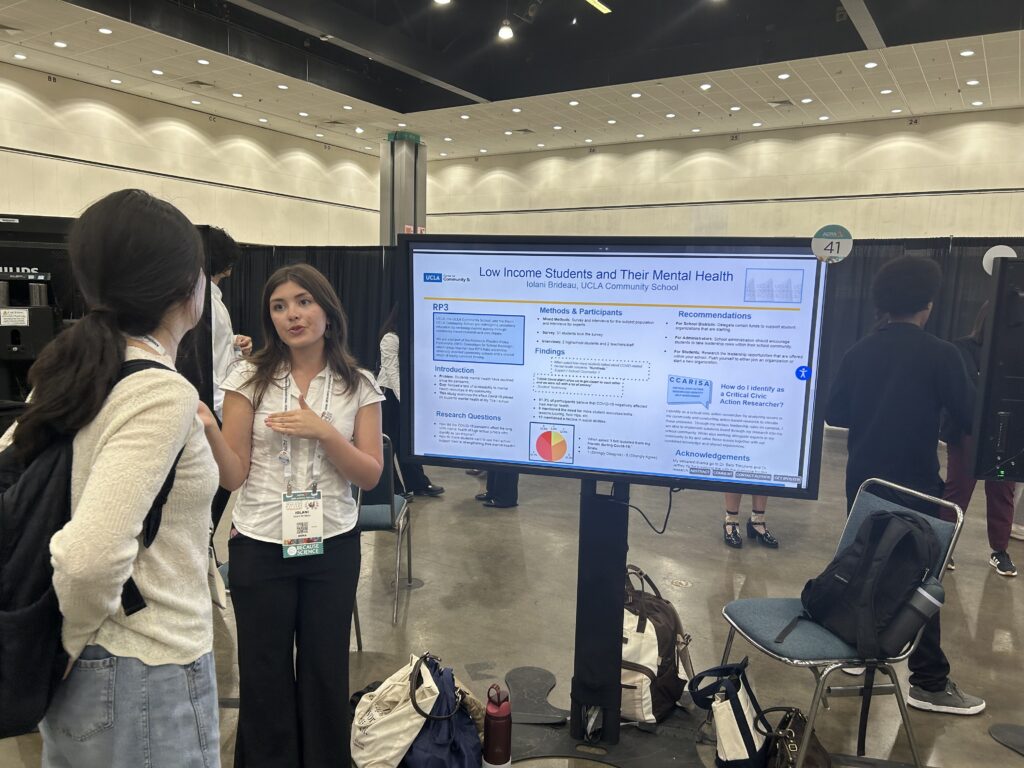
“My work focuses on how low-income students’ mental health was affected by COVID-19,” says Brideau. “I’ve come to see myself as a researcher who not only acknowledges issues but strives to solve them every day. It’s taught me creative problem solving and pushed me to put my words into action.”
Additional research projects presented include:
“Financial Perception of College” – Jillian Santos, UCLA Community School
Santos’s research focuses on the gap in underserved students’ perceptions of financial support and how to improve student’s financial perceptions of college. Her mixed methods study finds that financial perceptions of college negatively influences the behaviors of underserved students, affecting their attitudes about their college future.
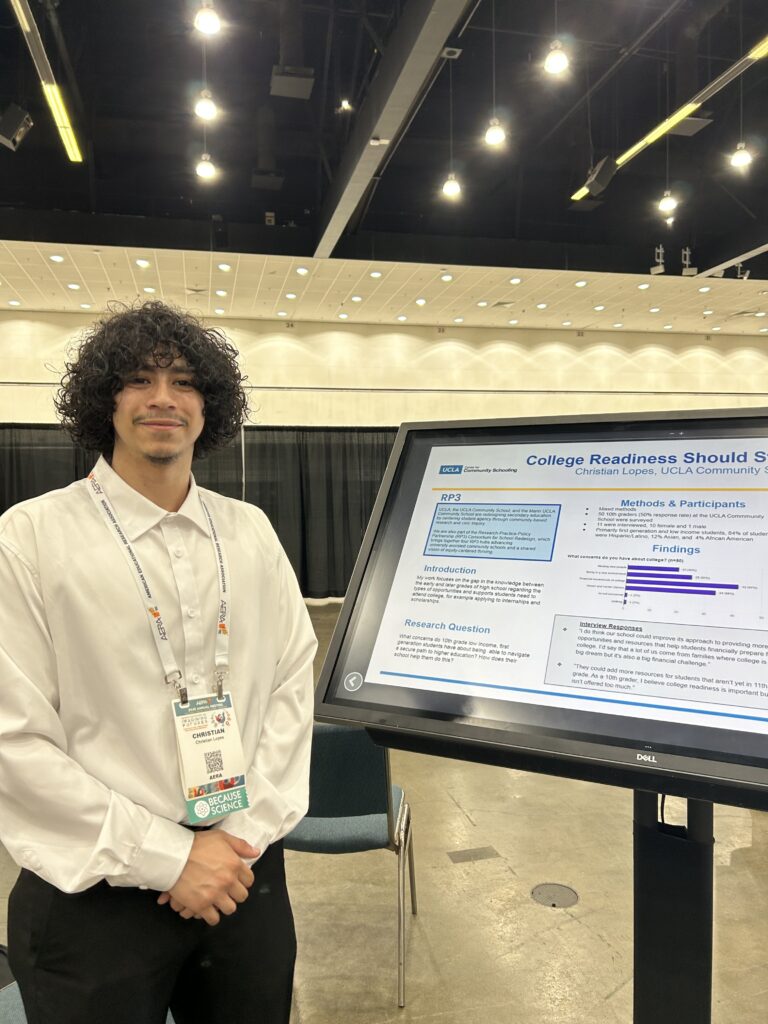
“College Readiness Should Start Earlier” – Christian Lopes, UCLA Community School
Through surveys and interviews with 10th grade students at the UCLA Community School, Lopes explores the gap in the knowledge between the early and later grades of high school regarding the types of opportunities and supports students need to attend college. In the words of one interview respondent, “they could add more resources for students not yet in the 11th grade.” Among Lopes’s recommendations is to create a seminar for the lower-classmen to learn and take advice from the upper-classmen.
“School To Prison Pipeline” – Abraham May, Mann UCLA Community School
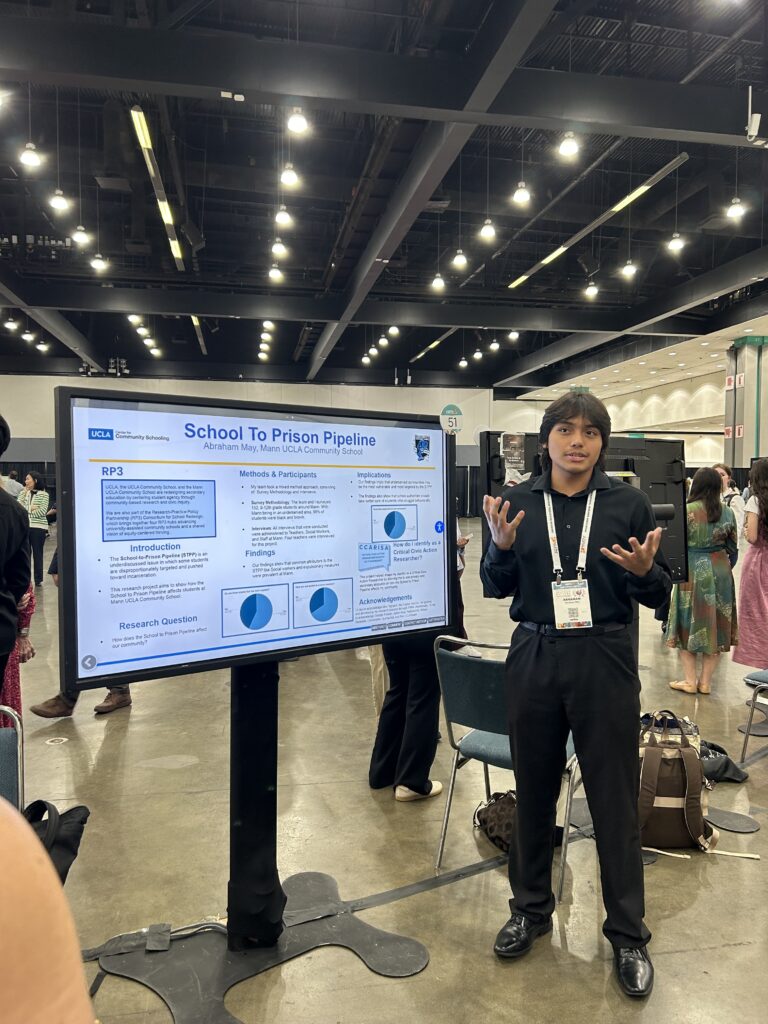
In this survey of 152 grade 9-12 students at Mann UCLA, May finds that common elements of the School to Prison Pipeline such as school expulsion measures were prevalent among students at the school. For example, almost 58 percent of respondents know someone who has been expelled from school.
“Housing Inequalities” – Warenn Trujeque, Mann UCLA Community School
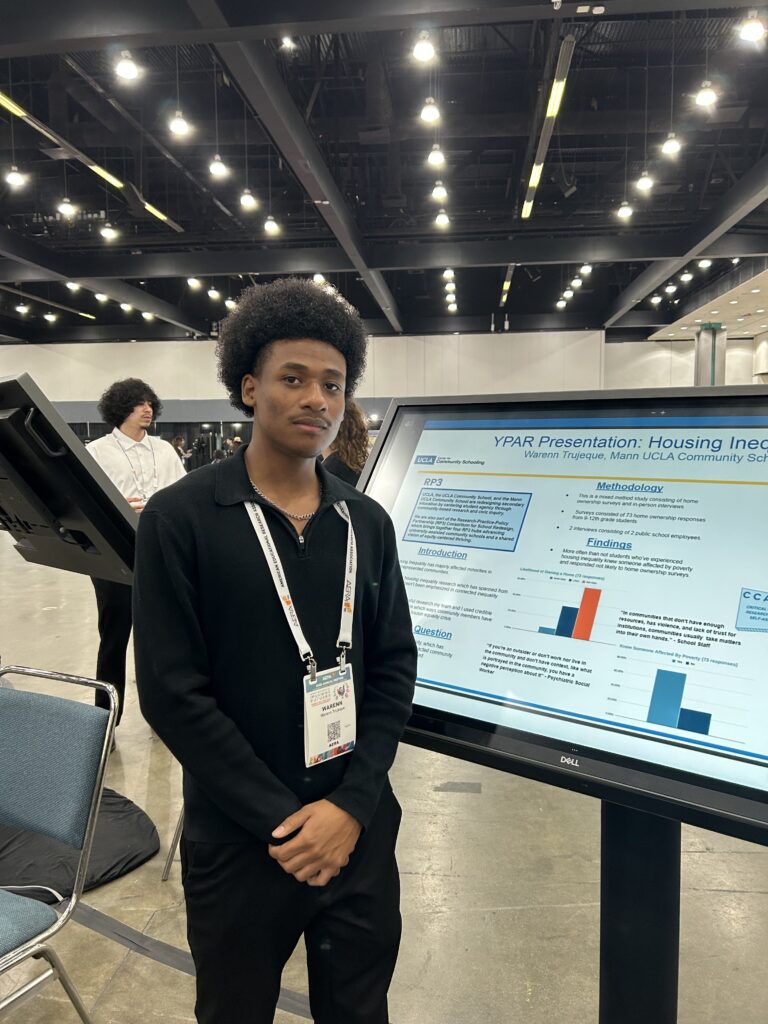
The research by Trujeque, a senior at Mann UCLA who has been accepted to UCLA and plans to attend next fall, explores the issue of housing inequality in underrepresented communities. A majority of respondents to his survey said they know students that have experienced poverty, with almost 60 percent of respondents saying they were “unlikely” to own a home.
“My work focuses on housing inequalities, particularly in underrepresented communities which have historical connections to redlining,” said Trujeque. “I’ve come to see myself as a researcher who has gained valuable insight and experience in critical research-oriented projects. It’s taught me how the perception of one’s community can be shaped and molded around what they’ve experienced in life and pushed me to spread a light on positive outlooks and disprove any misconceptions about underrepresented communities.”
The AERA READY program aims to cultivate and encourage youth researchers’ knowledge of and interest in the field of education research and expand the next generation of talent in the field.. In addition to presenting their own research, the students had the opportunity to attend a wide range of research presentations during the AERA annual meeting.
“Our community schools have been doing such great work, and I think these students represent what’s happening at both of our school sites,” said Jeffrey Yo, research and evaluation specialist at the UCLA Center for Community Schooling. “The opportunity to attend the AERA meeting has been important. It’s given them a chance to start thinking about how to be an educational researcher, to think about how this could be a space for them to have a career. The opportunity to see that these issues matter and that people are willing to listen and think about them is powerful. They are taking a lot of ownership and have been super engaged. The more time they spent at the conference, the more joy and experience of being a researcher they seemed to get.”
The student research projects were presented as part of an initiative of UCLA, the UCLA Community School, and the Mann UCLA Community School to redesign secondary education by engaging students in community-based research and civic inquiry. The effort is also part of the Research-Practice-Policy Partnership (RP3) Consortium for School Redesign, which brings together four RP3 hubs that are advancing university-assisted community schools and reimagining secondary schooling. The students at Mann UCLA conducted their research as part of Mann’s AP Seminar course, the findings of which they previously presented at their school’s Youth Participating in Action Research (YPAR) conference. Students at the UCLA Community School developed their research projects while participating in the Advance Placement Research course at their school.
Research posters for the UCLA community school student research projects presented at the AERA annual meeting are available here