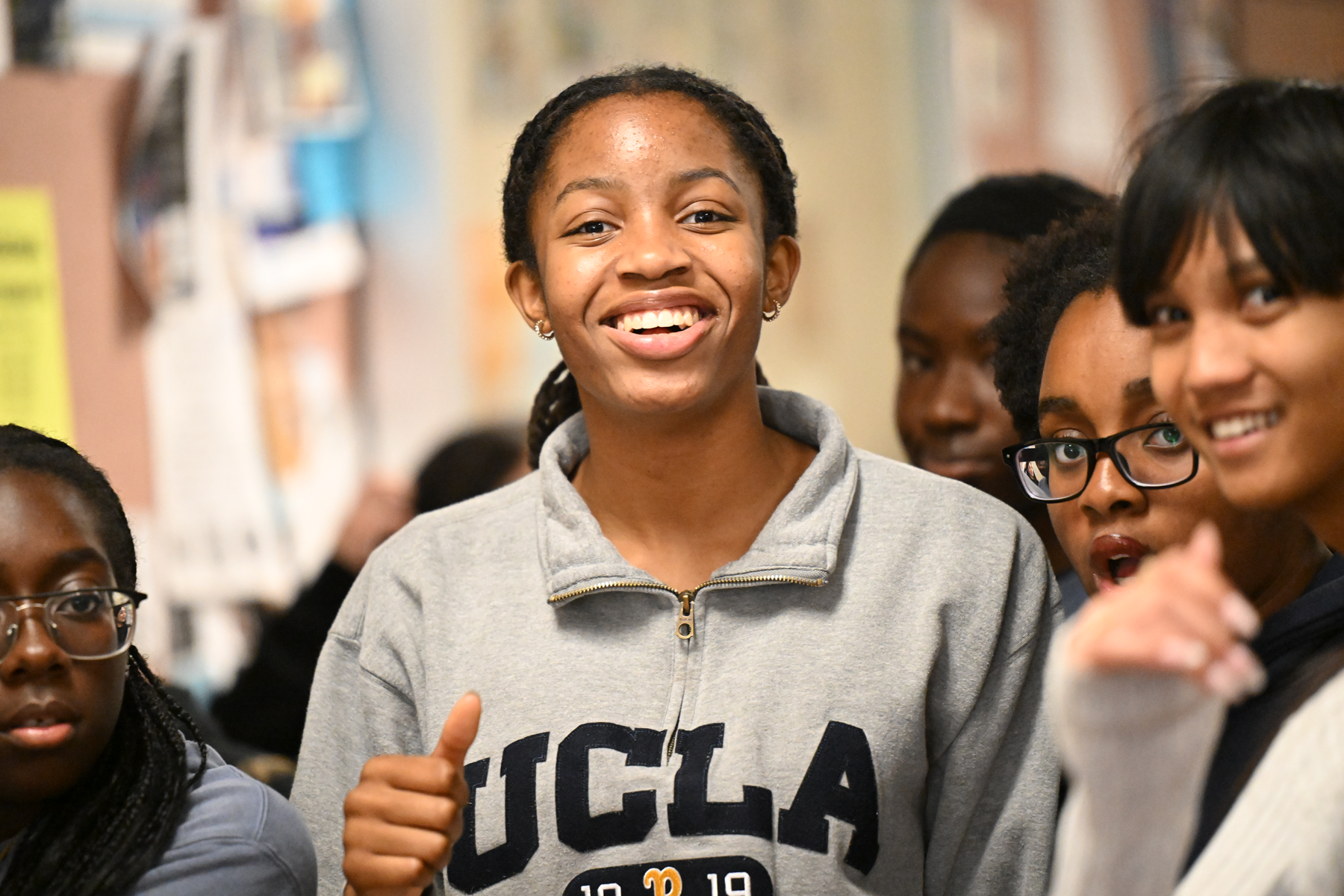
Partnership between UCLA’s Center X, LAUSD, and Compton Unified School District provides a running start for college-bound high schoolers, professional development for teachers and AP educators.
Providing equity and access to high-level instruction in Advanced Placement is the mission of the AP Readiness Program, an initiative of UCLA’s Center X. Designed to give 9th-12th graders the skills needed to be successful in college, the program also focuses on improving the skills of AP teachers as well as encouraging more educators to teach AP courses.
With virtual meetings on Saturdays and one in-person session held at UCLA near the end of each academic quarter, AP Readiness brings together master instructors from across LAUSD and the Compton Unified School District who prepare students for the rigorous curriculum of AP courses. STEM courses include biology, calculus, physics, computer science, and environmental science. Humanities courses include English and Spanish language and literature, psychology, government, U.S. history, and world history. During the sessions teachers have the opportunity to observe and learn from master instructors and to explore a successful framework for conducting AP courses.
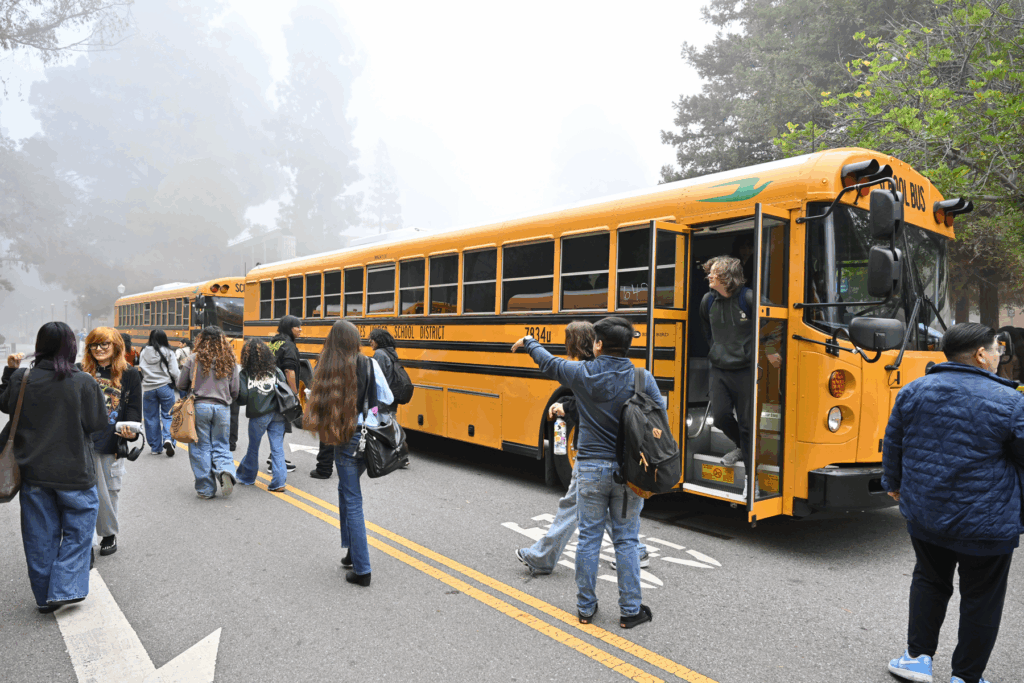
On Dec. 13, over 2,450 high school students from LAUSD and Compton USD, along with 40 students from Palisades High School, and 230 of their teachers visited UCLA to take part in an in-person AP Readiness session, which was provided through a partnership with LAUSD and Compton USD, and with bus transportation by the districts.
Lynn Kim-John, executive director of Center X, welcomed the teachers to UCLA with a showcase of educator and leadership development program and projects housed in the center that support teachers throughout their careers, including the Teacher Education Program (TEP); the Principal Leadership Institute (PLI); and the National Board Project. Subject matter projects like the the California Reading & Literature Project, the Mathematics Project, the Writing Project, the California Reading & Literature Project and Coaching Partnerships were present to share resources with teachers.
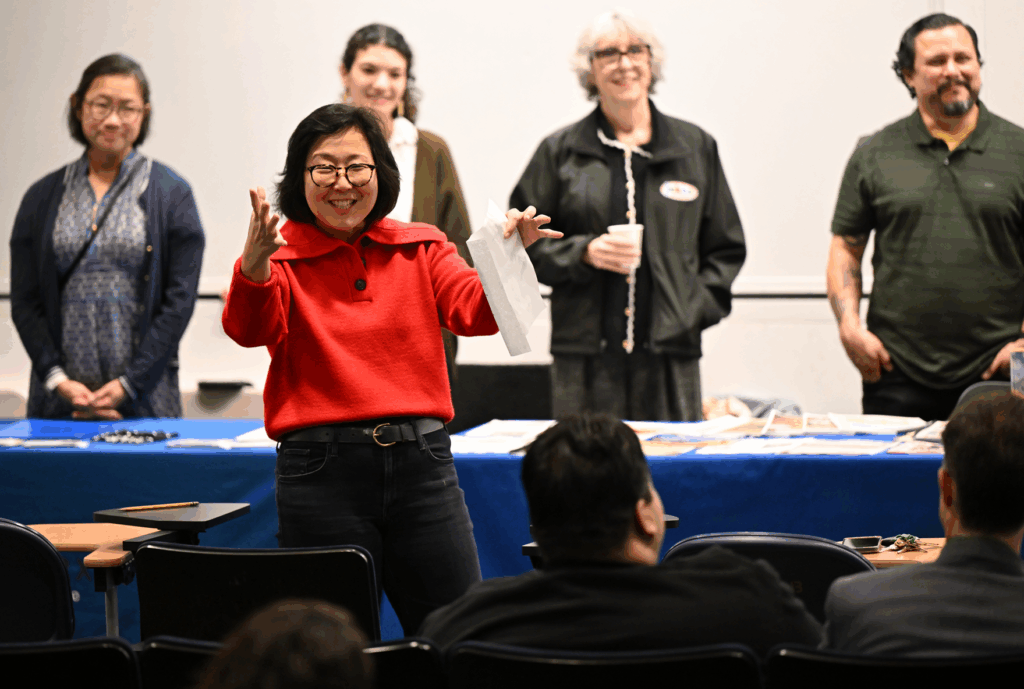
Kim-John said that AP Readiness is both a teacher and student support program that “provides a venue for teachers to learn from experienced AP teachers and students access to experienced teachers, which expands high quality AP experience for all students.
“The program seeks to give our students an idea of what the college-going culture is, so we bring them to UCLA,” Kim-John said. “They learn from teachers from all across the district that are experienced and have a passion for student learning. The program selects teachers that have high impact and willing to mentor other teachers along the way. There is this organic professional development… with a community of teachers that come together.”
Kim-John said that “the UCLA AP Readiness program supports college access by providing the additional layer of AP support as well as developing the identity of a future college students.”
Ana Beltran, AP coordinator for the LAUSD Division of Instruction, has worked with Center X and the AP Readiness program for five years and said that she hopes for expansion of the program, which is given free of charge.
“Our district is seeing large growth in students taking more AP classes, receiving qualifying scores, and attending more STEM classes in AP and in the humanities as well,” Beltran said. “One of the [division’s] missions is to make sure that we look at the whole global picture for our kiddos, and that we provide this opportunity for those kids that typically wouldn’t be on a college campus so early.”
For the current school year, 5,300 LAUSD students and 334 educators have attended at least one AP Readiness session.
“This is an amazing program that the district has willingly supported,” she said. “The district’s vision is that any student willing to take an AP course and the rigors of it, is allowed to take an AP course. We really encourage all of our kids that want to try an AP course that we have a pathway for them.”
A former LAUSD teacher, James Keipp has directed the AP Readiness Program for more than 15 years. He said that the program provides teachers with excellent preparation to teach AP courses, with exposure to the teaching of STEM labs that might appear difficult, or instructors with robust websites of materials for lessons.
“They do more relevant [lessons] and they’re more aware of pacing, which is always big,” Keipp said. “They’re more aware of what you need to provide students [with] to get better scores on the AP exam.”
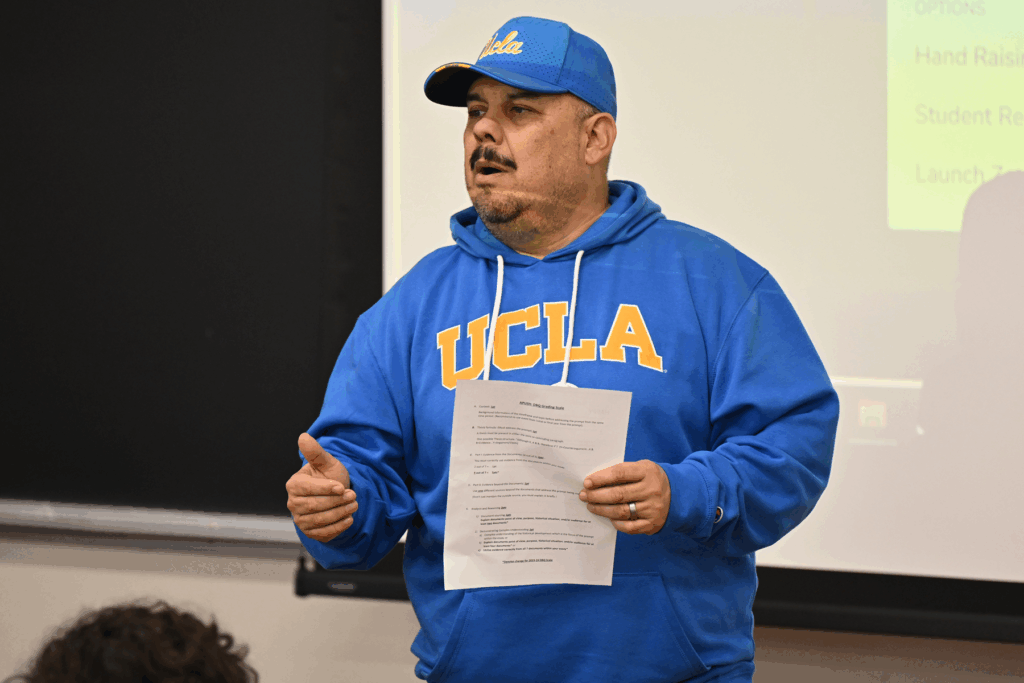
Aditi Mehta Doshi, a U.S. history teacher at Van Nuys High School, began teaching AP this year. She has participated in AP Readiness for the last five years as a participant, and this year, as an instructor of AP African American studies during the UCLA on-campus sessions.
“I was offered the opportunity to teach AP African American Studies and last year when AP Readiness started offering support for AP African American Studies, I started thinking about whether I felt prepared and if I could do an effective job in providing additional support for students with this course,” she said.
“One of the great things about AP Readiness, both for students and teachers, is that you are automatically part of this academic intellectual community,” said Doshi. “It’s difficult in a big urban district to find that community. I have a great set of colleagues at my school site, but we all have a million things to do. Just to have that time to pause and reflect on our practice together, in a setting where we can focus on building our own practice and strengthening our content knowledge is really rare.”
Doshi said that the success of African American studies as a relatively new addition to AP courses, depends on, “… [staying] stay true to the heart of the course, which is really that it is part of the much longer framework of Black liberatory education. It is not just an AP class [or] a test preparation class. Whatever I can do as a steward of the course to help make sure that it stays true to the discipline, I want to contribute.”
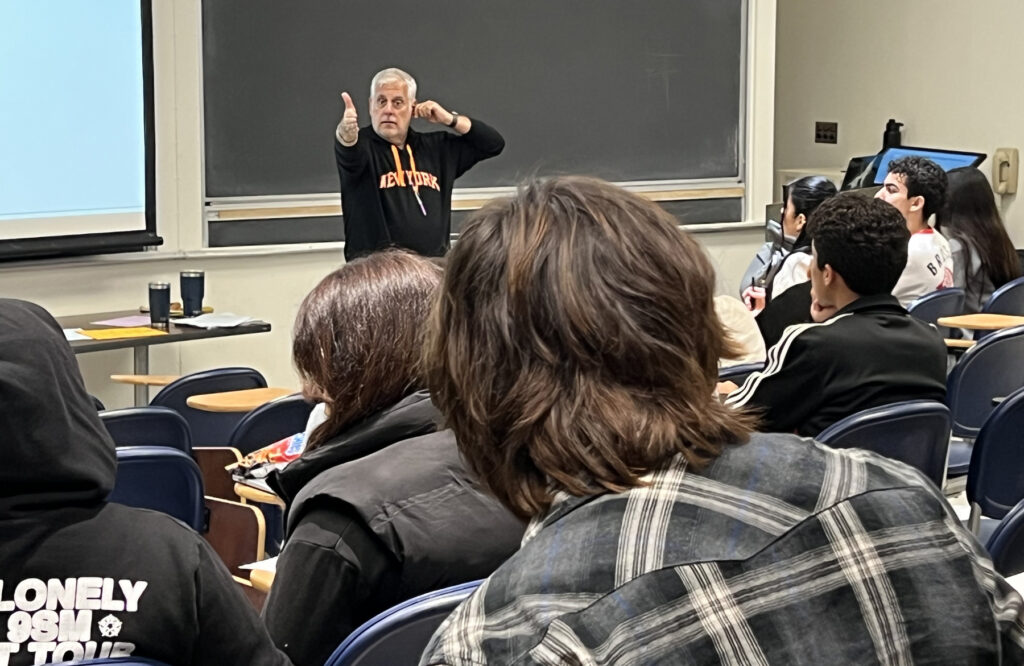
Joseph Zeccola, an AP English language and literature teacher at John Marshall High School, taught a course during the UCLA sessions on rhetoric. He said that having served as an AP essay reader, “really transformed my understanding of what kids need to do to be successful.”
“If they’re going to college, 80% of the classes are going to require essays – they’ve got to know how to write,” said Zeccola. “I don’t get hung up on the technicalities of writing – that’s the icing. The cake is the thinking. Understand what you’re saying. Even if your language is clunky but if your argument is coherent, we’ll get there.”
Keipp said that evaluations by students of the AP Readiness Program range from 92-97% positive.
“We get responses like, ‘Today was beneficial to my learning’ and ‘The program will help me do better in my class, it’ll help me do better on the AP exam,’” he said. “The pass rate is anywhere between 19-25% higher than LA Unified’s pass rate in the same subjects than their peers who do not attend AP Readiness.”
Keipp notes that for the 2024-2025 school year, students that attended four or more AP Readiness sessions had a qualifying score rate of 63%, while across LAUSD, the rate for the same exams was 49%; for the 2023-2024 school year, students that attended four or more sessions had a qualifying score rate of 65%, while the LAUSD rate for the same exams was 43%.
Jada Harden, a junior from San Pedro High School (SPHS), attended Zeccola’s language session and a session on US history.
“I like to challenge myself,” she said. “Right now, I’m taking four AP courses. I just like really rigorous work.”
Harden, who is thinking of applying to Howard University or UC Berkeley, said that she would encourage her peers to attend AP classes.
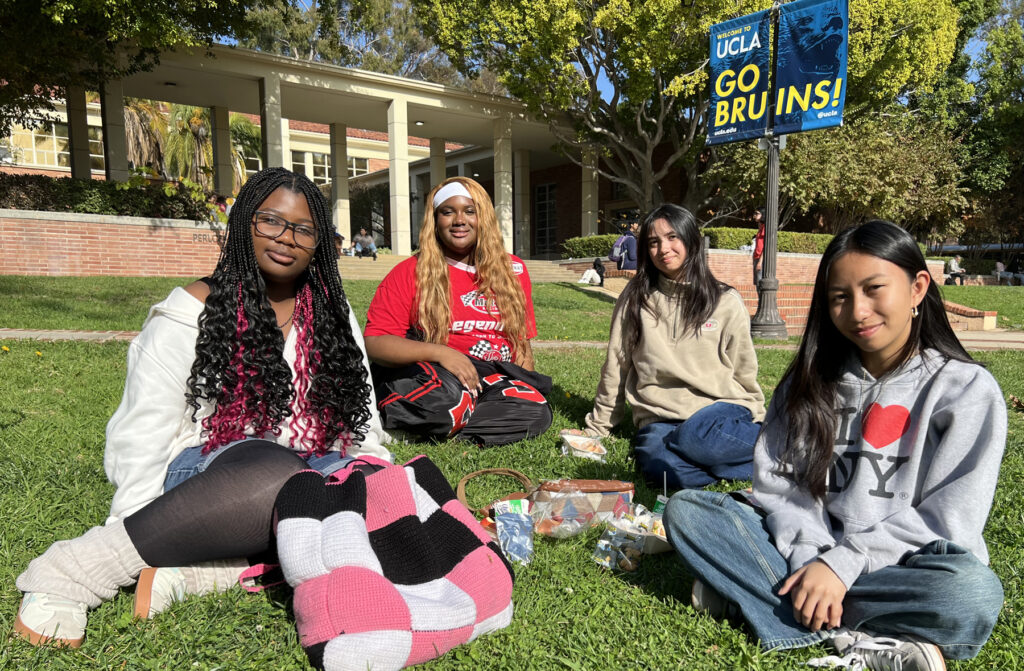
“You’ll never know until you try,” she said. “If you are really dedicated and committed to what you do, then I feel like a lot of people will fit in. As you do the work, you’ll understand and learn what you need to do to pass the [AP] exam.”
Steven Flores, a 10th grader at the School for the Visual Arts and Humanities (SVAH) at RFK Community Schools, attended an AP world history session at UCLA in preparation for the AP exam in May.
“The teachers were very nice and taught a lot in those hours,” he said. “I had a wonderful day here and I would like to be here again in March.”
Marvin Gramajo, another SVAH 10th grader, said that his best subjects are math and science, but that he has an interest in history as “a good subject to learn about so you know about how the world was evolving though time.” He said that he would urge his classmates to take AP courses.
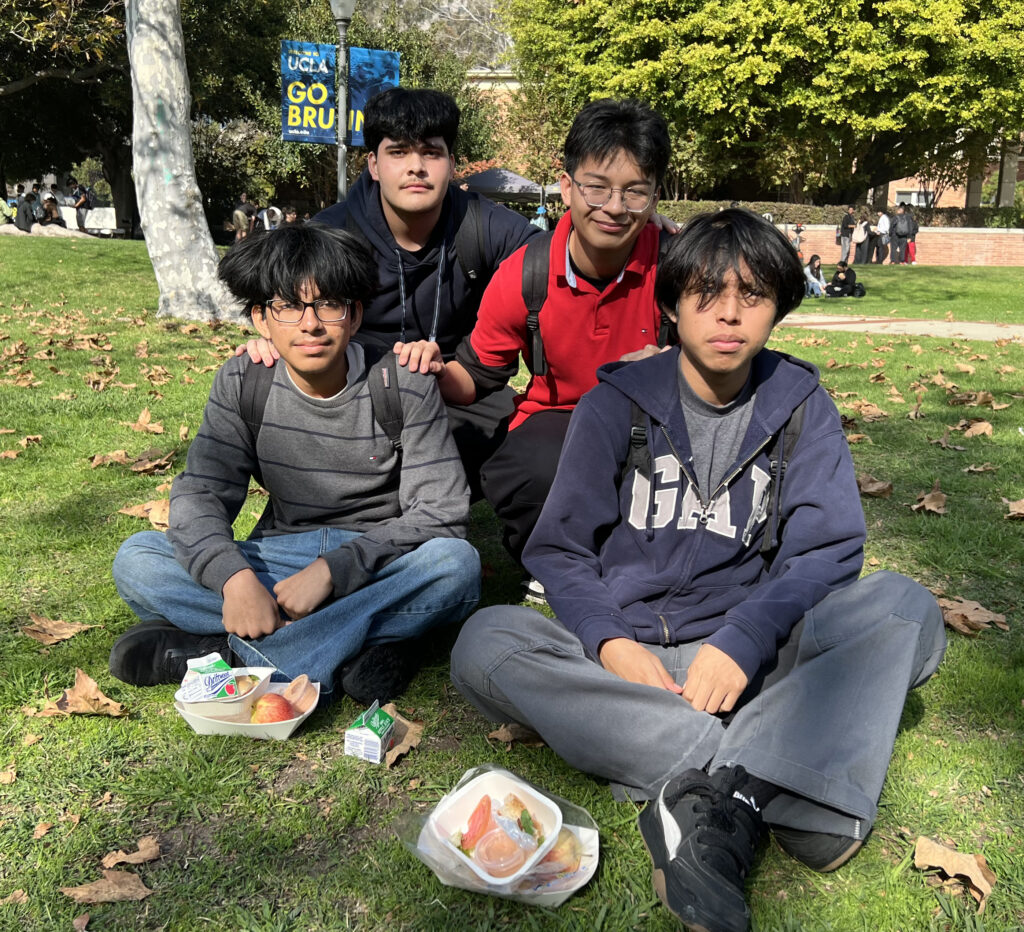
“If they want to challenge themselves [and] have their transcripts look good for colleges, they should join AP,” said Gramajo.
Bianca Dalton, a junior at SPHS, also attended Zeccola’s rhetoric session and is taking AP biology and U.S. history classes as part of the high school’s college prep program, the School of Advanced Studies. She plans to attend community college and to transfer to a UC.
“At San Pedro, they really push taking AP classes,” said Dalton. “I think it’s pretty useful. It helps you get used to the workload before you get into college. The classes are actually pretty interesting. For example, last year, I took AP history and I ended up getting really interested in history.”
Zeccola said that working with the cohort of students who came through elementary school during the pandemic is one of the current challenges in teaching AP.
“Post-COVID, kids tend to shy away from things they’re not successful at, so fostering grit is the biggest thing to me in education right now,” he said. “My AP English class is the toughest group. I think it’s because looking at the timing, they went out [of in-person instruction] for COVID at the 5th to 6th grade elementary shift, and that’s a very difficult shift period, but how about doing it all on Zoom? I can’t teach you if I can’t see your reaction.
“They have mad skills and all kinds of talent, but they need resilience,” said Zeccola. “It wasn’t learning loss – it was [the loss of] social-emotional competencies. We’re trying to foster resiliency.”
Doshi, who is an alumna of UCLA’s Teacher Education Program, said that the AP Readiness Program embodies a valuable partnership between UCLA and LAUSD that, “… [provides] that space to teachers, to provide the financial support to make it possible, to bring together people from all over the city, and to give us a sense of how amazingly diverse, and beautiful our city is.
“I got a sense of that every single time I participate, even when I was not teaching the sessions,” said Doshi. “It’s a really wonderful community … seeing where all these kids come from, seeing them in person together, supporting each other with this goal of coming to learn and just being the best students that they could be.”