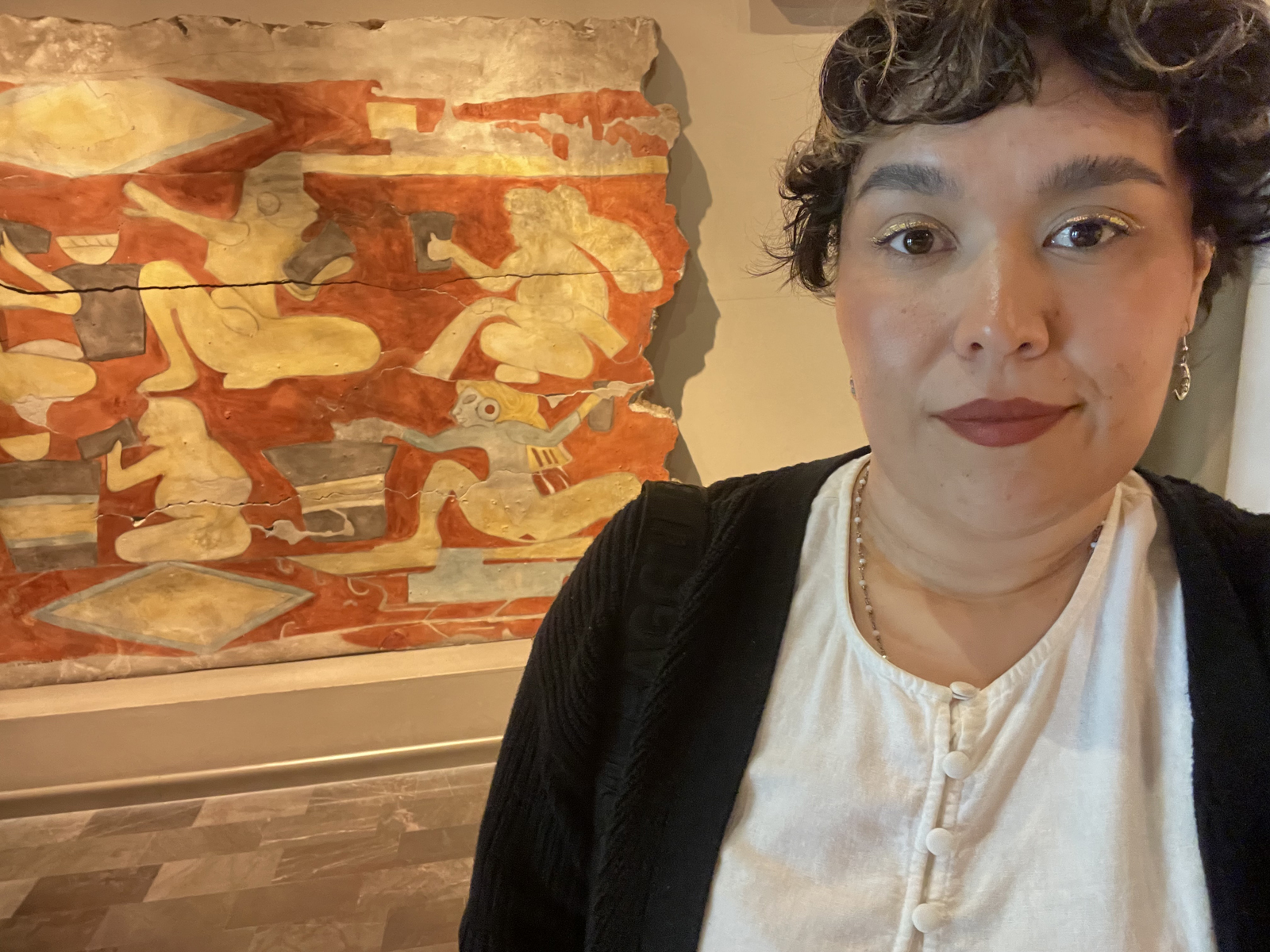
Sophia Gónzalez and Melayah Fawaz participated in California Rare Book School’s on-site and hybrid classes, taught by international scholars.
Graduate students Sophia González and Melayah Fawaz chose UCLA as the place to pursue their master’s in library and information science degrees, based on the opportunity to attend the only in-person MLIS program in California, and to learn from world-class faculty in the archival, library, and information fields.
This summer, Fawaz and González, who have completed their first year in the MLIS program, attended the California Rare Book School (CalRBS), which is housed in the UCLA Department of Information Studies, led by UCLA Professor of Information Studies and department chair Robert D. Montoya. The two students were awarded scholarships to attend CalRBS this summer, with courses taught online and in-person at institutions in Los Angeles, México City, and New York City.
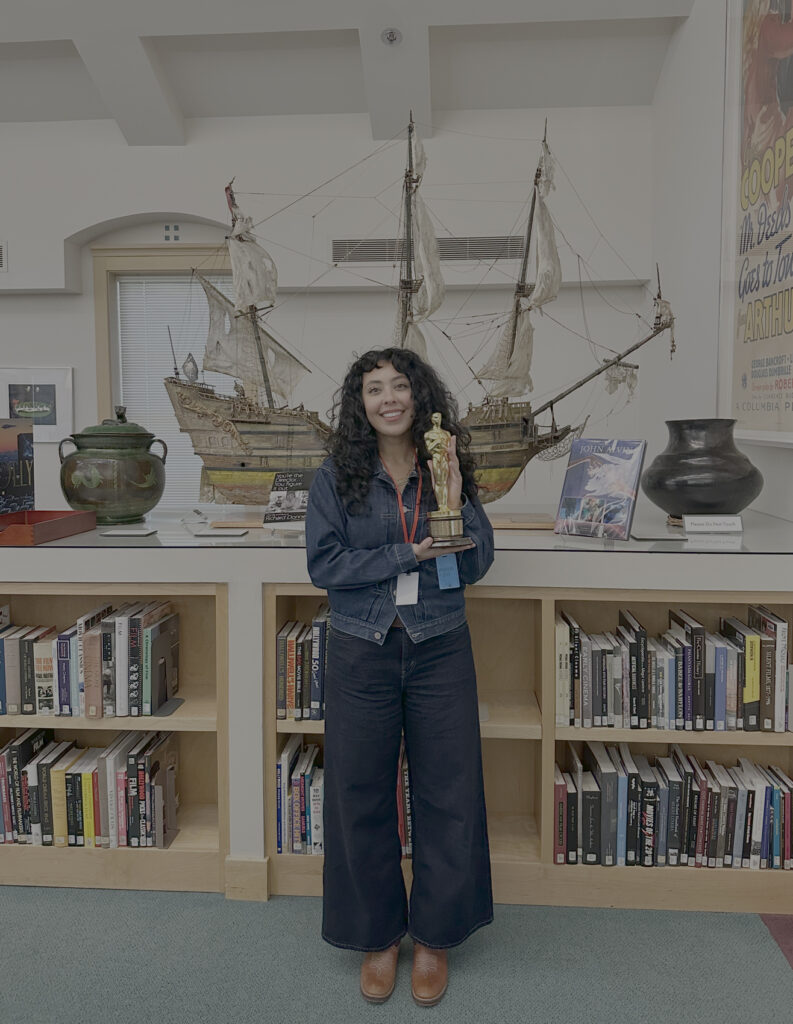
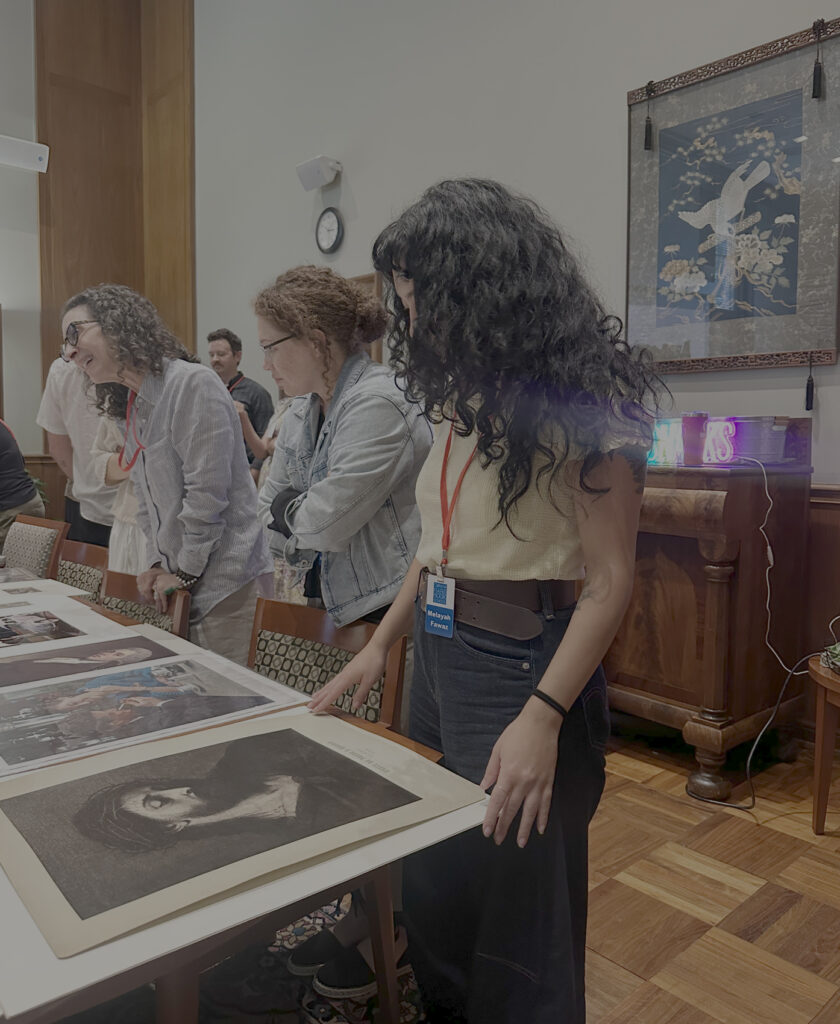
Fawaz is currently working in a student position at the William Andrew Clark Memorial Library, and volunteers at the Centennial Library in downtown Los Angeles, digitizing rare books. As a participant of the iSchool mentorship program, Fawaz was encouraged to attend CalRBS by her mentor Salma Abumeeiz. Fawaz received both full and partial scholarships to attend, “Beyond the Book, Acquiring, Identifying, Collecting, and Selling Ephemera and Archival Material,” which were taught at the Claremont College Library and “Archives and Climate Change,” which was taught online.
“I’m researching the books they have at the Centennial, listing them and finding as much [information] as I can online,” she says. “So, CalRBS makes a perfect fit for me. I want to take advantage of everything I can while being a student at UCLA.”
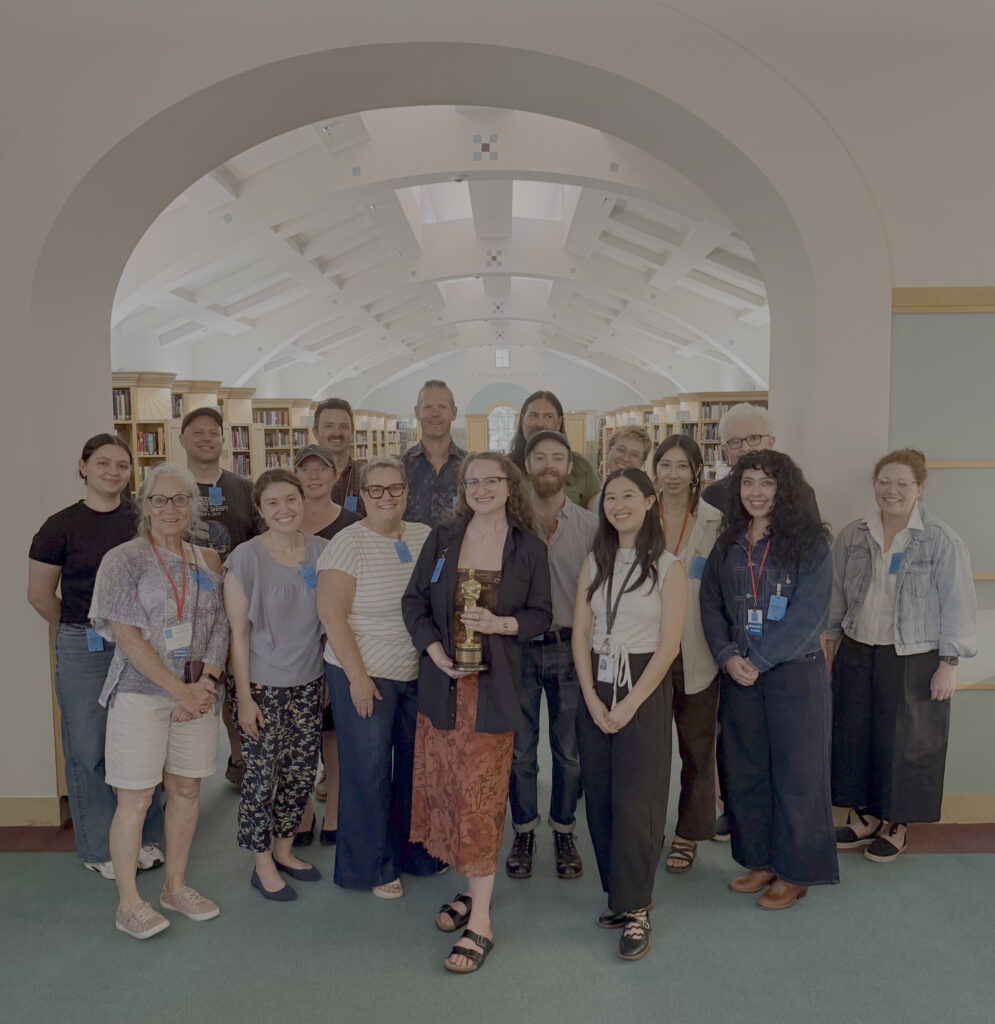
Fawaz’s CalRBS experiences included field trips to the Margaret Herrick Library at the Academy of Motion Picture Arts and Sciences, the private collection of illustrator and graphic designer Jim Heimann and attending a reception at the Clark Library.
“My experience with California Rare Book School was an opportunity to think more critically about the relationship between archives, cultural heritage, and the environmental challenges facing the profession,” she says. “I participated in the course ‘Archives and Climate Change,’ which encouraged us to consider how climate change affects not only the physical preservation of collections, but also the communities, histories, and places represented within them. I was particularly interested in conversations surrounding climate disaster, displacement, war, and the difficult decisions archivists may increasingly face regarding preservation, appraisal, and loss. The course broadened my understanding of archival sustainability and reinforced the importance of developing practices that are both environmentally responsible and attentive to the communities whose histories we preserve.”
Fawaz, whose emphasis in the MLIS program is archival studies, is creating a digital resource that tracks population movement from Lebanon to Dearborn, Michigan.
“I’m from Dearborn, so it’s kind of interesting to see how it’s portrayed in the media, and especially now with everything that’s happening in Lebanon, how that impacts the community,” she says. “I’ve had some issues with it, trying to not make it as political as the heart desires but making it more of a resource that can be built upon, with LibGuides and research [on] Dearborn and the migration that has happened there.
“I’m interviewing my grandma and my aunt, because they came from the South when active war was happening,” says Fawaz, who is of Lebanese descent. “They came as refugees, so that’s going to be an interesting component of the website as well.”
Fawaz, who achieved her BA in history and Middle Eastern studies at CSU Long Beach, has written an article on the Islamicate manuscript collection at Library Special Collections that has been accepted for publication in MELA Notes, the journal of the Middle East Librarians Association. UCLA Library’s collection of Islamicate and Arabic-script manuscripts ranks as the second largest in North America, though most remain unexplored, under-described and inaccessible.
González’s interest in archives and special collections is also both professional and deeply personal. At UCLA, she has found opportunities to explore digital collections, preservation, and the history of Mexican print culture while connecting with her family’s heritage, as well as academic and professional resources and opportunities that provide her with a pathway to an archival and library career.
“You have incredible scholars and practitioners you’re learning from in this program, and I’ve learned so much from my peers as well,” González says. “There are opportunities unique to the network that UCLA’s MLIS program has cultivated that fit what I was interested in exploring.”
Among those opportunities was CalRBS’s international course program, which took González to México City in July for Guillermo Morales’ course on “The Ancient Mexican Book: History, Bibliography, and Digital Access,” which was taught entirely in Spanish.
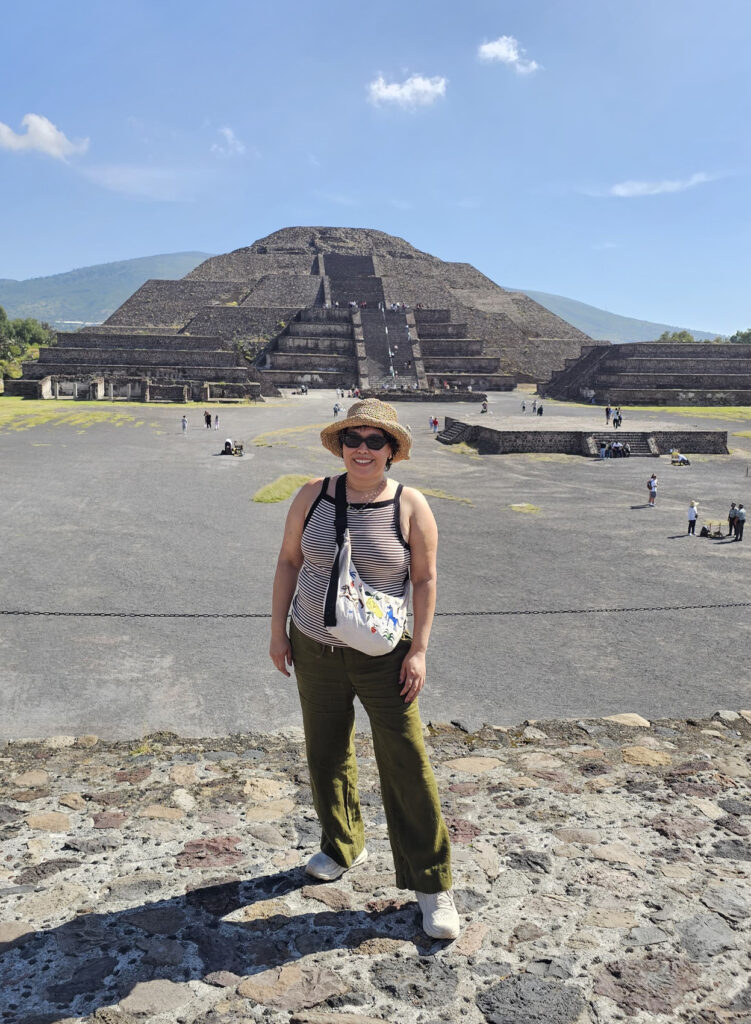
“I value experiential learning and was eager to take this opportunity to combine my academic interests with my longing to visit my family’s home country,” she says. “As a heritage speaker, I was unsure I had enough proficiency to meaningfully participate in the course, but I really wanted to take on this academic and personal challenge.”
The experience proved to be deeply formative.
“The class was incredible,” says González. “Getting to learn about México’s rich history and context in which print culture was developed deepened my appreciation of this field and for México in particular. Dr. Morales is incredibly knowledgeable and inspired a lot of discussion around cultural narrative, preservation, repatriation, and how México continues to navigate challenges to sharing its cultural treasures domestically and internationally.”
For González, those conversations continued outside the classroom through visits with librarians and archivists, as well as tours of libraries and cultural institutions, including Gonzalez’s favorite site, La Biblioteca Nacional de Antropología e Historia.
“The senior librarian, Rosa Cecilia Mejía, presented facsimiles of original Mesoamerican and colonial Mexican codices as well as conventual books from Franciscan, Dominican, and Jesuit friars,” says González. “She spoke with us about the complicated relationship between the Indigenous peoples and the religious orders that both contributed to the destruction as well as preservation of their records. It greatly shapes how México developed its cultural narrative and how it defines itself.”
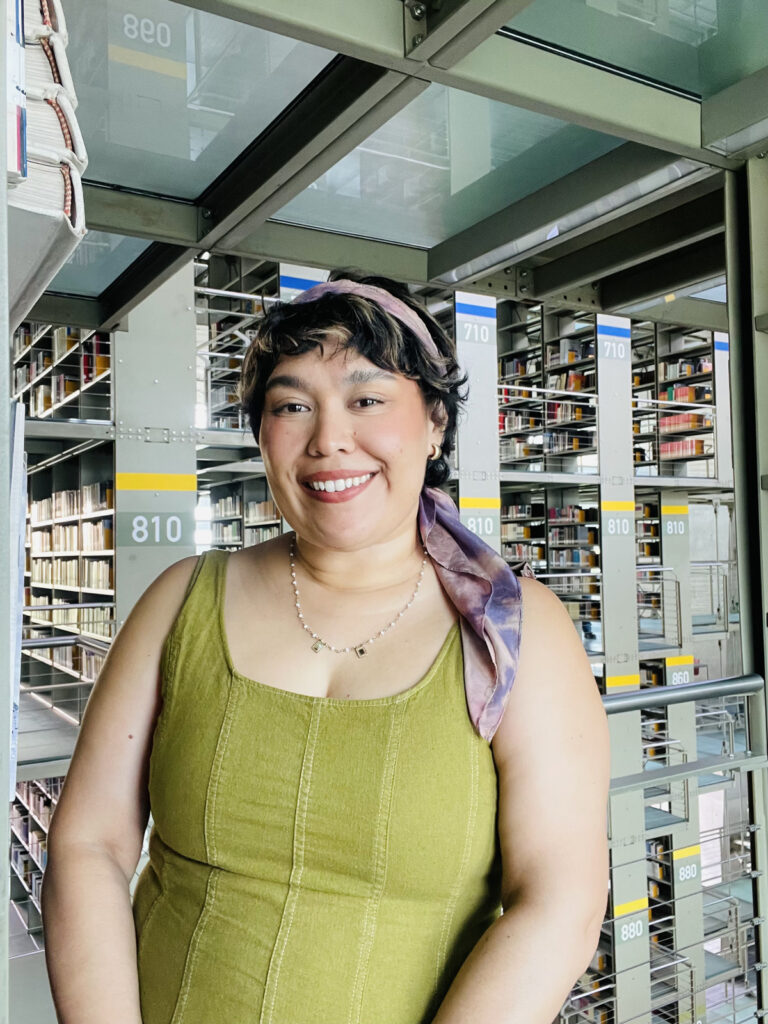
This experience has further shaped how González hopes to approach her own research. Guided by an interest in histories of migrant and marginalized communities, she plans to draw on her family’s history as she continues exploring the role of archives and special collections in preserving community memory. Through community and experiential opportunities at UCLA IS, she has been able to explore her academic interests, connect with her heritage, and begin considering how her own family’s history might contribute to the field.
“My abuelo was a bracero in the 1950s, and unfortunately not much research has been done around this program, though the Bracero History Archive has been a great resource I’ve reviewed with him,” says González. “I am eager to learn and contribute to this field because I see archives and special collections as sources of intergenerational and cross-cultural connection, as well as potential sources for community building, collective resistance, and transformation.”
A sense of community has been integral to González’s graduate education at UCLA from the beginning. Support from classmates and previous cohorts has enhanced her experience and was a determining factor in choosing the program, as was the department’s reputation.
“It’s a genuine support system and community we’re trying to build,” she says. “We want to see each other win. If there’s a position open where we work and we know folks who are interested in getting that experience and would be a great fit, we let them know and recommend them.
“You have really great scholars and practitioners that are teaching [and] in the industry,” González says. “Doors are going to be open for you much more if you get your degree at UCLA, because the network is just incredible.”
Fawaz, who planned to earn a graduate degree in history and to eventually teach, was encouraged by Dr. Mik Larsen and Sean Smith, her mentors at CSU Long Beach, to look at UCLA’s MLIS program, in view of her research interest in Middle Eastern studies. Fawaz chose UCLA because of the hands-on approach that an online program wouldn’t provide, as well as other opportunities across the University, including the chance to acquire a graduate certificate in Islamic studies.
“I started looking into it and I saw Michelle Caswell’s [and] Anne Gilliland’s work, and I was really inspired by that,” says Fawaz. “I never thought I could be an archivist – I didn’t even know it was a job. I’m first-generation [and] never had a lot of college direction, I’ve just done what I was interested in.
“I did my research and found that [UCLA] was going to suit me really well, and it has,” she says. “I’ve had a really wonderful first year. There are so many certificates and and opportunities… in the program that complement the direction that you want to go.”
Gonzalez says that the support from her classmates and previous cohorts has enhanced her experience at UCLA from the beginning.
“It feels genuine,” she says. “It’s not like our jobs define us but like we’re joined together by common interests and basically, wanting people to win.
“I think I knew it was the place for me when I went to Prospective Students Day, and I got to meet some of the now-graduating, cohort members,” says González. “They have gone out of their way to create a community and to be supportive of one another. We’re always looking out for each other. If we see there’s a job in the place we’re at, we’ll let people know.”
Fawaz echoes González’s sentiments and adds that she is inspired by both the wide range of talent and collegiality of her classmates.
“Everyone comes with a passion and a dedication,” says Fawaz. “You can also not know [something] and no one makes you feel uncomfortable for not knowing – that’s where you can talk it out, which is really, really cool. There is a lot of room for growth and support in the program with classmates and faculty alike—echoing what Sophia said, everyone wants to see each other win. In just one year, I made some wonderful friends too, that I feel like I’m going to know forever.”
Above: Sophia González in front of part of the “Murales de los Bebedores,” a nearly 2,000 year old mural on display at the Museo Nacional de Antropología in Mexico City. Photo by Sophia González