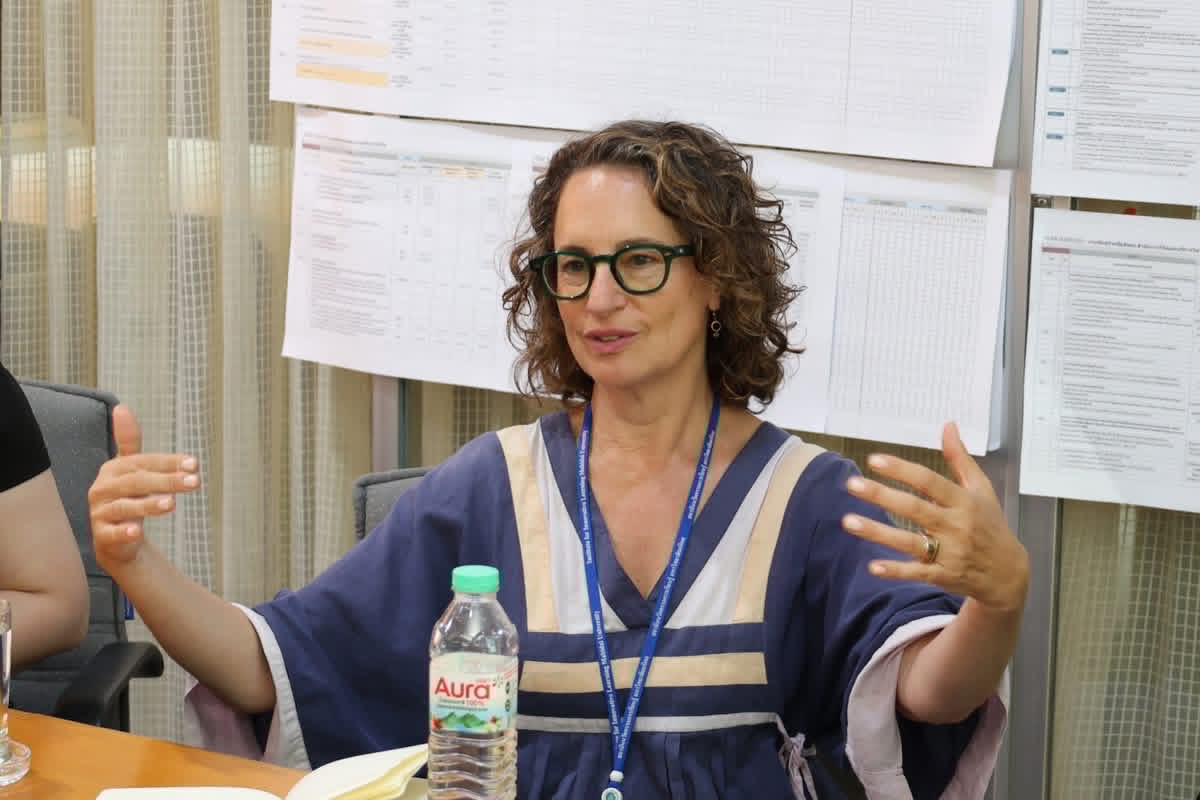
Director of the Computer Science Equity Project at UCLA Center X shares her expertise on inclusive STEM education with Mahidol University in Thailand.
Looking back at her experiences in the Fulbright Specialist Program at Mahidol University in Thailand, Julie Flapan recalls several “a-ha” moments from her visit this spring to Salaya, a city in Nakhon Pathom Province, west of Bangkok.
The director of the Computer Science Equity Project at UCLA Center X, Flapan leads professional learning, research and policy initiatives in K–12 computer science education, was selected to share her expertise for a project at Mahidol’s Institute for Innovative Learning on “Capacity Building for Inclusive STEM Education in the AI Era.”
A Bruin who achieved her Ed.D. in UCLA’s Educational Leadership Program and ensuing academic career in the UCLA School of Education and Information Studies, Flapan says that a mid-career Fulbright Specialist assignment was “a beautiful, humbling reminder that no matter where we are in our careers, there is always more to learn, discover, and experience.”
“During my junior year abroad in Spain and other cross-cultural experiences, I discovered how travel cracks open your mind and heart,” she says. “I am deeply grateful for my liberal arts experiences in higher education for instilling in me a lifelong devotion to curiosity, empathy, experiential problem-solving, and the foundational art of learning how to learn.”
As a Fulbright scholar-in-residence, Flapan facilitated a day-long workshop at Mahidol University, “STEM Education in the AI Era: Global Perspectives,” and a two-day public workshop for educators across Thailand, organized alongside Mahidol alumni, education and science faculty, and local teacher networks. The presentation titled, “Future-Ready STEM Education: Design and Ethical AI Integration for All,” connected U.S. perspectives, global research and Thai classroom practice to support meaningful STEM teaching and learning.
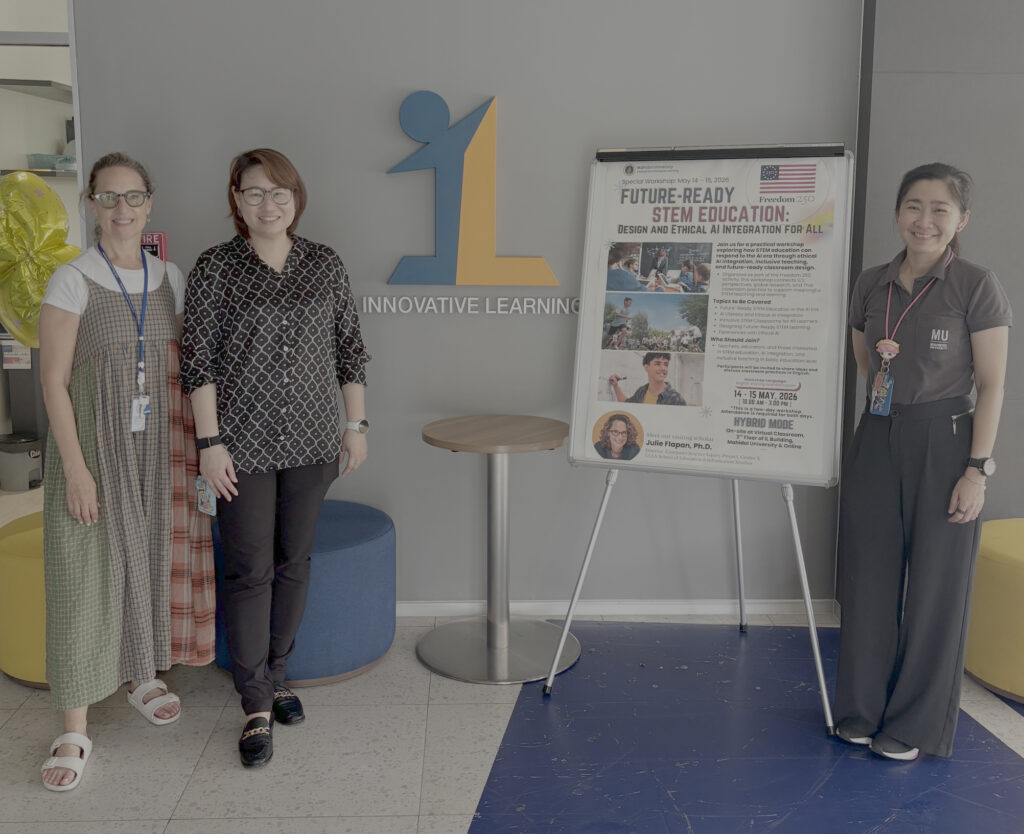
Students from Myanmar, Laos, Bangladesh, Vietnam, Singapore, Cambodia, the Philippines, China, and Korea attended the workshop, which was part of Fulbright’s “Freedom 250” program, which celebrates the 250th anniversary of the Declaration of Independence and Fulbright’s 80th anniversary.
“As a natural tech-skeptic who leans toward critical analysis rather than blind tech advocacy, I intentionally built a workshop focusing on both the promises and perils of educational technology,” says Flapan. “However, my participants quickly challenged me with a powerful truth: being skeptical is fine, but how do we handle the undeniable reality of tech’s everyday presence in our classrooms?”
“Supported by my colleagues at my host, Mahidol University, I had no choice but to depart from my planned agenda and pivot,” she says. “I listened deeply to my students’ actual needs; they appreciated the high-level critique I offered, but they wanted concrete strategies for designing inclusive STEM instruction that integrated AI and emerging technologies into resource-diverse classrooms. Ultimately, I had to practice what I preach: meeting learners where they are.”
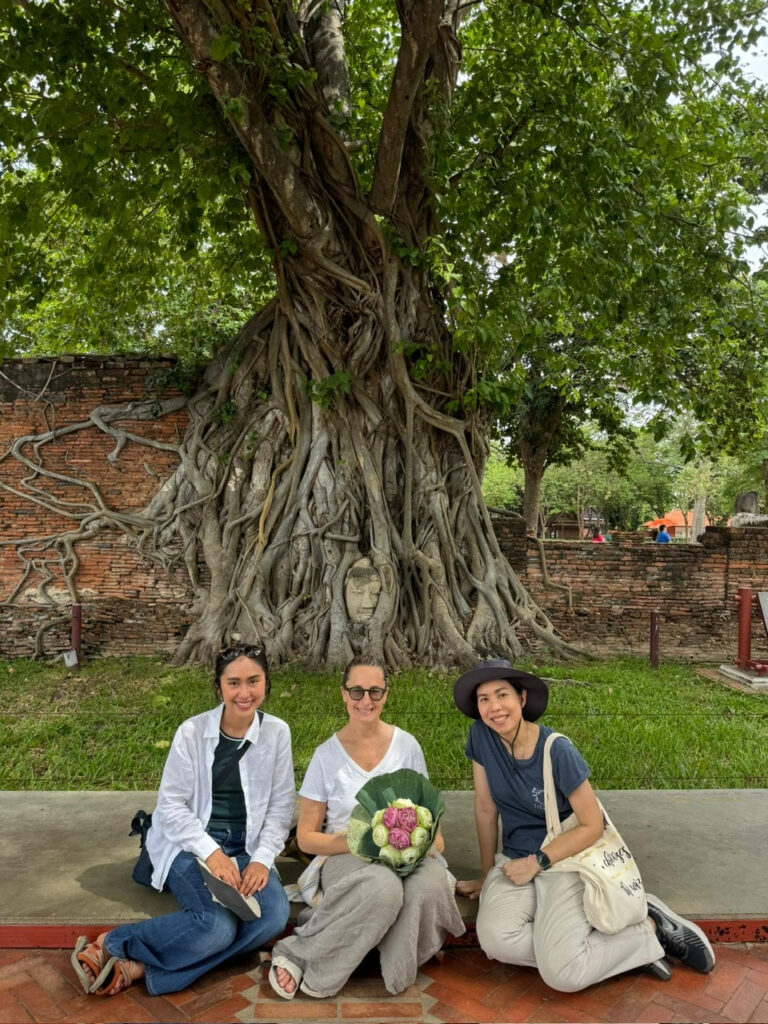
Experiencing a centuries-old culture was for Flapan “a rich tapestry of historical and cultural influences [that] shape Thai identity.” She says that while technology eased her travel preparations, the act of physically being there was what resonated throughout her visit, both personally and professionally.
“Although technology can act as an accelerator to shape global and local identities, there are just some things technology simply can’t replace,” says Flapan. “The unique IRL (in real life) experience of travel as a Fulbright Specialist was a special opportunity to immerse myself deeply in another country. addressing real field-driven needs, sharing my expertise, all while experiencing a culture through the eyes of locals who proudly shared their heritage as my hosts.”
Flapan viewed an exhibit at the Bangkok National Museum titled, “What is Thainess?” which she says, “forced me to turn the mirror inward,” and ask herself what it meant to be an American educator in Southeast Asia.
“As a seasoned teacher educator and facilitator of anti-bias education, I value introspection and shared dialogue to examine stereotypes and prejudice that are rooted in systemic inequality,” says Flapan. “In the U.S., I am visually part of the majority, whereas in Thailand, I was more attuned to my more obvious ‘non-Asian’ identity that made me a minority. I returned home with a deeper commitment to cross-cultural exchanges that help build empathy between majorities and minorities (in whatever dimension that might be) and the diverse contexts in which we experience them.”
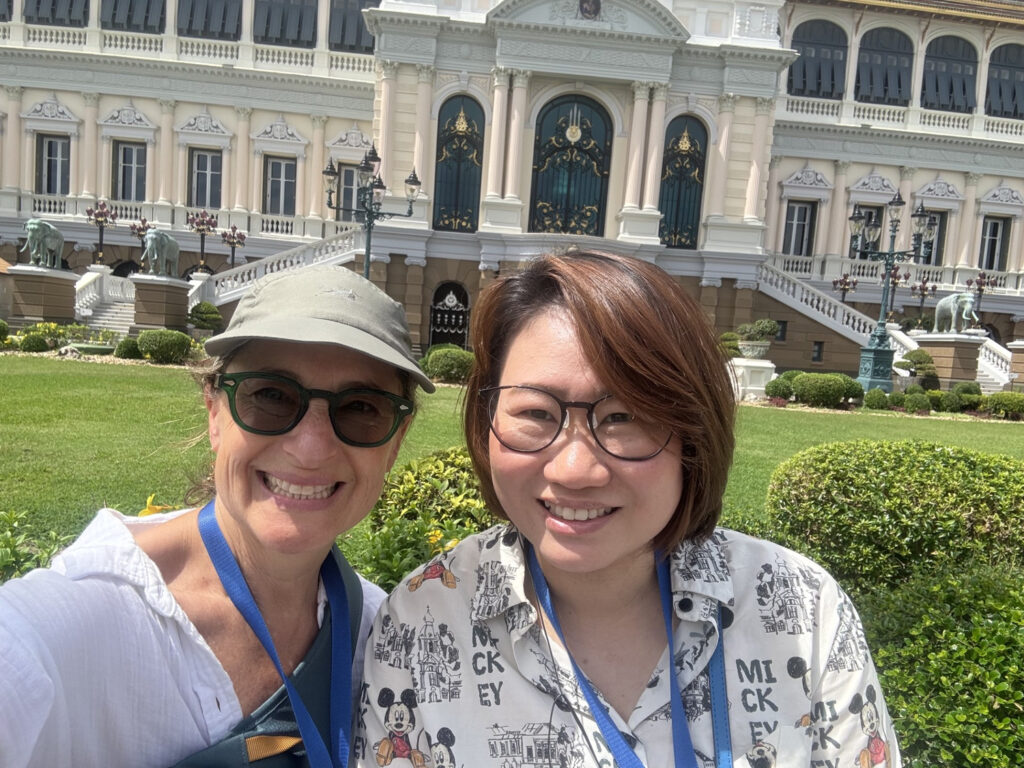
Flapan says that her visit to Mahidol University in Thailand vividly showed her that the effects of AI – both positive and negative – are of global concern.
“No matter where we live, we are all grappling with the same existential disruptions: AI’s effect on teaching and learning, discerning fact from algorithmic manipulation, academic integrity, economic shifts, environmental sustainability, and mental health,” she says. “Technology is rapidly expanding our world yet simultaneously making it smaller as we collectively navigate its impact on our shared humanity.”
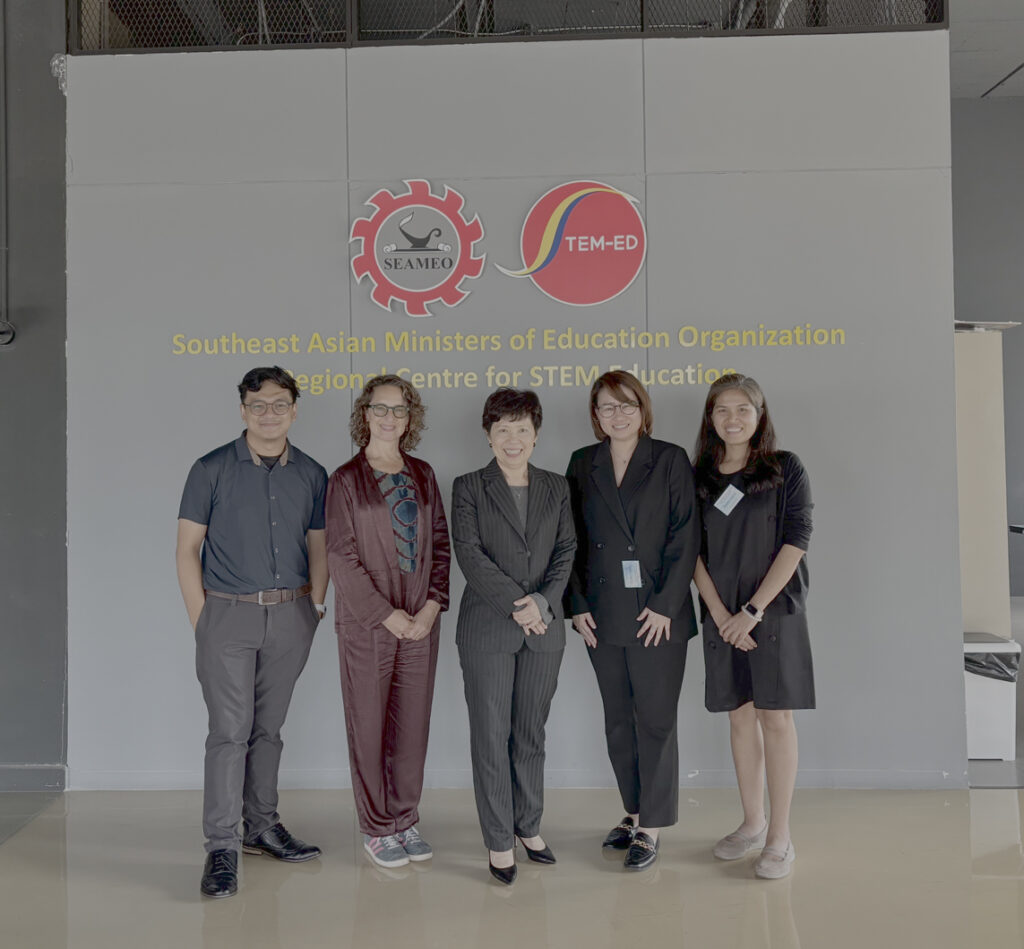
Through various public seminars, and meetings with heads of the National Science Museum, Southeast Asian Ministers of Education Organization, along with research mentoring of doctoral students, among many activities, the program provided an opportunity to connect and support each other’s shared challenges of mitigating AI’s harms while leveraging its potential to build a more inclusive future.

As director of The UCLA CS Equity Project and founding director of the statewide coalition Computer Science for California (CSforCA), Flapan leads research and policy initiatives focused on equity in CS K-12 education, advancing high quality teaching and learning opportunities in computer science education including access to courses and teachers, examining belief systems, classroom pedagogy, and larger educational policies that impact access and equity and inclusion in computer science and AI education.
The Fulbright Program is the flagship international educational exchange program sponsored by the U.S. government and is designed to build lasting connections between the people of the United States and the people of other countries. Flapan is one of over 400 U.S. citizens who share expertise with host institutions abroad through the Fulbright Specialist Program each year, selected for their academic and professional achievement, demonstrated leadership in their field, and potential to foster long-term cooperation between institutions in the U.S. and abroad.
Flapan earned a B.A. in psychology from Pitzer College, a member of the Claremont Colleges, and her M.S. in education and social policy from Northwestern University.