UCLA senior lecturer among global scholars discussing literacy in digital and green contexts at the organization’s 60th International Literacy Day.
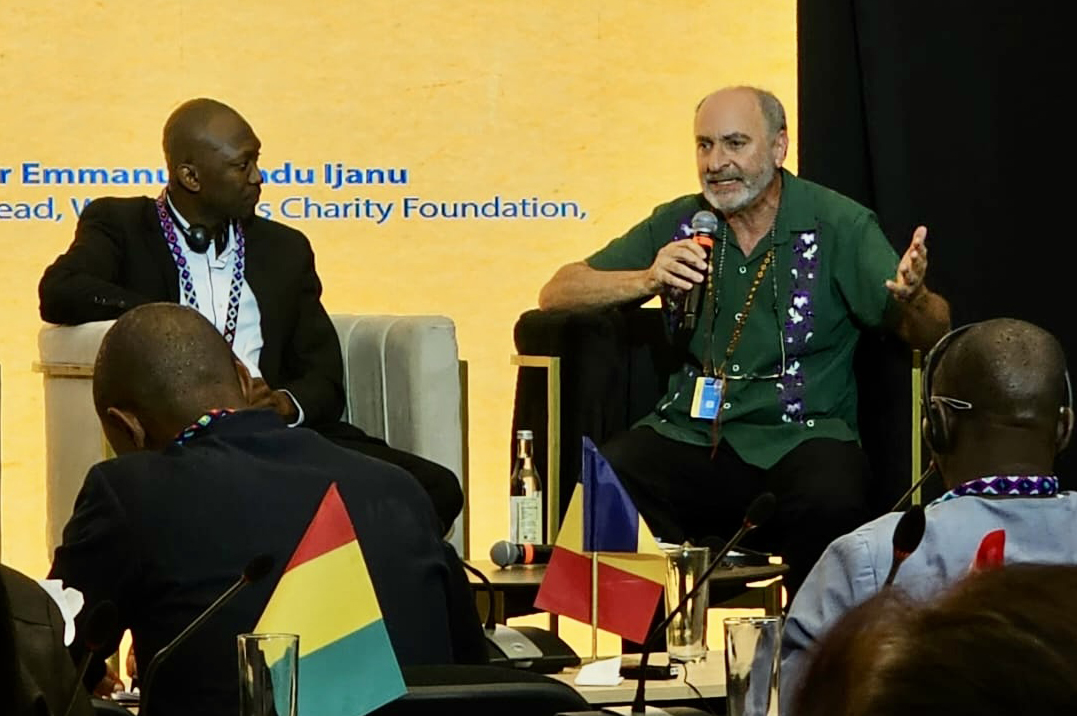
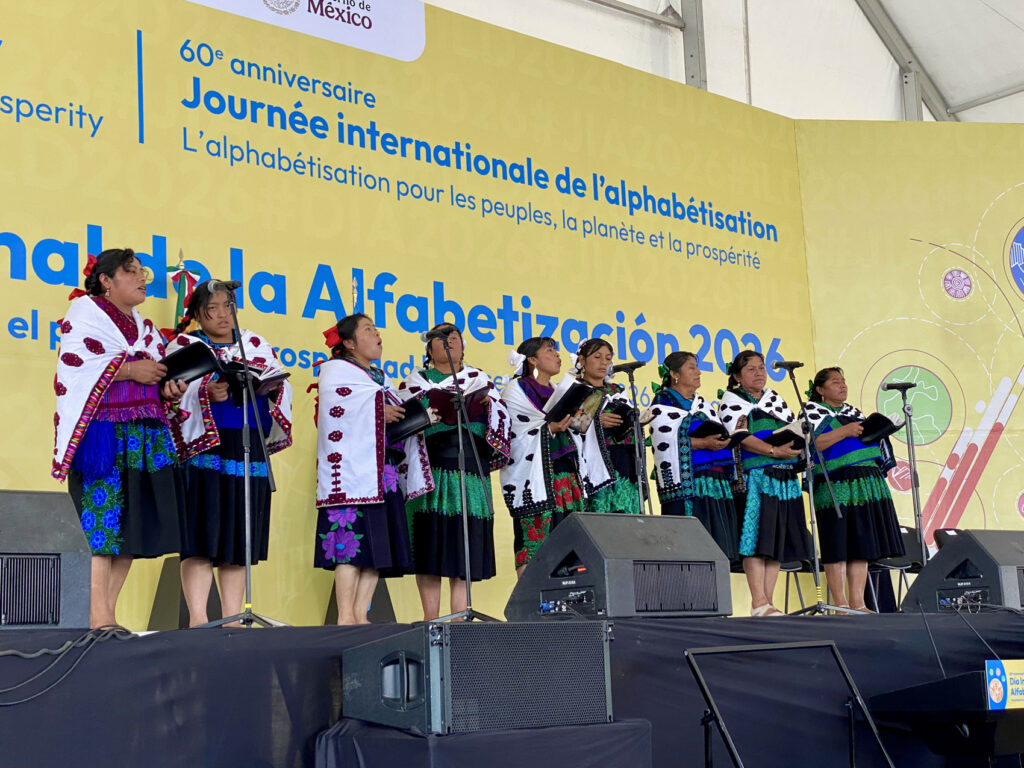
Jeff Share, senior lecturer in the UCLA School of Education and Information Studies, took part in a panel discussion titled, “Deep look at literacy in the digital and green transitions for social, economic and environmental justice,” during UNESCO’s 60th International Literacy Day Celebration in Chiapas, Mexico on Sept. 9. The editor of the 2024 book, “For the Love of Nature: Ecowriting the World,” Share discussed his teaching and work on critical media literacy and environmental justice.
“Literacy needs to be teaching people to think critically about all communication; about the languages, the words, and the stories that we’re seeing, that we’re hearing, that we’re sharing, and that we’re creating as well,” said Share, who co-authored “The Critical Media Literacy Guide: Engaging Media and Transforming Education,” with UCLA Distinguished Research Professor Douglas Kellner.
The panel discussion explored the role of literacy – reading, writing and numeracy skills – in the dual digital and green transitions and the implications of these transitions for how literacy policies, programs, and practices are managed, as well as key issues requiring particular attention to policy to ensure that literacy development contributes to creating more just and sustainable societies.
Share noted that the global climate crisis is interconnected and that “environmental justice is social justice; and social justice is environmental justice. We can’t separate them,” and that, “… what we do with literacy must be different. It must address how we live in this changing climate, in a world where we can still make changes.”
Share said that learning from Indigenous ways can provide “knowledge and wisdom about how we can live a more sustainable way of life.
“The groups that identify as Indigenous tend to be the ones that have resisted capitalism the most; have resisted colonialism,” he said. “We’ve been looking at how this Western ideology of domination, and the hierarchies of power have created such irresponsibility and danger for our very existence on the planet.
“How can we shift that logic of this pyramid, where humans – and even men above women – are at the top of the hierarchy and then animals and plants and everything goes downward, in terms of values and priorities?” asked Share. “How can we shift that logic of domination to a more ecological worldview, an idea of a circular way of seeing the world and understanding our interdependence, our interconnections? Because that’s essential if we’re going to change the trajectory that right now, is unsustainable and very dangerous.”
Share said that solutions to the climate crisis do not lie in technology but in “changing what we’re doing.
“Science has already told us what’s causing the climate crisis and what we need to do to stop it.,” he said. “This is now an issue for the humanities: for psychology, for sociology, and especially for education; not that we as educators will solve everything but we need to be one of the participants in challenging the thinking that’s going on, the inertia, the lack of political motivation to stop burning fossil fuels, to stop extracting from the earth.”
Share said that Paulo Freire’s concept of “critical consciousness” is essential in understanding “that education is political.”
“Literacy is never neutral, so we should use that in a positive way to transform society, to be more sustainable, humane, and just” said Share. “It’s about adding more of the ‘p’ words to the goals of this conference from just ‘Literacy for the people, planet, and prosperity,’ to also include Timothy Ireland’s call to add, ‘peace,’ as well as praxis, perseverance, and problem-posing pedagogy.
“And, a word that we seldom talk about but that I think is essential, that goes along with love and care, is the idea of ‘pleasure,’ that education and learning should be joyful,” added Share. “We need to be political and we also need to be living what in the Andes of Ecuador they call ‘Sumak Kawsay,’ in Spanish they translate this as ‘el buen vivir’, and in English it roughly translates to a better way of living in relationship with respect, reciprocity, and responsibility to all humans and the natural world.”
Above: Jeff Share, senior lecturer in the UCLA School of Education and Information Studies (at right), took part in a panel on global solutions for literacy in the digital and green transitions for social, economic and environmental justice. At left: Dr. Emmanuel Madu Ijanu, programme lead, Waer Waters Charity Foundation, Nigeria. Courtesy of Jeff Share