“Bibliotactics: Libraries and the Colonial Public in Vietnam” examines the duality of libraries as an instrument of French control that also provided “possibility and community” to the Vietnamese reading public.
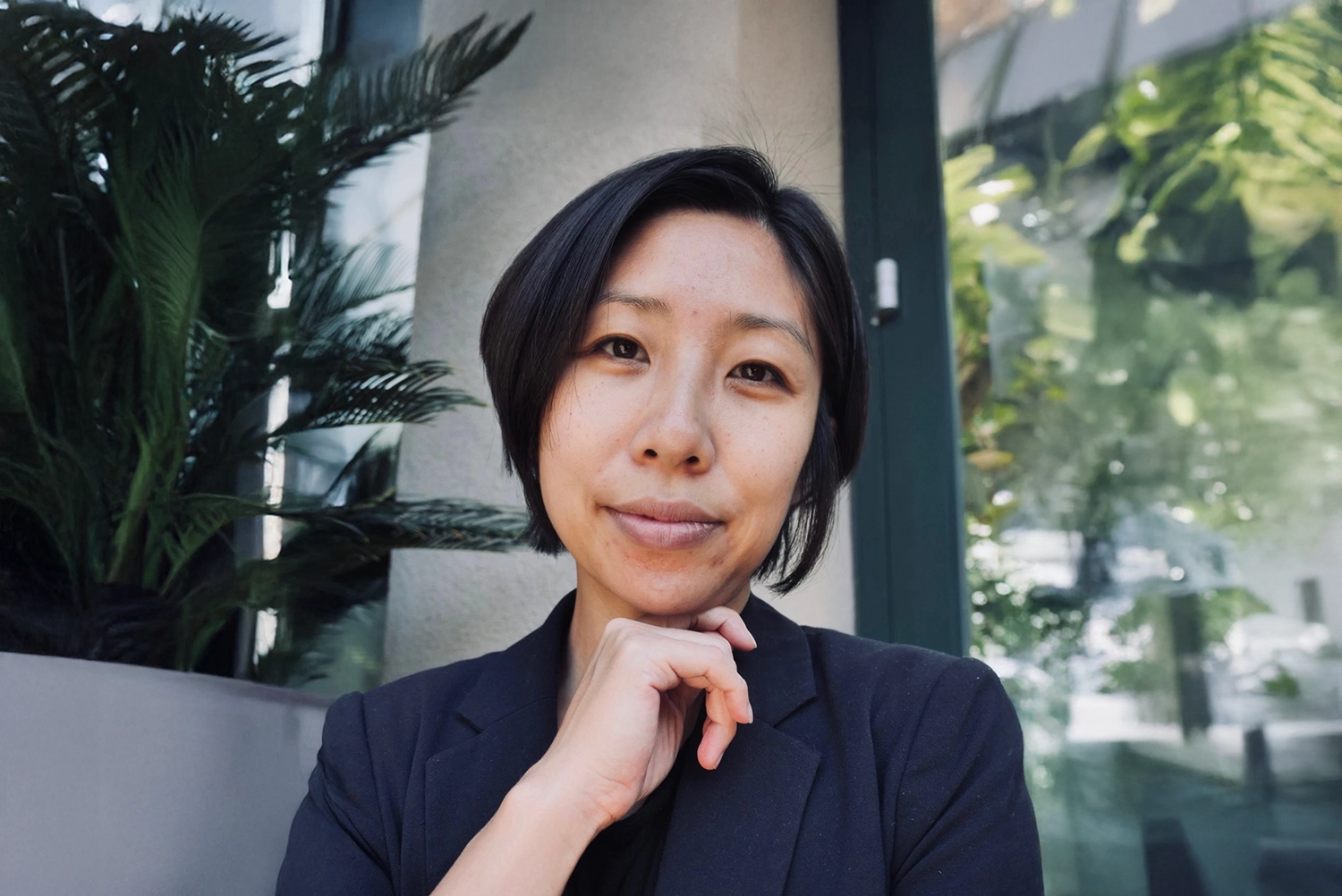
In her forthcoming book, “Bibliotactics: Libraries and the Colonial Public in Vietnam” (UC Press, 2026), Cindy Anh Nguyen reveals the little-known history of how libraries in early 20th Century Vietnam served as governmental institutions that enforced colonial dominance yet provided a forum for Vietnamese intellectualism and public life. Nguyen, an assistant professor of information studies at the UCLA School of Education and Information Studies, uses transdisciplinary research to examine historical and socio-technical production of knowledge in Southeast Asia through libraries, encyclopedia, visual media, and language through feminist, decolonial, and critical approaches.
At UCLA, Professor Nguyen also has an appointment in the Digital Humanities program, is an affiliate faculty member in Asian Languages & Culture and serves on the faculty advisory committee for Data X and the Center for Southeast Asian Studies. Her work has appeared in the Journal of Vietnamese Studies; Verge: Studies in Global Asia; the Journal of Interactive Technology and Pedagogy; the Vietnamese American Refugee Experience Model Curriculum; and in numerous edited volumes on history and digital humanities.
Nguyen is the recipient of a 2025 National Endowment for the Humanities Research Fellowship in Cambodia from the Council of American Overseas Research Centers; a Chancellor’s Arts Initiative Grant from UCLA (2024); the University of California Chancellor’s Postdoctoral Fellowship (2021); and the Phyllis Dain Library History award from the American Library Association (2021).
This summer, Professor Nguyen organized a transnational library event for leading cultural heritage institutions in Cambodia titled, “Empowering Cambodian Libraries: Building Sustainable Digital Futures,” held at the Center for Khmer Studies in Siem Reap. She presented sessions on “Digital Library User Experience: Access, Application, Activation” and “Example Case Studies: Exploration, Evaluation, Application for Cambodia.” At the workshop, Casey Winkleman, librarian and manager of the IS Library and Media Preservation Lab in the UCLA Department of Information Studies and co-director of the UCLA Center for the Preservation of Audiovisual Heritage, presented a session on, “Sustainable Digitization and Digital Preservation Frameworks.”
Nguyen also presented a Data X event at UCLA on “Critical Digital Humanities Praxis with Lauren Klein and Roopika Risam,” two leading scholars in digital humanities and critical data, whose projects Data by Design and Data Empire have contributed to feminist and postcolonial digital humanities. Through UCLA’s Data X, Nguyen is the convener of the Critical Data Lab, a collaborative convergence network to explore critical and creative applications within sociocultural data centric research.
Professor Nguyen earned her PhD in history at UC Berkeley, her master’s degree in history at Michigan State University, and her bachelor’s degree in history and Southeast Asian studies at UCLA. Nguyen is also a public scholar and community artist whose work can be viewed on her website.
What inspired “Bibliotactics”?
Cindy Anh Nguyen: The inspiration is definitely a personal one. I was born in a refugee camp when my family fled Vietnam, post-war in the 1980s. I grew up in public libraries in the United States, and I had always, especially as a young person and as an immigrant refugee, found it to a place of possibility and community. The social and public space of it always informed me as a human being but also informed how I approached the book.
I decided to focus on the library in Vietnam. I’m a cultural historian by training and my focus was always on Southeast Asia. I found it to be really important to think about an institution in which two things were playing out – French colonialism but also understanding social life in the 20th century. The main focus is from 1917 to 1958, but I have a lot of background before the French came too, because I don’t discuss libraries in a vacuum, but within the context of millennia long histories of Vietnamese reading culture.
Having grown up in the United States, I found it important to reposition Vietnam, not just as a war because so much of the understanding about Vietnam is from U.S. education about the Vietnam War. That’s what pulled me to look at cultural and social history during the French colonial period, before my family fled the country.
What was the reading culture like at that time in Vietnam?
Nguyen: The period I focus on is during a shift from Confucian systems of privileged elite education in order to become a civil servant in the bureaucracy. That is, being trained in letters and characters in Chinese and Vietnamese script and trained by a very small community of teachers. To be a reader was such a privilege during this time. The shift in the twentieth century is the expansion of education opportunities in French and vernacular Vietnamese. Why I examine the libraries is really important because that is a moment in which a cultural educational institution was established that widened the possibility of literacy and access to reading matter.
While the majority of the materials I examine are in French, my argument is that during 1917 to 1958, reading culture was a multilingual one. People were engaging in those three languages, in Chinese, in Vietnamese, and in French … writing in those languages and speaking in those languages.
Reading culture goes beyond the book and the solitary reader. It was about reading in the library space but also reading out loud socially. Through the book I wanted to expand on the meaning of reading beyond the Western sense of solitary and quiet reading. In reality, the colonial library institution is a space where people were reading and engaging in much more dynamic ways.
Were Vietnamese writers and literature included in the public library?
Nguyen: This period is a really important one because you have the transition of a small elite group who were Vietnamese and writing in Chinese, to more educational structures teaching in both French and Vietnamese. In the 1920s, you had an explosion of a literati, a reading and writing intellectual class of individuals, the majority of whom are men.
My fourth chapter focuses on women’s reading and women creating community reading rooms. This chapter also explores the expansion of Vietnamese vernacular publishing sphere, experimenting in dynamic genres. This was happening around the world too, and you see in the 1920s, [writers] taking inspiration from Western classics like, “The Three Musketeers” and “The Count of Monte Cristo” by Alexander Dumas, but also other books … Arthur Conan Doyle, detective fiction, realist fiction genres around modern life. There were a lot of southern writers who wrote about peasants and rural life in a similar way to Pearl S. Buck’s “The Good Earth.” Hồ Biểu Chánh is one of the authors, and his Vietnamese language books and short stories circulated in the book mobile libraries during this period.
You have all these new fiction genres that have been attributed to a Western canon but instead were reimagined and reinvented all around the world – India, China, Southeast Asia, and Vietnam. The Vietnamese are now writing these experimental genres with their own localized twist; recreating prose and poetry, bridging between fiction and nonfiction, finding ways to critique colonial society and inequality through literature. These materials circulated widely in the library and in newspapers.
This is also a period of translations and transliteration. As I mentioned before, Vietnamese had a long history of character script based literature in Sinitic and character based vernacular Vietnamese called Nôm. One such famous work of literature in character script-based Vietnamese language Nôm [text], is called “The Tale of Kieu,” written by Nguyễn Du. A 19th century Vietnamese epic poem, this work is seen as one of the classic Vietnamese melodramas, like romance meets moral ethics … a cloak and dagger type approach [with] bad villains, good villains, and a lot of moral questions. Notably, the protagonist is female and this work been raised as the moral, political, and cultural quintessence of Vietnamese literary life during this time. Written originally in character based script, during the 1920s Vietnamese intellectuals started to rewrite it in a romanized script form (quốc ngữ), which more people could read and is the current script that we see in Vietnam today. There were also translations to French and plays and adaptations of the work for the larger public.
What was the impact of these bilingual libraries on the public?
Nguyen: The majority of the writing in the library was in the French language – I do want to emphasize that. While there was a space for the literary creativity, most of the collections were in French, and there was a political reason and rationale for why the government invested so much in building up this French language library.
The library was like a propaganda engine of French culture in Vietnam, a storehouse of French knowledge. At the same time, I do want to note that there were also Vietnamese intellectuals and journalists writing in the French language in Vietnam and publishing important contemporary literature and contributing to public discourse.
My argumentative approach is to hold both of those truths: the fact that the library was a propaganda engine sponsored by the government, dispersing French culture globally. And then, because the majority of users of the library were Vietnamese, even though they’re engaging with French texts, they’re engaging with it defiant, subtly creative, and self-determined ways.
They’re using the library for a social studies space; they’re using it to teach themselves French to read maps, to access free materials. They’re using it as a study space and to access the Vietnamese materials that are there too. There were these empowering elements to education and self-directed knowledge-making in the library. That contradiction of French control and hegemony versus Vietnamese resistance or creative intellectualism both take place in the space of the library.
How did the libraries impact Vietnam economically and socially?
Nguyen: The period I examine – about 1917 to the 1950s – is a period of rapid urbanization and a larger middle class. You see that happening with more individuals going to both public and private schools. You see conspicuous consumption and the rise of consumer culture in the cities in this context.
What is interesting is that the Vietnamese were the main employees of the whole library system. It was treated like a government position; there was social mobility. Many of the Vietnamese librarians used their job as a space for independent education, reading all the time and reading widely. Some of the librarians are also researchers and publishing in newspapers.
I examine newspapers where the Vietnamese emphasize the social responsibility of governments to provide spaces like public libraries. An interesting discourse emerges in the 1920s and 30s where libraries are purported to solve social problems such as unemployment, or for young people, listlessness … not [being] sure what to do. They equate [the library to how] when someone is sick, there’s a hospital or a doctor; when society is sick, you have a library.
They also critique [the system] in that there’s not enough. [They want] more libraries in the central region of Vietnam and in the countryside for younger people. There’s a demand for more public library systems and a call for the government to invest in that.
How have you been able to employ digital humanities in your research?
Nguyen: For this specific book, digital humanities gave me the methodological training to approach historical sources as data and as contested data too. There were a lot of library circulation statistics of how many people entered the library, how many books they checked out, when they entered, and what race and gender they were, as well as what they read. There was a lot of unstructured data because they were primary sources and digital humanities gave me the intellectual background to structure and organize the data in systematic ways and to criticize it to see which spaces have data silences and what data I don’t have.
Digital humanities is also connected with my community-engaged scholarship. As a historian, I engage closely with archivists and librarians, and what I hear from my engagement with them that’s been of rising importance is the role of digital scholarship, digital literacy, digital information systems.
My work this past summer in Cambodia with my Vietnamese colleagues and Vietnamese librarians was around questions of digital futures within libraries. My community-engaged research co-designs with my community partners around urgent contemporary needs in knowledge transmission, preservation, and information literacy. My book also engages with Cambodia as well, as part of French Indochina and the legacies of those information systems or inequalities that had roots in the colonial period, and what they might look like today in terms of language, education, and information literacy.
“Bibliotactics: Libraries and the Colonial Public in Vietnam” will be released on Jan. 13, 2026; an open source version will be available as well.