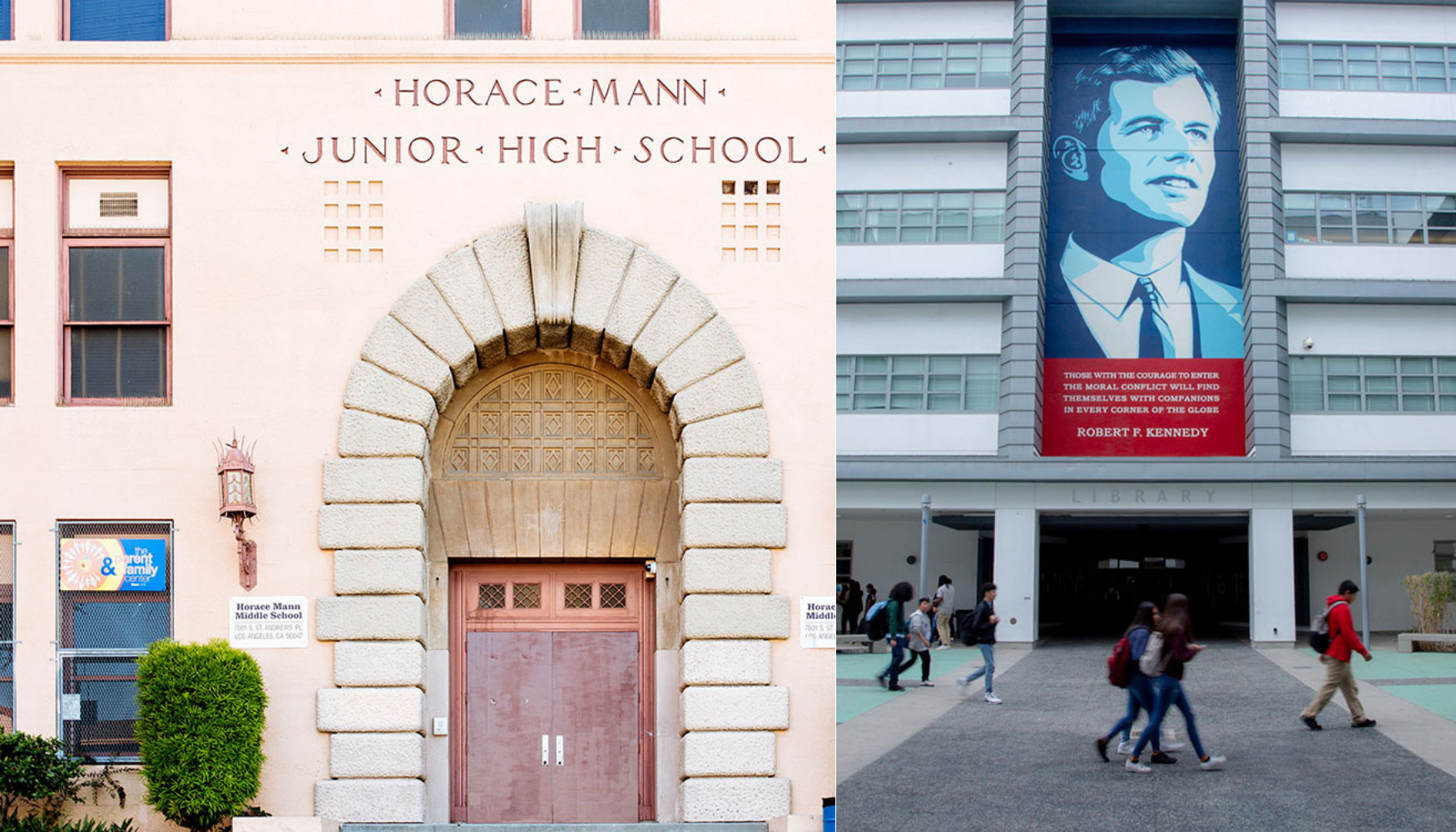
Cinthya Salazar, Marisa Saunders take reins of groundbreaking effort
Cinthya Salazar and Marisa Saunders have been named co-directors of the UCLA Center for Community Schooling, replacing former director Karen Hunter Quartz who retired in June. Together, they will lead an effort to support and learn from the UCLA community schools in the Los Angeles Unified School District and fuel and further the expansion of community schooling across the state through the California Community Schools Partnership Program. Both women lead with kindness, humility, and a passion for equity.
Salazar is an associate professor in the UCLA School of Education and Information Studies. Her research has explored the trajectories of undocumented students and the mechanisms they use to access, persist, and succeed in higher education. She is an expert in participatory action research and engages undocumented students as co-researchers to generate student success models that can promote their college retention.
Saunders is the former research director of the Center for Community schooling and has served public schools nationwide for more than 25 years as a researcher and practitioner. Through community-engaged research strategies, she has examined how teacher leadership, school-community partnerships, and collaborative approaches to school improvement can strengthen educational opportunities and improve student outcomes. As co-director, Saunders will continue to research and support K-12 transformation efforts that address longstanding educational inequalities such as community schooling.
The UCLA Center for Community Schooling was established in 2017 as a campus-wide initiative to accelerate and strengthen the capacity of universities to serve as critical partners providing sustained support to community schools. The effort is informed by the work of the UCLA Community School and Mann UCLA Community School in Los Angeles. A core value of the Center is a deep commitment to the advancement of democracy, justice and education that recognizes and builds on the assets of students, families, and teachers to foster access to educational opportunities and resources for low-income students of color. The Center is also deeply engaged in research, teaching and service activities that advances the broader community school’s movement. The Center is one of four partners who lead the State Transformational Assistance for California’s multi-billion-dollar investment in community schools, as well as a regional training center for university-assisted community schools across the nation.
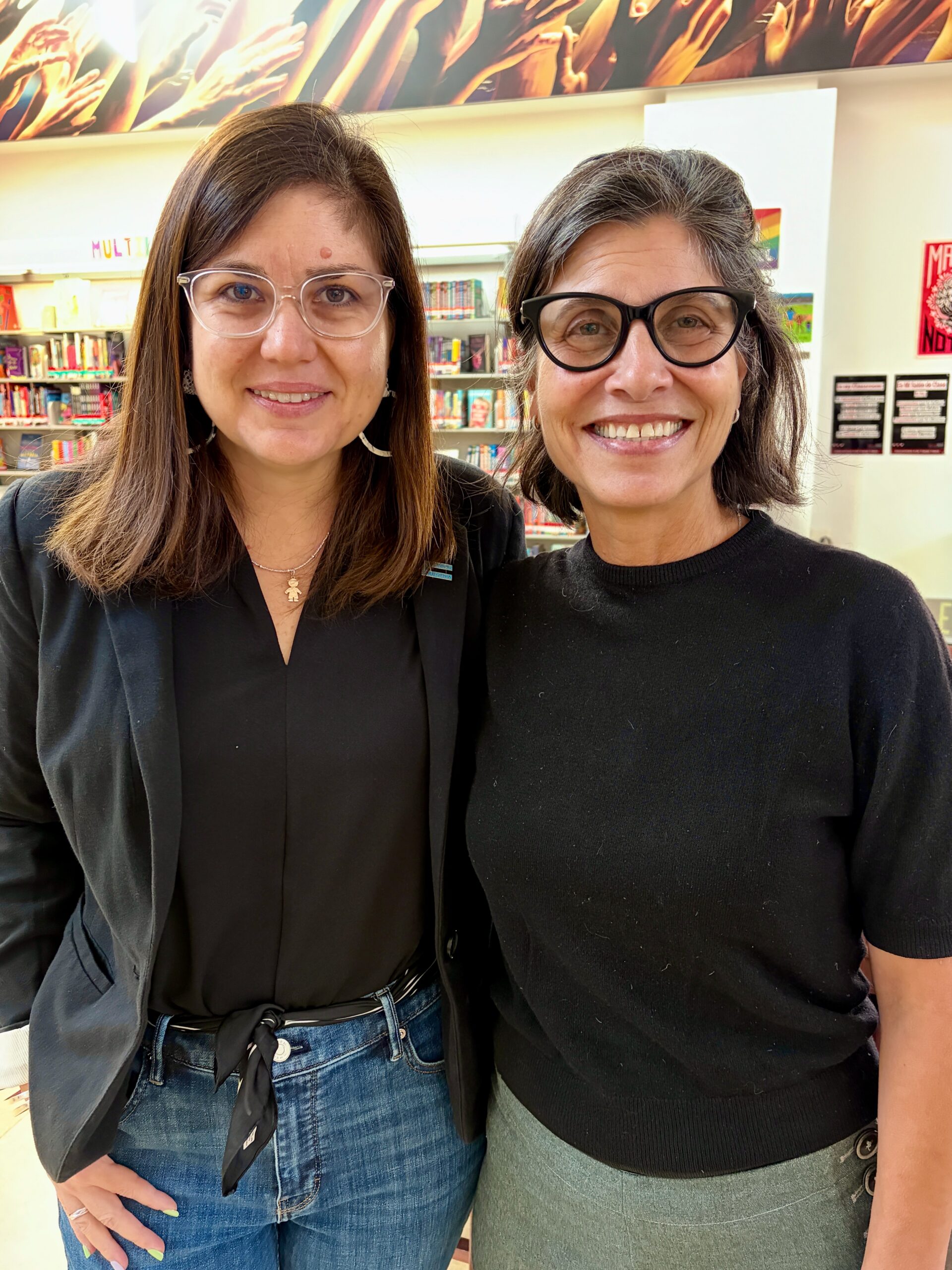
We talk with Salazar and Saunders here about their new roles as leaders of the Center for Community Schooling and the work and challenges ahead.
UCLA: You have chosen to share the leadership of the Center as co-directors. Why two leaders?
Marisa Saunders: Cinthya and I wanted to be intentional about how we structured our leadership. University centers often distinguish between academic and administrative leadership, but we saw an opportunity to bring those roles together in a more collaborative way. We both bring different experiences, expertise, and relationships to this work, and we wanted a structure that recognized those contributions equally. For us, co-directorship is about more than sharing responsibilities. It’s about being true partners in shaping the vision, direction, and day-to-day work of the Center.
Cinthya Salazar: It also aligns with our community schooling model. Our community schools practice values of shared governance, coordination and support, and that aligns with how we’re working at the university. Like our community school, we are building on each other’s strengths, and knowledge and relationships.
UCLA: How is it going so far?
Salazar: We’re being honest here when we say it’s challenging in terms of adjusting to the transition. Like any transition, any change, you have to go through a period of learning, being uncomfortable, challenging yourself. I’ll just say I am learning so much, and I am loving the learning.
UCLA: Are there specific roles you will each play?
Saunders: Initially, we anticipated that Cinthya would focus on providing support and conducting research at our two community schools, while I would continue to focus more on the state-wide work to further the community school effort. But these aren’t separate areas of work. They inform and strengthen one another, and we’re continuing to figure out how best to share responsibilities as new opportunities and priorities emerge.
Salazar: One thing I am focused on is building on the tremendous work Karen had been doing to build the university community school relationships, especially in terms of how UCLA undergraduate and graduate students, and our faculty and staff members engage at the community school.
For example, this year we have 18 undergraduate students in the education major who are taking part in a year-long internship at the schools. They take a course I am co-teaching with Jason Dorio and then the second part of the course is they have to go to the schools. As interns, they are at the school on a weekly basis as active members of the community collaborating with practitioners and engaging with students and families.
One of the areas that I am going to be thinking about is what our collaboration with the schools means for college access and success. I am also looking more at the college and career research practice partnership that we have at both schools. Looking through the lens of community schooling in a more in-depth way, I am seeing things differently, which is really interesting for my own research.
Saunders: I want to build on the college research-practice partnership example that Cinthya shared because it’s a great example of how our work with our partnership schools connect to broader policy conversations. Across California, there are important conversation underway about what it means to prepare young people for college, career, and civic life, including how we rethink traditional measures of readiness like A-G requirements, and the high school experience itself. Our educators, students, and school communities are doing the important work of reimagining what teaching and learning can look like. Our role at the Center is to work alongside them to document what they’re learning, share their experiences, and bring those insights into larger conversations about educational policy and school transformation. That’s what makes our community schools such important learning spaces–not just for UCLA, but for the broader field of education.
UCLA: Can you tell us more about what is happening at the state level?
Saunders: It is an exciting time in California. In July, the state passed AB 126, which establishes $1 billion in ongoing annual funding to sustain and expand community schools. This could bring nearly 4,000 additional schools into the community schooling movement. The legislation also supports secondary school redesign, creating opportunities to connect community schooling with broader efforts to rethink teaching and learning, college and career readiness, and what we value in a high school education.
What’s particularly exciting to me is the opportunity to bring these efforts together. Too often, we approach educational improvement through separate initiatives, when in reality they’re deeply connected. Our community schools are showing us what it looks like to approach school transformation more holistically. Educators, students, and families are doing this work every day, and our role at the Center is to learn alongside them, document their experiences, and help bring those lessons into statewide conversations about policy and practice. As California makes this historic investment, it’s more important than ever that the people doing this work in schools help shape what comes next.
UCLA: What are some of the challenges for your work with the UCLA community schools.
Salazar: One of the challenges I think all schools are facing, including our schools, is declining enrollment. It’s happening and it poses a real challenge to the infrastructure and staffing available at the schools. For example, at the Horace Mann UCLA Community School in South Los Angeles, based on enrollment numbers the school district does not provide the school with a full-time college counselor. That is a very critical support that any high school, regardless of size, needs. A college counselor is essential. It sends a message to the community, to the schools, if they don’t have one.
That’s a real challenge, and for us as partners, and because these are university-assisted community schools, our responsibility is to think about how and when we leverage our resources as a university, our funds, our donors to be able to provide the support the school needs that cannot come from the district, or grants or other state funding at this time.
That’s just one example of a problem we are actually navigating right now. We’re thinking about how we can provide support for college counseling in different ways, whether that is a 10-hour person, or interns, or someone else, by leveraging our university resources in terms of human capital and financial support to meet that need of the school. It’s important, because we want to send a message to the students that we believe they’re college ready, that we believe they deserve access to a college education.
Saunders: I was going to point to enrollment as well. Our schools are not immune to the problems experienced by public schools across the state. In addition to declining enrollment, California and other states are experiencing teacher shortages and challenges with teacher retention. These are issues we’re grappling with as well. How do we support teachers? How do we ensure that they are working in environments where they feel cared for, supported, and have a sense of belonging? We know how much these conditions matter to educators and their ability to thrive in their work. We’re paying close attention to these broader challenges and thinking about how our university partnerships can help schools respond.
UCLA: You have said that the community schools aren’t immune from these other problems, but as university assisted schools are they better prepared to deal with the challenges?
Salazar: I think that is where we are. We want them to know that they’re not alone, when the problems are there. For example, harsh immigration enforcement and the anti-immigrant climate really impacted the community around Koreatown. The school felt that impact and that presence. We needed to have ways to be in community with them.
While they are not immune to these problems at the same time, they can rely on us as a partner to come up with solutions and get ahead of some conversations. UCLA has a lot of capital, and we can use that capital. It’s a tool that has a lot of power. When UCLA comes in, people listen. It’s important to us and for them to know that.
Saunders: I think university-assisted community schools offer an important model for sustainability. Universities can be stable, long-term partners bringing resources, expertise, relationships, but also simply serving as thought partners as schools navigate challenges. We want schools to see universities as partners that they can count on over time.
Just as important is how community schools make decisions and who is involved in making them. Cinthya spoke earlier about shared power and what it means to really live the values of community schooling. When schools are experiencing challenges, whatever they may be, students, parents, community members rally around the school and become real problem solvers. That collective strength, coupled with a committed university partner, can help navigate challenges.
UCLA: Part of the work of the Center for Community Schooling is a core commitment to advancing democracy, justice and education. That can be a challenge in our current political environment. How are you working to further that commitment?
Salazar: When we think about democracy, we really have to center the process and the practices on the ground. When you are having conversations, who is at the table, who is communicating, who is part of the decision-making process? How is that reflective of the community and others? That is part of what we’re doing with the work in all of the different structures that are in place.
For example, in the research and accountability committees at the schools, they know who at the Center is approving what’s going to happen at the schools, who is going to be making decisions about who will be welcomed to do research that is reflective of the community, that is intentional with the community. That is part of our democratic values, and it is reflected in the different structures that that are in place, in conversations about the future of the schools, the future of the community. That is a way to advance justice too, especially when you think about opportunities for underserved communities, underrepresented, minoritized communities to participate.
Saunders: I would add that while we are we facing significant challenges across the country, we’re fortunate that the California Community Schools Partnership Program (CCSPP) is explicitly defined as an equity-centered approach, and we’re not moving away from that commitment. Early on, there were some questions about whether we could really use language like equity, racial justice, social justice. And we had statewide leaders saying, “Yes, we’re not going to shy away from that language.” That matters to us.
You see this commitment reflected in legislation where CCSPP directs resources towards schools and communities facing longstanding structural barriers, with the goal of addressing unequal conditions for learning. It also about addressing power, shared decision making, and recognizing whose knowledge and experiences count.
These are the values at the heart of community schooling, and they’re especially important in the current political environment. We’re fortunate to work in a state where these commitments are reflected in policy, and our responsibility is to help ensure they’re realized in practice.