
Research published by the UCLA Civil Rights Project challenges conservative education policies, asserts investments in effective education policies strengthen educational opportunities for all students and deliver benefits to the nation that far exceed their cost.
The federal government and Congress have been cutting public education funding, attempting to close the Department of Education, and expanding conservative policies, such as school choice and private school vouchers, often claiming that public school programs have failed. The Civil Rights Project has published an important new study of the economics of educational reforms directly challenging those ideas. The study asserts solid evidence that several major cost-effective programs and policies strengthen public schools, further educational opportunities for all students and provide economic benefits to the nation far exceeding their cost.
The paper, “Investing in Our Nation’s Future: Advancing Educational Opportunity for Underserved Students,” by education economists Emma García and Henry Levin, summarizes the benefits of educational interventions ranging from participating in early childhood education to increasing rates of community college completion. Their study analyzes data on existing cost benefit analyses of each intervention, showing substantial benefit-to-cost ratios ranging from approximately $2 to more than $10 for every dollar invested.
The researchers also simulate the additional net benefits to the taxpayer if Black and Hispanic students enrolled in high-quality early childhood education, graduate from high school, or completed their associate degrees at the same rates as white students, on average, between 2023–2060. If those were to occur, the researchers estimate an increased net benefit to the public of up to $72.6 billion per year. Unfortunately, since the pandemic the racial gaps in achievement and academic attainment have widened, making this analysis more urgent.
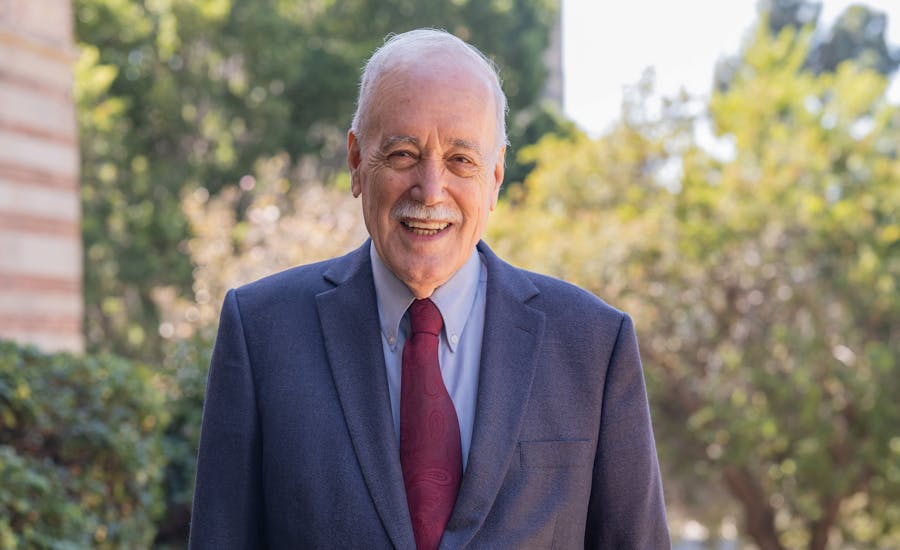
“This study makes clear that rather than enacting conservative fads for choice policies that increase racial stratification, policy makers should examine the evidence on educational reforms that have succeeded, both in strengthening the preparation of the next generation and creating substantial positive economic benefits for society,” said Gary Orfield, co-director of the Civil Rights Project at UCLA. “Spending more on well-documented reforms in public education would not be an act of futility but a high-profit investment, increasing equal opportunity with the largest gains coming for disadvantaged students.”
The paper shows the stakes are rising. It includes demographic projections between 2022 and 2060, making clear the United States is undergoing a profound demographic transformation, with individuals from racial and ethnic minorities becoming the national majority (which has already happened in public schools), a declining white population and the youth population shrinking. By 2060 the population will include about 64 million more people from racial and ethnic minority backgrounds, 33 million fewer white individuals, and 8 million fewer children and youth, according to data from the U.S. Census.
The study outlines two contrasting paths forward for the country. Maintaining the current course of federal education policy, characterized by stagnating investment that fails to reach all children, would lead to worsened educational and economic aggregate outcomes for the U.S. This path increasingly reflects the outcomes of children from historically disadvantaged backgrounds and the deep-seated and persistent inequalities in opportunities to learn they experience. On the other hand, pursuing an equity-focused agenda at scale, that improves educational opportunities and outcomes for all, including our most underserved students, would present an opportunity to spark the potential of the growing majorities and yield substantial net economic benefits for the nation.
“Our findings make clear that devoting more public funds to education is not just about fairness—it’s about the future of the nation,” said Emma García, a principal researcher at the Learning Policy Institute and co-author of the report. “As America grows increasingly diverse, our prosperity will depend on how well we equip every child to thrive. The choice before us is stark: invest in opportunity now or face the sizable costs of deepening inequality and division.”
The paper summarizes cost benefit analyses of interventions that show positive net returns for both the participants and the general public. The evidence accrues from policies related to preschool and early-childhood education, high school completion, socioemotional interventions, comprehensive school services, accelerated college completion, accelerated schools and curricula, and school integration. The study provides a compelling, research-based case for why devoting more public funds to education is a good social investment.
“When we measure the costs of the interventions, the outcomes and the benefits they generate over time, this paper demonstrates that it is possible to make major gains in educational outcomes, reap benefits that surpass the cost and ultimately produce equity,” says co-author Henry M. Levin, professor emeritus of economics and education at Teachers College, Columbia University. “The benefits compound over children’s lifetimes and spread across society—through a stronger workforce, better health, and lower social costs.”
The authors show that disinvesting in public education doesn’t save money; it costs us opportunity, growth, and the potential of entire generations, perpetuating unequal opportunity.
“Investing in Our Nation’s Future: Advancing Educational Opportunity for Underserved Students,” is researched and written by Emma García, education economist and principal researcher at the Learning Policy Institute, and Henry M. Levin, the William Heard Kilpatrick Professor, Emeritus, of Economics and Education at Teachers College, Columbia University, and senior research fellow at the Learning Policy Institute. The paper is published by the UCLA Civil Rights Project/ Proyecto Derechos Civiles as part of their research series, A Civil Rights Agenda for the Next Quarter Century. The report, including an executive summary, is available on the Civil Rights Project website.