
The Social Media and the Spread of Hate (SMASH) Project
Social Media and the Spread of Hate or SMASH is an interdisciplinary collaboration between researchers, educators, and policy advocates from UCLA’s School of Education and Information Studies, the Semel Healthy Campus Initiative (HCI), and an independent non-profit partner, the Organization for Social Media Safety (OFSMS). SMASH is funded by UCLA’s Initiative to Study Hate.
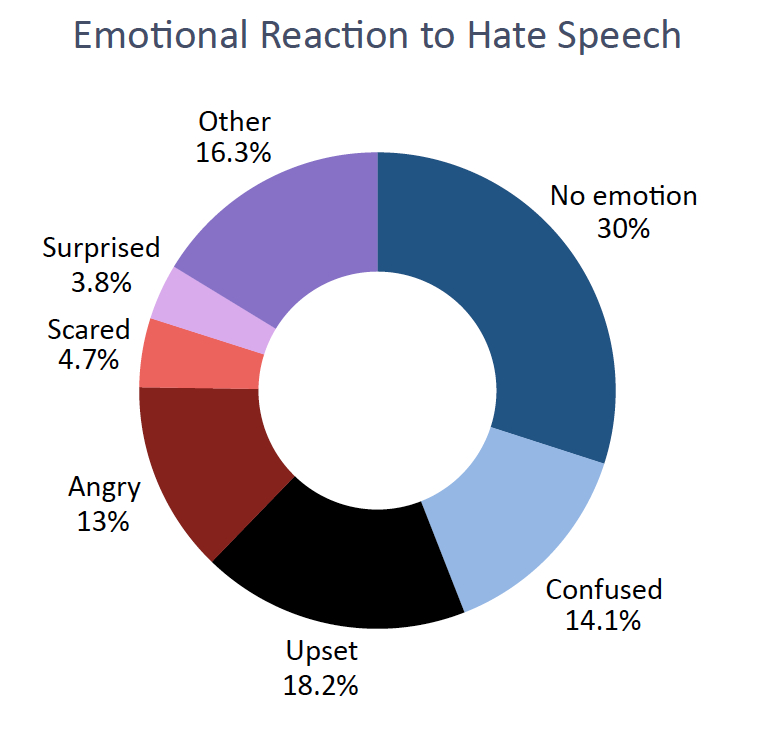
New Study: Adolescents’ Encounters with Hate on Social Media
This brief from UCLA’s Social Media and the Spread of Hate (SMASH) project offers a data-driven look at how adolescents experience social media today—highlighting patterns of use, exposure to cyberbullying and hate speech, and the emotional impact of these encounters. Drawing on responses from more than 28,000 students nationwide, the report surfaces key trends and raises important questions for educators, families, and policymakers working to create safer digital environments.
Read the brief
Our Goal
Explore how young people encounter hateful content online, their responses to it, and ways to make social media safe for everyone.
Our Work
Our work incorporates various methods including survey data gathered from secondary and undergraduate students as well as in-depth conversations with young people about their own experiences using social media.
Our Impact
As of March 2025, SMASH has analyzed survey data generated through interactive assemblies led by OFSMS from over 29,000 students in grades 5-12 and over 100 schools nationwide. Our findings have informed OFSMS program improvements. Our research has also been shared by OFSMS partners in legislative testimony related to potential harms on social media and broader advocacy efforts at the local, state and national level. In addition, SMASH has piloted a survey prompting UCLA students to reflect on their social media habits, experiences, and encounters with hateful content over time. Survey results and follow-up interviews provide valuable information regarding how often, where and types of hateful content they encounter as well as insight regarding their changing relationship with social media as they mature. Taken together, SMASH results can help inform future policy, educational resources, and interventions that foster kindness and empathy as well as critical thinking around social media use.

Recent News
Featured in UCLA Ed&IS Magazine Fall 2024 Issue
By Joanie Harmon
November 12, 2024

Recent News
Marc Berkman Shares Findings with Congress, LAUSD on the Harms of Social Media
By Joanie Harmon
June 20, 2024
Recent News
UCLA Ed&IS Combine Departmental Expertise to Study Hate Speech
By Joanie Harmon
March 10, 2023