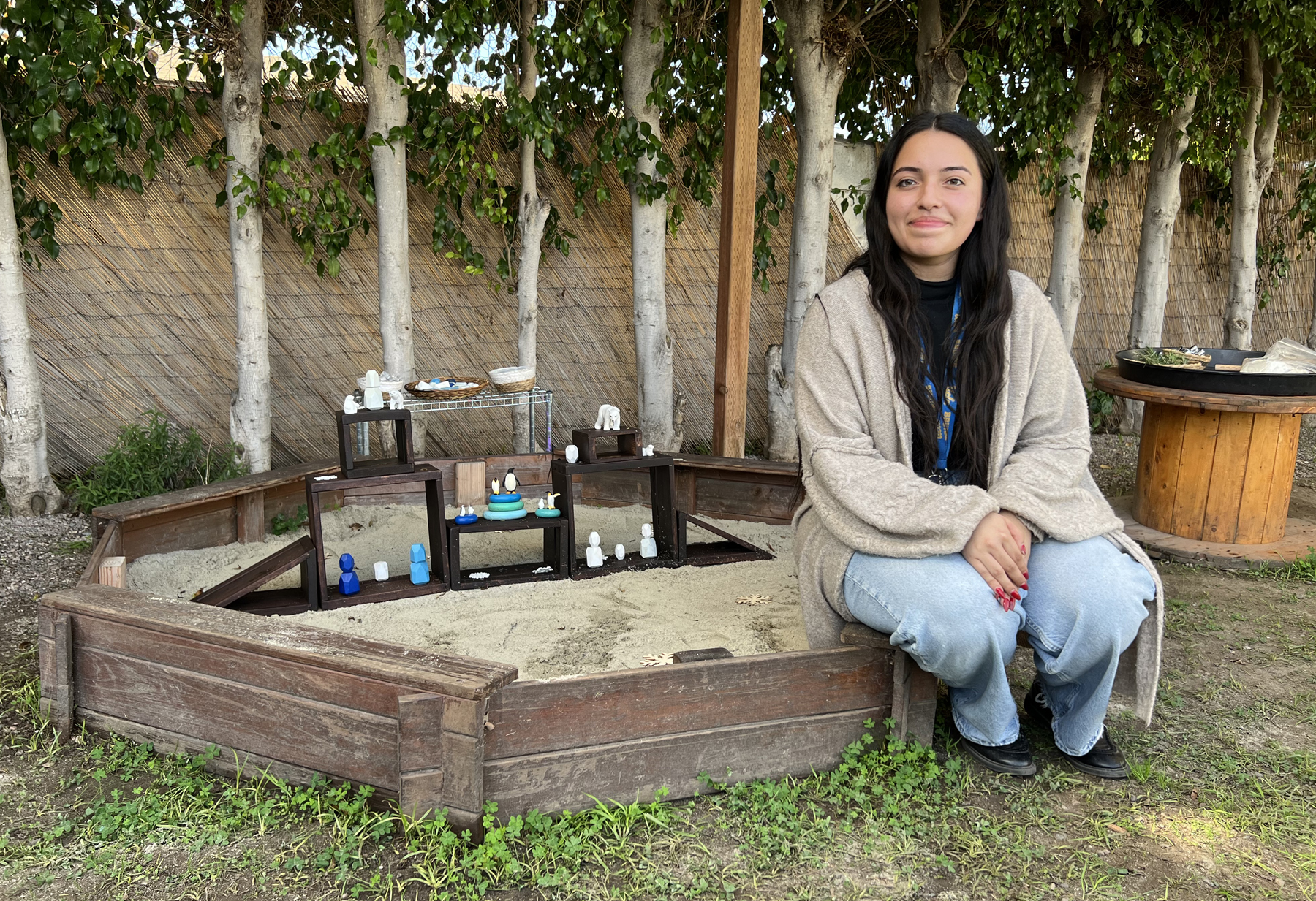
UCLA undergrad in the Education and Social Transformation major program created Playful Roots Studio to provide collaborative experiences for children, parents, and community.
When Stephanie Reynoso noticed that there was a small and underused outdoor space behind her church, she decided to ask if she could use it to create a place where the community’s children could gather for creative play. Calling upon her training in early childhood education from Los Angeles Harbor College and her work as a teacher for the Community Development Center, Inc., (CDC) Reynoso, a fourth-year undergraduate in UCLA’s Education and Social Transformation major program, opened Playful Roots Studio on the campus of Iglesia Cristiana Nuevo Pacto in her hometown of Wilmington, California.
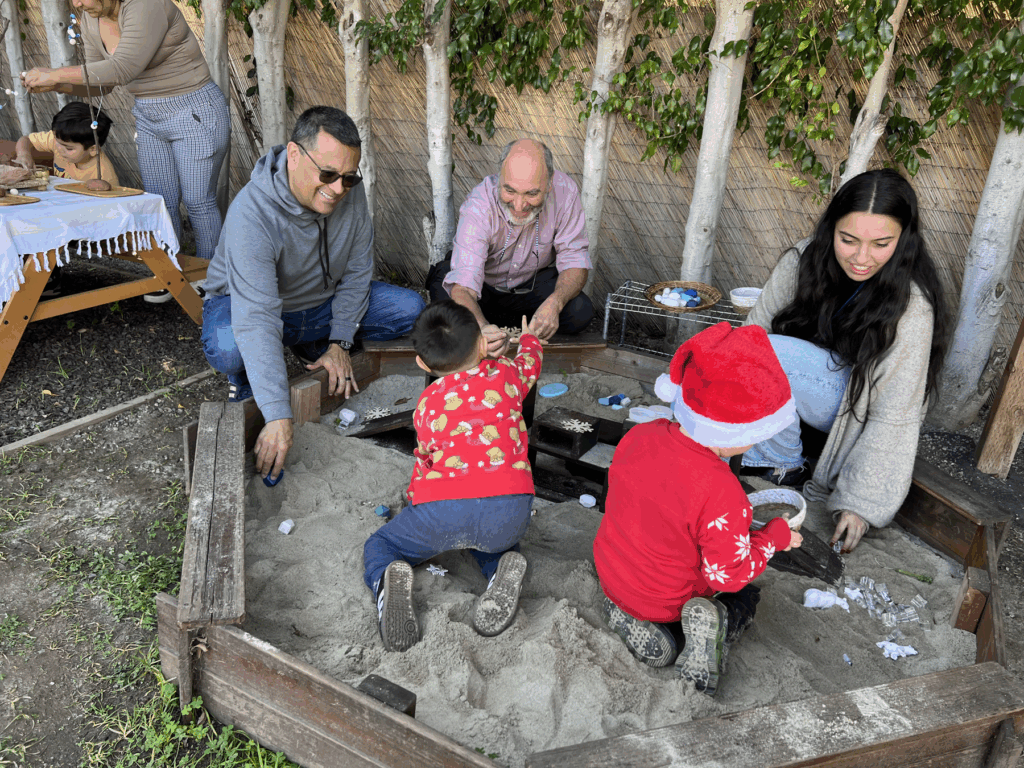
On an afternoon in December, Reynoso, her mother and sister, who also teach at the CDC’s Friendship Academies, and several family members welcomed children their families to the space for that month’s session of Playful Roots Studio. Stations with tactile play and supplies for creating art projects were spaced throughout the area to appeal to a range of ages from pre-K to young elementary. A rooster crowed in the backyard next door.
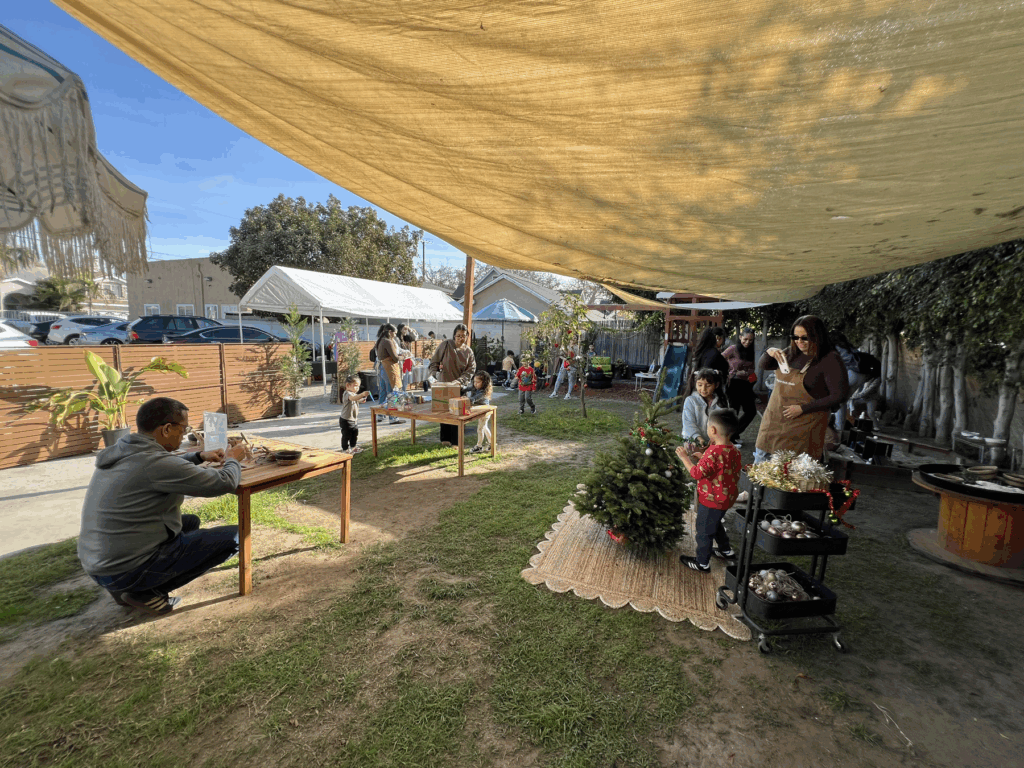
“I think there’s something beautiful about being outdoors,” said Reynoso, who serves as the project’s CEO. “There’s a lot that nature provides for us.”
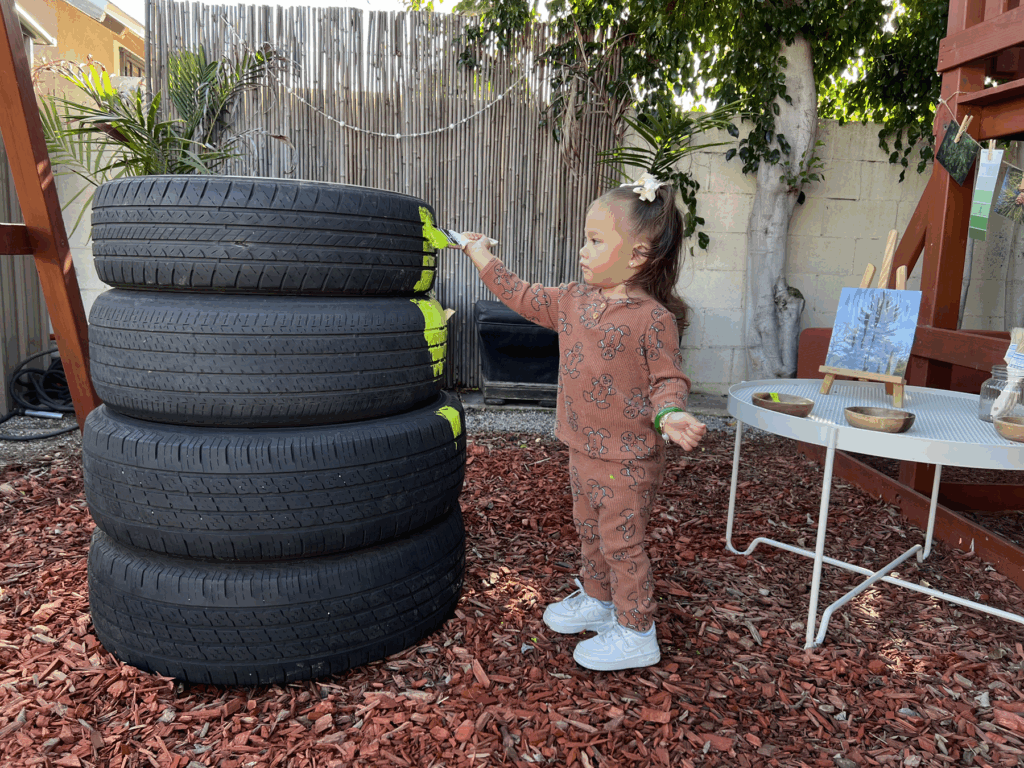
Along with drawing from nature, Reynoso repurposes items that would have been discarded to supply Playful Roots Studio with materials for its play and art making sessions. Her father, who is a mechanic, provided tires of different sizes that she stacked to resemble a Christmas tree that the children could paint. The very young are invited to play with an armature along which wooden beads could be slid, or a basin full of non-toxic paint and water, with orange slices and holly berries afloat resembling a “Winter Soup.” Older children could design snowflakes with wooden popsicle sticks or sculpt with air-drying clay.
Reynoso’s church community contributes as well, with older children who assist her with setting up the space each month. Playful Roots Studio serves 15 children a month on average, who attend with their parents and family members, who are invited to stay and play alongside them.
“We don’t see having [the parents] here as a burden – it’s an opportunity to talk to them about it,” says Reynoso of encouraging parents to replicate the Playful Rootsexperience at home. “We make sure it’s accessible to them, not out of reach. They’re using what nature already offers, along with items that can be easily found within their homes.
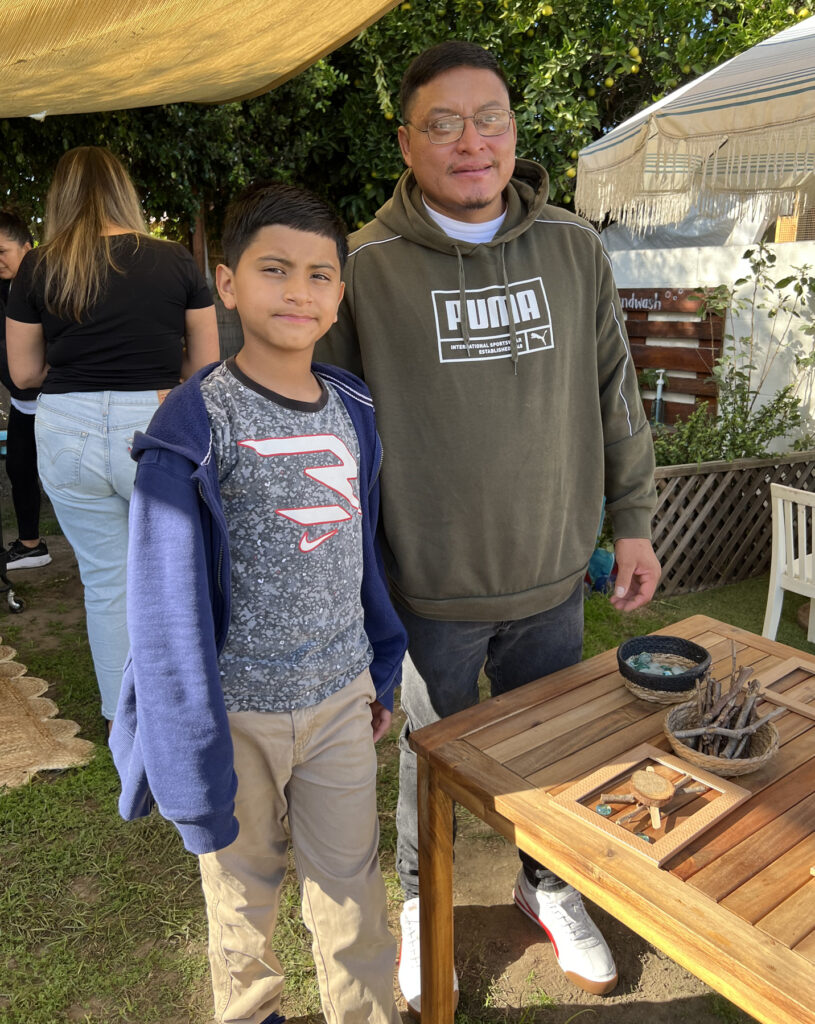
“We want the work done at the studio extended in a way that inspires families to make this applicable to their children beyond what we can imagine,” she said. “But that requires teamwork and time — a sacrifice that I am willing to make to ensure we can continually inspire our future generation of leaders.”
Reynoso, who aspires to earn her MEd in education, has been introducing Playful Roots Studio in her work with CDC and said that she hopes to share the concept with more schools in order to encourage teachers “to learn to play again.” She plans to eventually open a preschool based on this model.
“I want to talk to them about the way we can create environments … utilizing repurposed items to tie in to both nature and learning,” she said. “I say it’s not something that’s impossible to do. You just have to think about what you already have… and [think] ‘How can I utilize this to do something that I truly enjoy?
“For me, that just happened to be creating these experiences for children and allowing them to connect with nature. I think it’s about finding that space and making connections with others to make it possible.”
Reynoso said that the idea of cross-pollination that she was taught at Harbor College – allowing children to take resources from one learning space in order to use them in a different way than the teacher advises – is one of the core tenets of Playful Roots Studio.
“It creates even more learning for the child because they’re making that choice and saying, I see the materials being offered and while I can use them here, they can also be used at another station in this way,” she said. “Of course, it’s us as adults, allowing that to happen and trusting the child with their ideas … not saying, ‘No, I had the idea to put the branches there,’ but rather, ‘Tell me about your idea and let’s figure out what you’re trying to do with that,’ and seeing the idea evolve and carry through.”
Raul Moreno (’94, BA, political science), principal, West Valley Early Education Center, observed the December session in preparation for opening a center like Playful Roots Studio.
“As teachers, we’re not necessarily trained or used to giving the students this much flexibility,” said Moreno. “When [teachers] expose children to stuff like this, it’s wonderful because they see what their kids’ interest levels are, what the possibilities are.
“My teachers are new – they’re very easily on board with this because they can see the connection,” said Moreno. “I’d love for them to come to a place like this and see how it connects with what we’re trying to do in the classroom … in an environment where students can use those same skills with new material, without the structure.”
Reynoso’s sister, Melanie, is a lead teacher at the CDC’s Friendship Academy School in Wilmington. She said that being involved with Playful Roots Studio has helped her to bring nature and play into her own classroom.
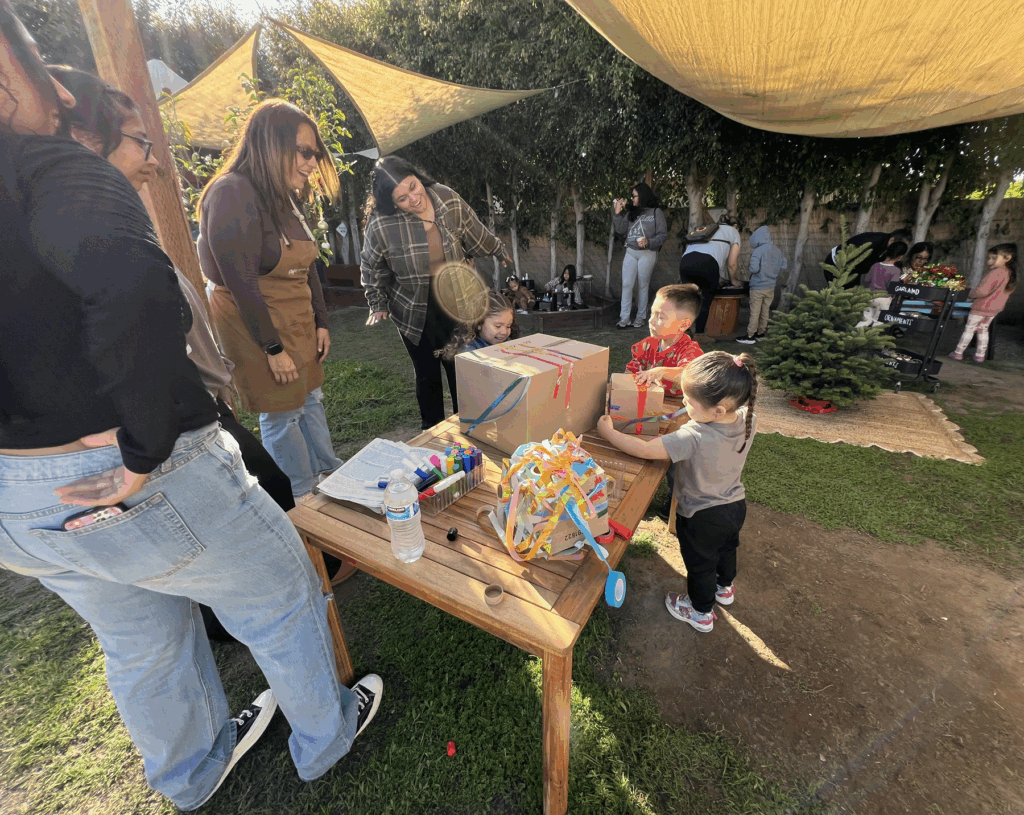
“The studio has helped me bring those ideas to children that don’t attend here,” Melanie Reynoso said as she assisted a toddler with wrapping a “present,” encrusted with bows and ribbons. “I have my science area where I incorporate pinecones and sticks. Sometimes I have an insect area. When we go on nature walks, we can bring them into the classroom and the children draw their observations.”
While Stephanie Reynoso’s activities are aimed at particular age groups, she also encourages interaction between older and younger children.
“I think it’s a beautiful thing for children of different age groups to learn from one another,” she said. “Sometimes we’ll have a child from elementary helping a two- or three-year-old, talking to them about the way we can use the materials or simply engaging in conversations where they introduce new vocabulary words to them. It’s not separating them by age group – it’s looking at how they can learn from each other.”
Jeff Share, a lecturer in the UCLA Undergraduate Education and Social Transformation major and Teacher Education Program, said that the involvement of Reynoso’s family and neighborhood in creating Playful Roots Studio is “such a great example of creating a space in the community for the community, filling a need that no one else is going to fill. It’s a rare thing to see, they are creating something in a way that’s so integral.”
During Reynoso’s capstone course for her education major with Share, she researched the theory and practice that informs this work and created a short video as her passion project for that final course in the major.
“There’s a lot of theory behind this work, and also a lot of love,” said Share. “Stephanie’s Playful Roots Studio is building meaningful connections with nature and her community through empowering children to be the subjects of their learning, exploring their world in authentic and creative ways.
“In our class we talked about what does social justice education look like – well, it looks this: people from the community, creating with their community, and bringing all their different experiences and resources together to support each other.”
Ever working to build on what she has achieved at Playful Roots Studio, Reynoso mentioned another neighborhood resource that she will use to enhance the experience for young participants and their families.
“They actually have a little one who comes here, but today’s his birthday,” she said, indicating the house next door, where the roosters continued to crow through the morning. “The mom talked to me… and she was like, whenever you want to, we’ll let you borrow [the roosters]. This just goes back to building those relationships with others.”
To view Stephanie Reynoso’s capstone project video, visit the Playful Roots Studio website.