
New research illuminates personal and institutional experiences and challenges that add to the precariousness of the community college journey for adult learners
More than one-third of students attending community college in California are age twenty-five years or older. A new study by a team of researchers affiliated with the UCLA School of Education and Information Studies finds that while these adult learners draw upon “funds of knowledge” fueled by their life and work experiences to navigate their college journey, they are confronted by both personal and institutional precarities that pose barriers to their college experience and success.
Using an approach focused on the strengths and assets of the students, the study, “A Whole Lot of Years I’ve Been in It: Understanding Community College Adult Learners’ College and Career Decisions,” examines how community college adult learners’ college and career decisions are informed by their lived experiences and the institutional precarities experienced within the community college system.
“Given the large number of adult learners in community colleges and the disparate outcomes they experience within the U.S. higher education system, there is an urgent need to more deeply understand the factors that shape their educational and occupational trajectories,” said Marco Murillo, associate professor of education in the School of Education and Counseling Psychology at Santa Clara University and an author of the study.
The study draws on interviews with 31 Community College Adult Learners (CCAL) at a community college in California. The findings demonstrate that precarity, both individual and institutional, was present in shaping CCALs’ higher education experiences.
Individual precarity was a phenomenon with lasting impacts on college and career decision making. Across their life span individuals experienced challenges such as financial hardship, employment insecurity, housing instability and health problems that informed their decisions to pursue higher education. Yet, many adult learners made sense of their career interests by leveraging life experiences and knowledge gained in the workplace.
“Despite experiencing individual precarities, adult learners harnessed their life experiences as valuable assets for college participation,” said Davis Vo, an education researcher at San José-Evergreen Community College District and Stanford University.
“Adult learners’ histories, truths, and triumphs during precarious times guided how students experienced the world, understood themselves, and made college and career decisions,” added Brianna Wright, an education researcher at UCLA and project manager of Latinas in STEM.
Adult learners in community college settings were also challenged by institutional precarities in the absence of structures, norms, and practices that focused on their academic and professional needs. Participants interviewed said that the institution often treated them as traditional college students and made assumptions about their educational pathways, leaving them unsure of what courses to take, what questions to ask, and having few supports to make a college plan. Institutional policies sometimes required students to be first-time enrollees and full-time students, resulting in some participants being unable to qualify for support programs. Additionally, although participants noted using services such as tutoring, counseling, and disability services, the availability of campus services and their utility were not aligned with participants’ life conditions and experiences. The students also said their interactions with the career center related to career guidance and services were limited and noted misalignment of what the career center offered and what they needed. They also discussed a need for more targeted support for older students. The onset of the COVID-19 global pandemic also made it particularly difficult for adult learners to access services and support.
When institutional precarities are misaligned, they can compound students’ individual precarities to support their educational pursuits.
The study’s authors conclude that practitioners, policymakers, and researchers can better support community college adult learners by applying a more asset-based approach to understand community college adult learners’ experiences and identify and reduce the institutional precarities impacting them. Community colleges can also provide more comprehensive and holistic support structures designed with community college adult learners in mind.
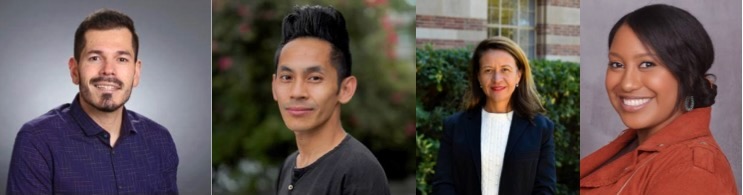
“A Whole Lot of Years I’ve Been in It: Understanding Community College Adult Learners’ College and Career Decisions,” is authored by Marco Murillo, Davis Vo, Brianna Wright and Cecilia Rios-Aguilar. Murillo, Vo and Wright earned their PhD degrees at the UCLA School of Education and Information Studies. Rios-Aguilar is a professor of education and the Chair of the department of Education at UCLA. The report is available online via Sage Journals here.