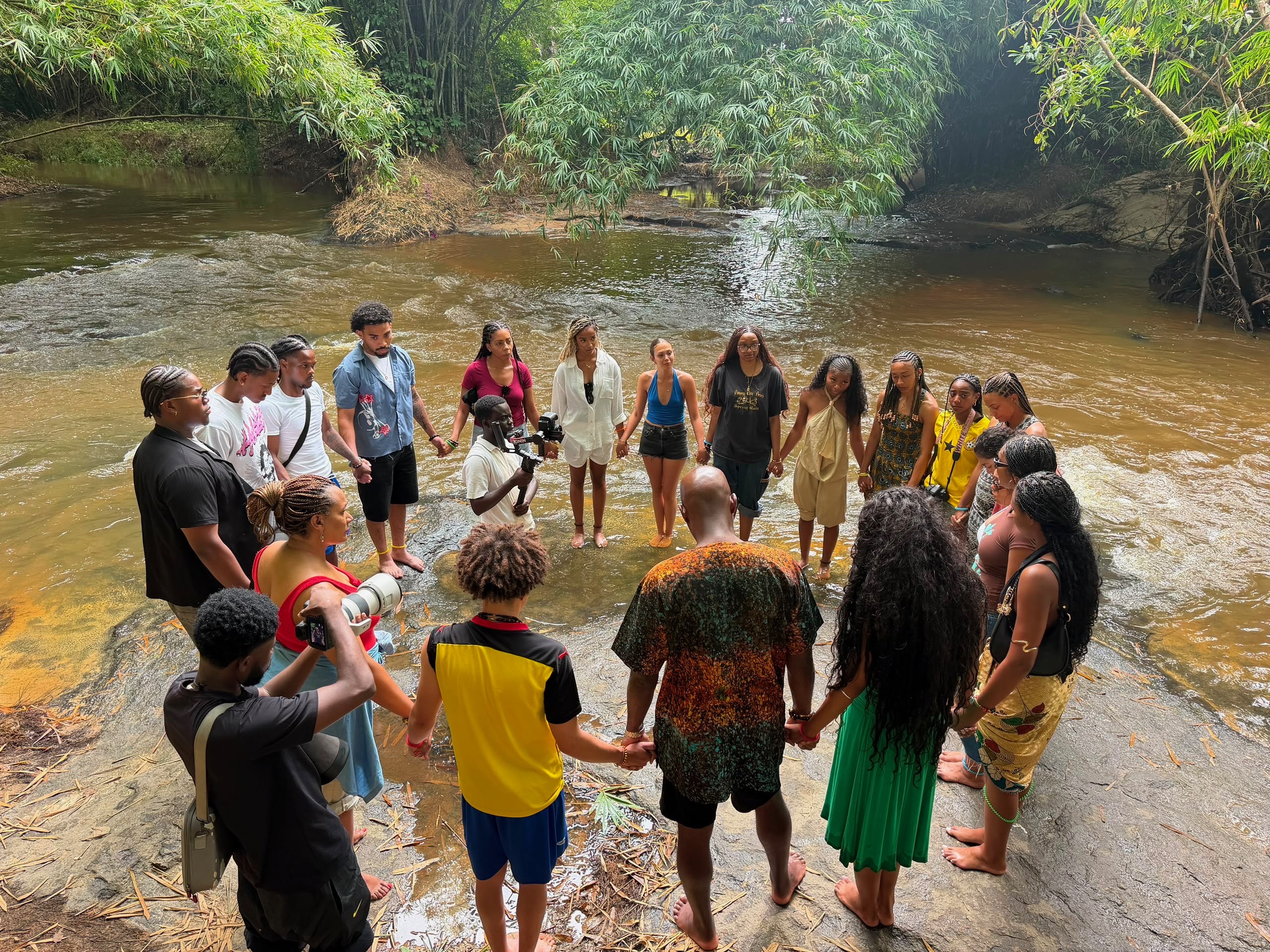
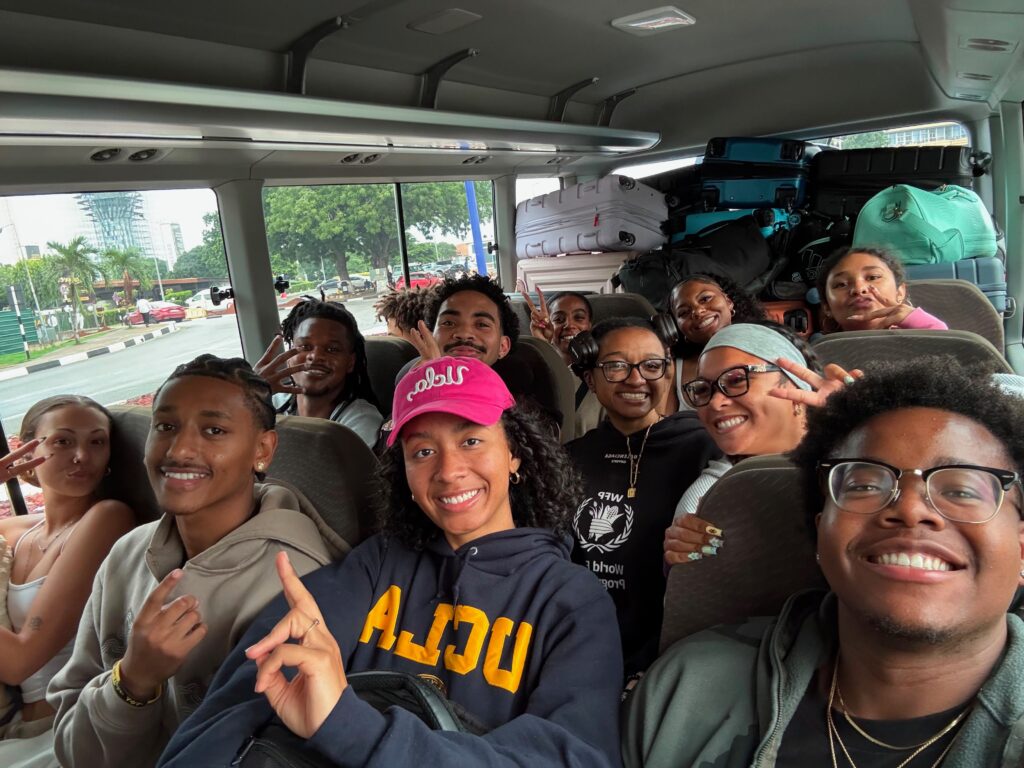
A diverse cohort of 20 UCLA students, faculty, staff, administrators, and community members explored the rich history and vibrant contemporary culture of Ghana July 14-22 as part of the UCLA Ghana Scholars Program 2026.
Participants in the program had the opportunity to visit sites such as the W.E.B. Du Bois Center, Makola Market, the Kwame Nkrumah Memorial Center, and Independence Square. Guided tours, community service, and reflective learning activities invited participants to grapple with the enduring legacies of the transatlantic slave trade at Omans Slave River and the Elmina Slave Dungeons, while also illuminating Ghana’s role as a place of historical memory and return for Black Americans.
“This year’s tour was a rousing success, says UCLA Professor of Education Tyrone Howard, who is the founder of the program and led the trip along with UCLA vice provost of student diversity and director of the UCLA Academic Advancement Program Jonli Tunstall. “The program continues to offer a powerful model of global education that advances UCLA’s mission to develop critically engaged world citizens.”
By intentionally integrating scholarship, experiential learning, and critical reflection, the program deepens participants’ understanding of how histories of enslavement, resistance, and independence shape current struggles for freedom, identity, and justice locally and globally. Now in its fifth year, the Ghana Scholars Program lowers barriers to transformative international engagement, exploring the African diaspora and modeling the inclusive, high-impact programming that positions UCLA as a leader in equity-driven global education.
“I learned more about the continent we call Africa in 8 days than I have in 22 years of the education system,” says Mitchell Stevens, a 2026 UCLA graduate who took part in this year’s visit to Ghana.
“Never could I have imagined I’d be the first in my family to return to the Motherland. I was always aware of my lineage as a descendant of the institution of slavery, but I never thought I would ever be reconnected to that lost history. No words can fully recount the different foods I tasted, the surroundings I witnessed, the unique sounds I heard, and the spiritual connection I felt. For nine entire days, I felt completely at home. To quote my grandmother, ‘I felt Africa in my soul.’”
The UCLA Ghana Scholars 2026 trip to Ghana was co-sponsored by the UCLA Bunche Center. Lorrie Frasure, the director of the UCLA Ralph J. Bunche Center, joined the trip along with Bunche staff members Jennifer Thomas and Whitney Pirtle.
We talk more with Professor Howard about the Ghana Scholars program and this year’s trip to the West African nation here.
UCLA: How was the trip to Ghana?
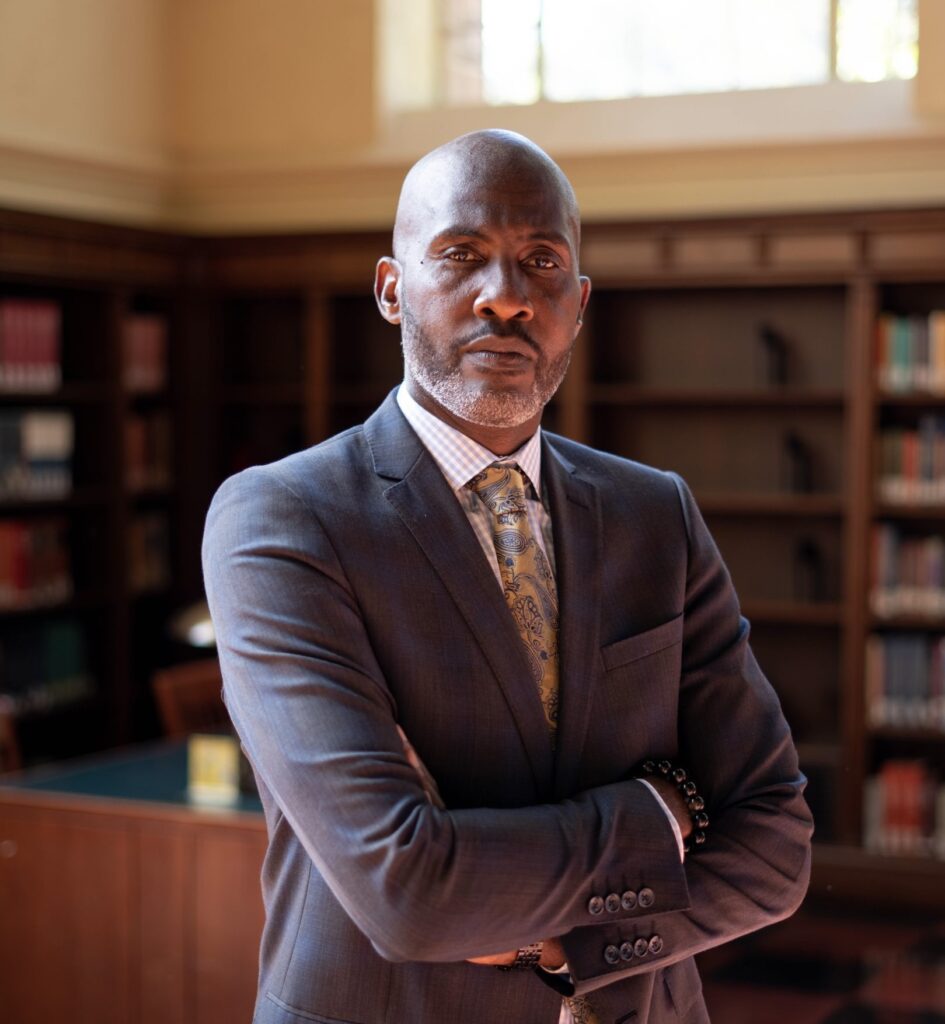
Tyrone Howard: The Ghana trip was amazing. This is our fifth year. The purpose is to help to create global awareness and create global citizens and develop global literacy for some of our UCLA students, and we had a phenomenal time of learning and laughing and crying and reflecting and sharing and writing. It was a successful trip all around.
Tell us a little bit about the Ghana Scholars Program. How did it get started?
About six years ago I had the good fortune of taking a trip to Ghana with Professor Walter Allen and, we had the chance to meet people and talk to folks. I’d never been to Ghana, and I was blown away about how they talk about the transatlantic slave trade and the connection between Black Americans and Ghanaians. They are a very welcoming people. The thing they stress to Black Americans is that when you leave, we ask you to come back again. But when you come back, bring people with you because more Black Americans need to know and understand about this experience and our connection to each other. That just stuck with me. I began I wonder if I could come back again and bring a group of students. The very next year we got a little pot of money, and I asked about seven or eight graduate students if they would like to take a trip to Africa to better understand the connection between the transmitted slave trade and America. They jumped at the opportunity and that was the beginning of it, it just kind of took off from there. The word spread and now I have dozens of undergraduate students and graduate students who say, “I want to go to Ghana.” Each year the number of applicants has gone up. We had close to 80 applicants this year. This is really a trip that that students find to be enriching a connection to their ancestral roots in some way.
Why Ghana?
Great question. So, Ghana is on the west coast of Africa. For most Black Americans, including myself, we don’t really know what parts of Africa our ancestors were taken from when they were brought here as enslaved people starting in the 17th century. But what we do know is that it is likely that it was from the western parts of Africa because those were the parts of the continent that the slave ships first arrived. Ghana is in one of those locations and has prided itself as a country in West Africa that that embraces in a very explicit fashion its connection to Black Americans. There are slave dungeons there, there’s a history that people have told about the millions of people who were taken from Africa from 1619 to 1865. Ghana has been out in front with this more so than other West African coastal countries and has positioned itself as the place of home coming for Black Americans. Though we can’t pinpoint specifically if that’s the location where we have our ancestral roots, symbolically it is the place. Ghana has become this place where it’s politically safe and sound, the economy is growing, infrastructure is on the rise, and they’ve had a large expat boom of Black Americans who have moved back to Ghana. They’ve been out in front to say, look, Ghana is the place that we want Black Americans to come back to and connect and learn and build.
Given our current political moment why is important that people learn from Ghana? What do they take away from it?
It’s important for a couple of reasons. Number one, we’re living through a time of historical erasure for lots of people. People are banning books, recreating history in erroneous and inaccurate ways. They are trying to minimize slavery. The administration wants to put out signs in front of the Smithsonian Museum that say that information is not accurate. This is the rewriting of American history. We must be careful because if that that narrative takes hold it wipes out the struggle and the realities of what happened during the 240 plus years of chattel slavery in this country. For me, it’s also important for these students to see firsthand the slave dungeons, to be able to see firsthand the slave markets, to see some of the villages where ancestors of theirs may have been stolen from. It’s important to see up close and personal what this looked like, to see and understand the loss for those in Ghana and the loss for us, the folks who came here. We were disconnected from language, from history, from culture, and I think in this moment it’s important to hold on to that as much as we can because there are many efforts to try to eliminate or erase that narrative.
What else stood out for you about the recent trip?
The big takeaway for me has been to watch the students who are just transfixed by the experience. They do writing reflections in journals and the students talk about how life-changing the trip is and how awakening it has been for them, how it has built their commitment to the best they can be academically and personally, how it’s opened their eyes to want to do more for their own global awareness and global literacy. To watch students who go to some of these dungeons and become very emotional and break into tears because they feel, as one student said this year, that they’ve had a spiritual reset or a cultural awakening. I just I’m just intrigued by the way that the students really embrace it, and how many of them say they want to come back, they want to bring their family members, they want to bring their friends. I’ve had students who have said that they want to move there and plan to move there because they just feel this sense of being at ease. I think for many Black Americans, being in the U.S. there’s a hyper vigilance that we always feel because you have to be careful of where you go, where you are. To wonder Is it safe? To worry about saying the wrong thing to the wrong person. What we hear students say is that when to Ghana is they don’t feel any of that. There’s an easiness. They can exhale. I think for many Black Americans, that’s the first time they’ve ever been in a context where they feel they won’t be treated differently because of the color, of their skin which is something so many of us get used to in the states.
What’s next for the UCLA Ghana Scholars Program?
The Ghana trip is taking on a life of its own. I’m getting all kinds of queries from other faculty, other administrators who are saying, “I want to go.” We are now contemplating what would it look like to bring a group of maybe 10, 15 faculty and staff along on the trip. I’m also getting more requests from graduate students who want to go. So, we are trying figure out how we can accommodate more students. We know this, we want UCLA students to have the opportunity to grow intellectually, to grow globally, to see other parts of the world. And part of what I have heard students saying is that this as close as it gets, they want to be able to spend some time in Africa and talk to people in Ghana and learn about the history, the culture, and our connections.