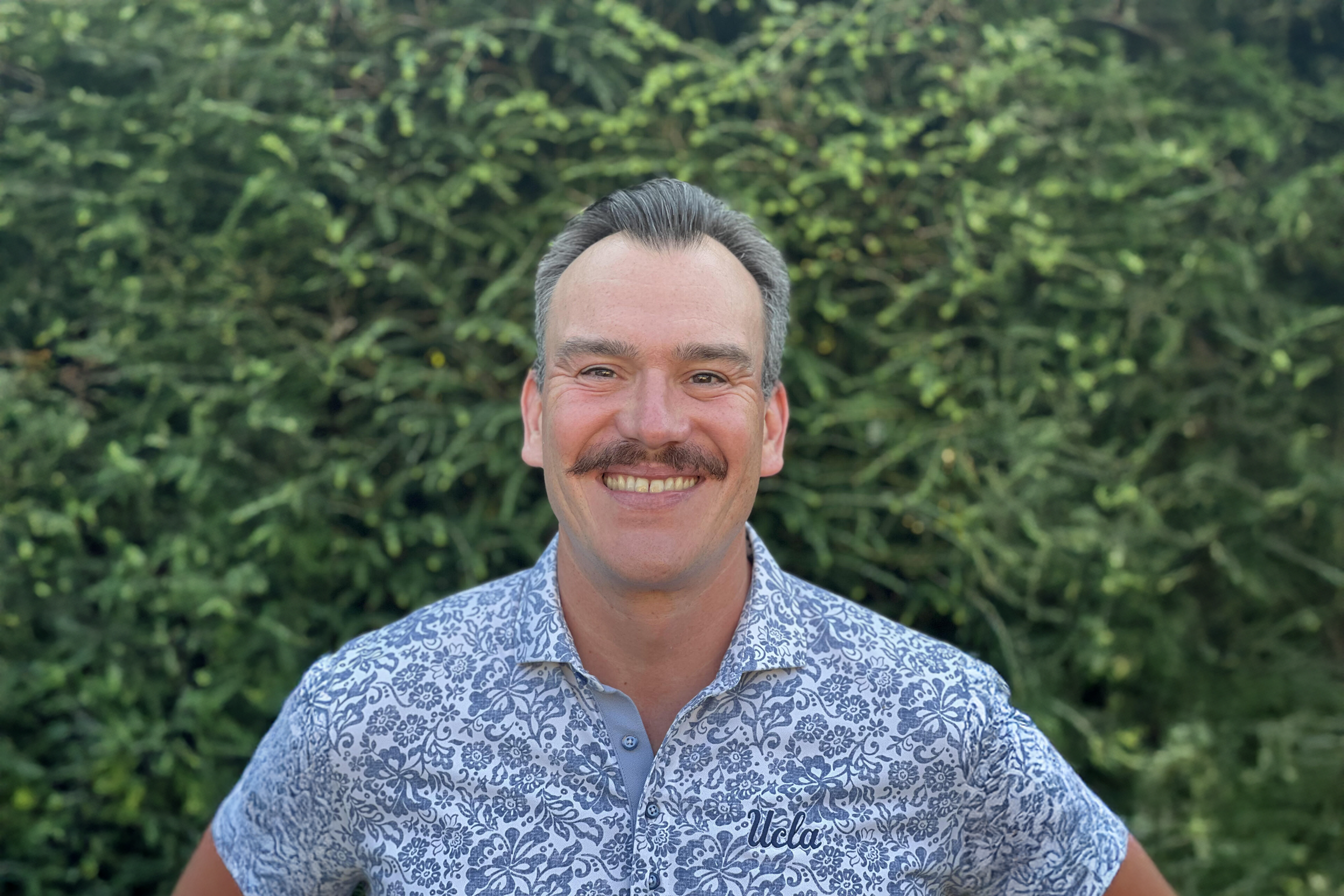
Ozan Jaquette, associate professor of higher education at the UCLA School of Education and Information Studies been named President-Elect of the Sociology of Education Association (SEA), an independent professional organization dedicated to advancing the study of education through sociological methods and theories.
Operating as an informal group SEA brings together scholars, educators, and graduate students to examine how social institutions, inequality, and human development affect educational processes. Each year, the organization hosts a conference in Monterey, California to engage colleagues from education, sociology, and other social sciences in discussion of issues at the intersection of sociology and education.
Jaquette joined SEA about 10 years ago as an assistant professor at UCLA after attending the group’s annual conference at the Asilomar Center in Monterey.
“My friend and colleague from grad school Julie Posselt was the first person to tell me, ‘Ozan you must attend this conference you will love it,’ and she was right. I think everyone who attends the conference is blown away by the quality of the scholarship and the friendliness of people there,” says Jaquette. “I was intimidated at first, but then I thought, if I want to become a better scholar then I need to be here because the people here are doing such amazing scholarship, they are throwing 100 mph, they are doing their best work. That is the sort of environment I want to be in. “
SEA hopes to spread the word that sociology offers a compelling approach to analyzing the world, especially in a world increasingly governed by algorithms and AI that are grafted atop structures of inequality.
“Education is an inherently interdisciplinary field, and sociology is one of the core disciplines that education draws from,” Jaquette says. “Alongside anthropology, sociology offers the strongest theoretical and empirical analyses of structures that produce inequality. America is based on hundreds of years of racial, class and geographic segregation. Segregation is a structure. Sociology makes these structures the object of theoretical and empirical analysis. That can be powerful. Sociology provides the language to do that interrogation. “
SEA also serves as an organizing vehicle for people interested in education and sociology and to introduce graduate students and new Ph.D.’s into a community of scholars. The organization also provides members with information about recent research, job openings, and other news of interest. SEA is committed to the inclusion of diverse scholars and strives to cultivate a more inclusive community in which scholars of all identities, visible and invisible, are welcomed.
The organizations main activity is the annual conference which Jaquette will help to plan and organize.
“I hope to help facilitate the debate, without putting my thumb on the scale too much,” says Jaquette. “As President, my role is mainly to be a steward of the past and subsequent generations, but I will support and propose policy changes that increase the number of presentations so that we can invite more scholars to present their work and increase the number of scholars who attend the conference each year.”
The Sociology of Education Association will gather in person for its annual meeting at Asilomar, February 19–21, 2027.
“The conference is a great place for graduate students to attend for a year or two, to see the kind of a work being done, and then throw their hat in the ring and present the work that they are really passionate about,” Jaquette concludes.
SEA members have also produced a new textbook called Education and Society: An Introduction of Key Issues in the Sociology of Education. 100% of the royalties go directly to SEA to be used exclusively for graduate student scholarships to attend the annual conference.