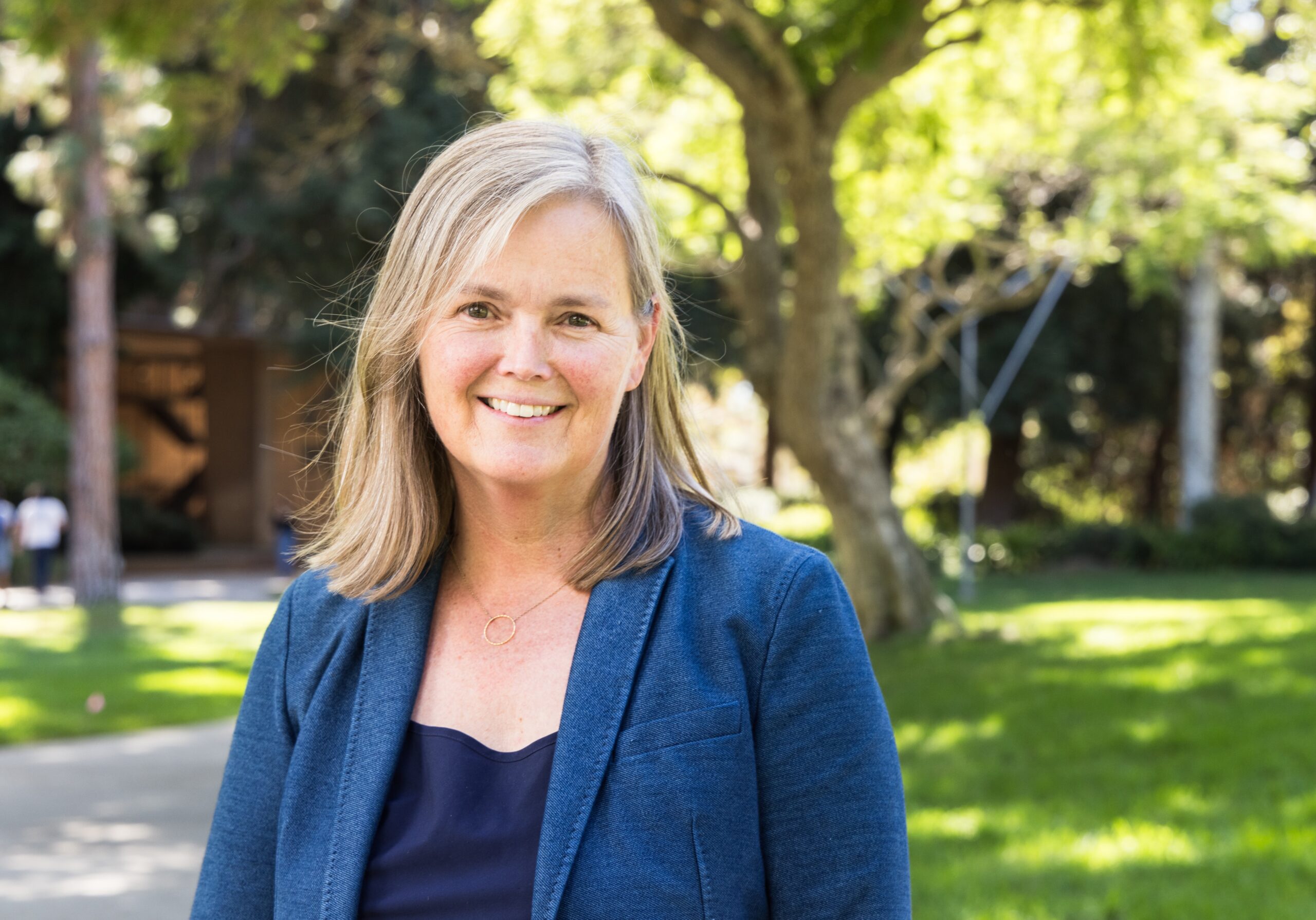
Director of Center for Community Schooling exits a career that has woven together people and ideas to support teachers and create better schools.
There is a new quilt hanging in an installation in the library at the UCLA Community School. The theme of the quilt is “Threads of Migration,” depicted by panels embroidered with images of home and celebrating immigrant roots and identity. The quilt was made by UCLA Community School alumnae, mothers, and established UCLA scholar-activists with deep connections to the community school who call themselves the WEAVE collective.
“We’ve been together for a long time. We meet monthly and talk about life, and so we created this little weave collective of women. We have a logo, it’s hilarious – Women for Equity Art Making Voice and Education,” says Karen Hunter Quartz, the director of the UCLA Center for Community Schooling. “We learned to embroider together and made images that represent our homes, and we put it together in a quilt. We’re like, ‘we can’t give this away,’ so we installed it last month in the RFK library.”
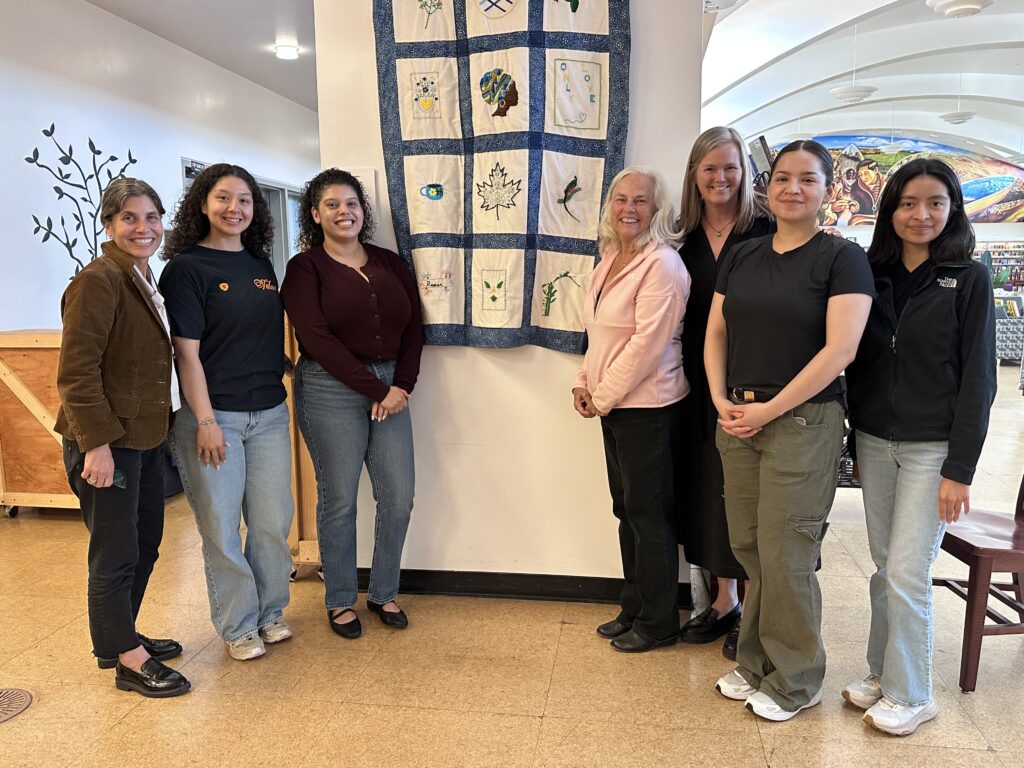
The new quilt is part of the National Welcome Blanket Project, an immigrant rights initiative where people all over the country are making blankets in support of new families. But the quilt and the work of the collective to weave it together represent more than another project. It is a metaphor for the career of Hunter Quartz who is retiring from UCLA this summer, leaving behind a life at UCLA spent weaving ideas and projects and people together to support teachers and make schools better places.
“Like so many things, the Weave Collective was Karen’s idea. She is the one who has brought us together,” says Annamarie Francois, director of public engagement at UCLA. “It’s so emblematic of how she operates. She has this understanding of large-scale system change, but also how that change happens in the smaller moments that connect people and build relationships. She has woven our community together to share our experiences, our lives, our learning. It is a deeply community-grounded space where we talk about and do important things together. She makes this transformational work feel deeply human.
“She deeply believes there is not a problem we can’t solve in education if you get the right people around the table,” says Francois. “I don’t know where we’re going to find that kind of deliberation that keeps us whole and moves us forward. Karen is the thread weaves all of us together.”
Hunter Quartz came to UCLA from Canada with her husband Steve in 1988 as a graduate student in the Department of Education. She retires having touched the lives of thousands of students and the hearts and minds of hundreds of colleagues and friends. Along the way, she has engaged deeply in work that has shaped the development of teachers while setting the course for community schooling in Los Angeles and beyond.
As director of the UCLA Center for Community Schooling, Hunter Quartz has led an effort to advance K-12 university assisted schooling in Los Angeles, across California, and across the nation. Her work helped to create and guide UCLA’s two community schools, and she and her team have played a critical role in California’s groundbreaking $4.1 billion expansion of community schools across the state. Hunter Quartz has also played an instrumental role as an advisor to the University-Assisted Community Schools National Network and led the establishment of UCLA Ed&IS as a University Assisted Community Schools Regional Training Center.
Hunter Quartz’s journey at UCLA began as a graduate student in Philosophical Foundations of Educational Policy and Practice. She was one of newly minted UCLA Professor Jeannie Oakes’ first graduate students. It would prove to be a transformative experience.
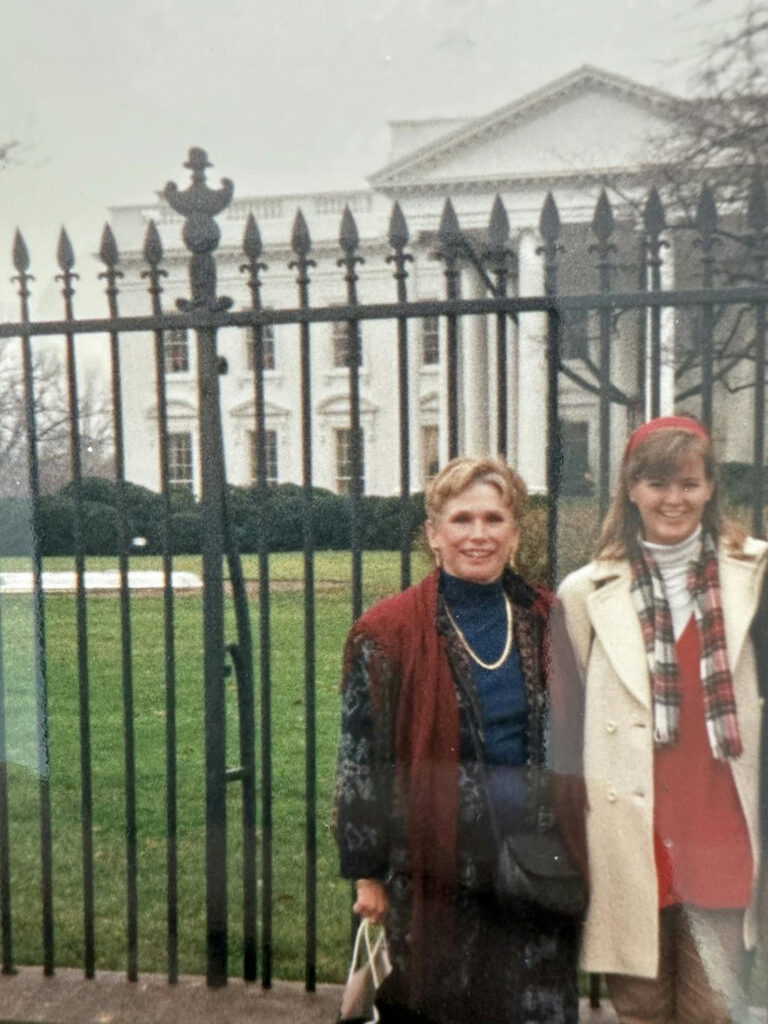
“I was really taken by Jeannie’s activism and her sense that we can change the world. She always viewed scholarship as a way to change things, and so that is the way I’ve tried to live my life. I study things in order to change them, that’s what I learned from Jeannie. You’re doing this work to change something, so own it, lean into it, and figure out how to make happen,” Hunter Quartz said in a 2024 interview with UCLA.
Under Oakes’ tutelage, Hunter Quartz would complete her dissertation, “The Culture of School Reform,” in 1994.
“My own dissertation was a look at the culture of school reform that Jeannie helped me to create. It was a commitment to looking at the process of social change, social transformation through planned implementation and different kinds of reforms,” says Hunter Quartz. “I still think that way.”
That commitment would lead her to a career of research, teaching and scholarship, digging deeply into issues of teacher retention and intently focused on the development of new schools.
Hunter Quartz completed her PhD in 1994, eight months pregnant and splitting her time between UCLA and San Diego where she lived with her husband. After the birth of the first of three children, she worked part-time teaching, writing and doing research at UC San Diego while keeping connections with UCLA and co-authoring the award winning, “Becoming Good American Schools: The Struggle for Civic Virtue in Education Reform,” with Oakes and others. Mostly though, she says “it was full-on motherhood.”
In 1999, she and her family moved to Los Angeles and Hunter Quartz went to work part-time as a professional researcher at UCLA, leading a longitudinal study of teacher retention and teaching in the education department. That research led to the publication of “Too angry to leave: Supporting new teachers’ commitment to transform urban schools.” While acknowledging the importance of teacher pay, the research underscored the impact of working conditions in schools on teachers and challenged the field to consider the identity and social justice commitments of teachers as fundamental to their retention in the profession. The article was recognized with the Outstanding Writing Award from the American Association of Colleges of Teacher Education.
In 2004, Hunter Quartz joined with Oakes and UCLA Professor John Rogers at UCLA’s Institute for Democracy, Education and Access (IDEA) as assistant director of research, intensifying her study of teacher retention and accelerating what has become a career long focus on urban school reform. Hunter Quartz research on teacher retention made clear to her that workplace conditions were probably the most important factor in shaping teaching careers and decisions about whether to keep teaching.
“Schools, especially high-poverty, under-resourced schools, can be extremely difficult places to work,” she says. “That’s what led me to switch my focus from teacher retention to creating schools that were good places for teachers.”
In 2007, Hunter Quartz moved to UCLA Center X as director of research, continuing research on teacher retention and studying the UCLA Teacher Education Program. She also helped Center X to secure a $10 million grant to establish a teacher residency initiative.
“Center X was really starting to come alive, and our focus was really on the intersection of research and practice,” says Jody Priselac, who was director of Center X at that time. “The practice part we were all into very much, but we really needed to coordinate the research. So, we brought Karen on, and that is what she did, she helped us to bring together the research and practice.”
Hunter Quartz’s research on teacher retention had shown that while working teachers in the UCLA TEP Program were staying in education, they were leaving the classroom in high numbers. The challenges were too difficult, the support too little.
“Our whole thing with Center X’s Teacher Education Program was creating a program that supported teachers to stay in teaching. People were coming and going from the teaching profession, and we wanted to understand what supports they needed during their first year of teaching,“ says Priselac. “Karen’s study helped us to understand what was challenging them and what we needed to do support them to get over that. It opened our eyes.”
It was about this time that a glimmer of a vision for the UCLA Community School began to emerge. The small school’s movement had taken root in Boston and New York and other eastern cities. The Pilot School Initiative began to grow in Los Angeles and the UC System, including UCLA, had formed the UC Network of College Going Schools. Hunter Quartz and others had also come together to form a community of practice bringing together those in the Los Angeles who were working to create small schools.
“There was a lot of energy in the small school’s movement, but the question was, what are we going to do here?” says Hunter Quartz.
That something grew into the plan for the UCLA Community School. At Oakes’ urging, Hunter Quartz and others launched a feasibility study that would eventually grow into an application for the LAUSD Pilot School waiver for the UCLA Community School.
The UCLA effort was awarded one of ten LAUSD Pilot school waivers in 2007 and planning began in earnest for a teacher-powered, university-assisted community school on the new RFK Community Schools campus. The design team for the new school was led by Hunter Quartz.
UCLA education graduate student Ramon Martinez – now an associate professor at Stanford – and Hunter Quartz had published a paper in the Teachers College Record, “Zoned for Change,” examining the push for, potential and pitfalls of school choice in the Belmont school attendance area in the LAUSD. The paper explored how community organizing and strategic alliances with educators can further educational reform and highlighted the active role of parents in providing higher-quality school options for historically underserved students. Those principles would become core to the formation of the new community school.
“Karen had studied this movement deeply, she was so inspired and had this dream of partnering with folks and creating a school that could bring the LAUSD and UCLA together in partnership,” says Marisa Saunders, director of research at the UCLA Center for Community Schooling. “And she made it happen.”
To make the plan for the school come to life, Hunter Quartz and the UCLA team engaged teachers and other educators in the design and planning of the community school. They also reached out to and involved parents and community members, asking them what they wanted and needed in a school.
“Karen really wanted to know, what does teacher training look like in a community-based school? How do you create relationships with families that are meaningful and where parents and teachers had real power. She kept asking all those good questions,” says Francois.
One of those she asked questions of was Queena Kim, a young teacher enrolled as a student in the UCLA Principal Leadership Institute, who had met Hunter Quartz in a class and later asked her what was happening with the new school. To Kim’s surprise, Hunter Quartz invited her to a meeting of the newly forming school advisory committee. Kim would join the design team and go on to become one of the first lead teachers at the Community School. She would later become the schools’ principal.
“When we started, we knew we wanted to have the input and voices of students and families in the community so that was what we did almost every time we met,” says Kim. “We had town halls and meetings with parents. It was like being invited into a whole new way of starting a school with the people who would closely work with the students, which were the teachers.
“From the beginning that vision was birthed through Karen, and we all caught on and came together to do our part in our roles to make that happen,” says Kim. “Together with the founding principal Georgia Lazo, she facilitated and guided that whole process. There’s just such an authenticity to how she approaches the work with kindness, humility and just genuine collaboration.”
While the new school sought to provide a wide range of services, from the beginning the focus was on teaching and learning. There was a big push on the development of the bilingual program and personalized instruction around community-centered learning.
Karen pushed us to think about what that would look like and then provided the support for our teachers to do that, say Kim. “She helped to create the conditions and provide the support a university can provide at a scholarly level.
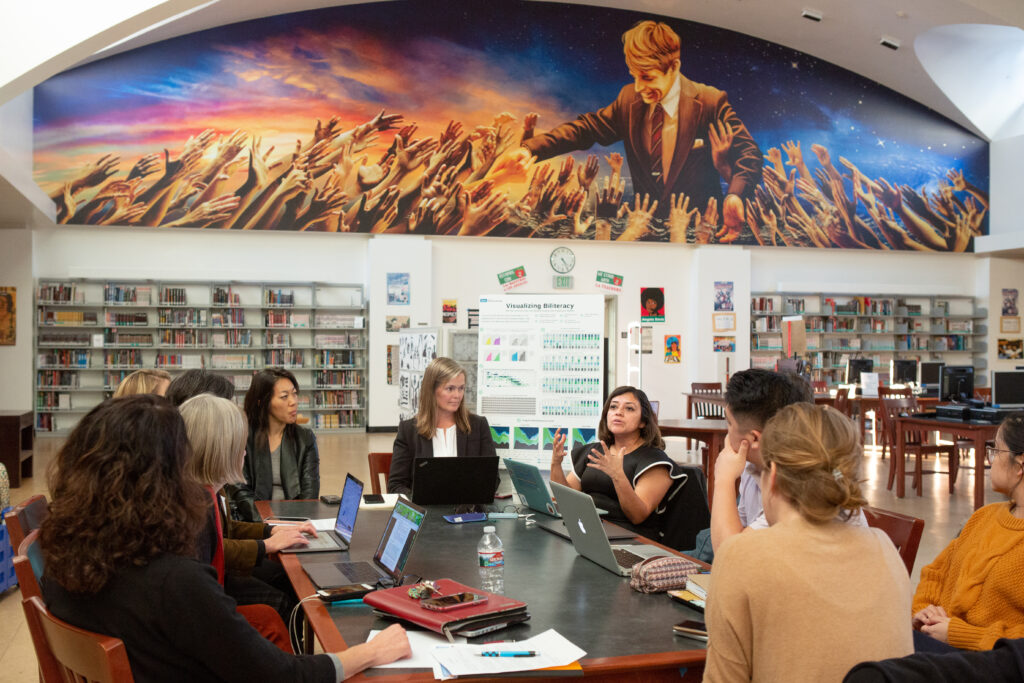
“Karen has been a constant advisor and thought partner who has helped us weave together big dreams and ideas to craft rich learning environments for all,” adds Leyda Garcia, who served as the community schools’ second principal. “She is the mother of the UCLA Community School.”
Working with Lazlo, Garcia, Kim and teachers and staff, Hunter Quartz helped the UCLA Community School grow into a nationally recognized K-12 model for the development of community schools. She has also helped to guide the development of the Mann UCLA Community School in South Los Angeles as a member of the school design team and currently oversees a portfolio of community engaged research-practice partnerships at both schools designed to advance democracy, inquiry, and change.
In 2016, with a grant from the Netter Center for Community Partnerships at the University of Pennsylvania, Hunter Quartz launched the UCLA Center for Community Schooling. Drawing on the expertise and experience of the UCLA Community Schools, the Center serves as a regional training center for university-assisted community schools. The Center hosts conferences and study tours and conducts and shares researchfrom a portfolio of research-practice partnerships to address problems of importance to community schools. The Center also publishes the open access journal “Community Schooling.” Hunter Quartz also serves as an advisor to the National Network of University Assisted Community Schools.
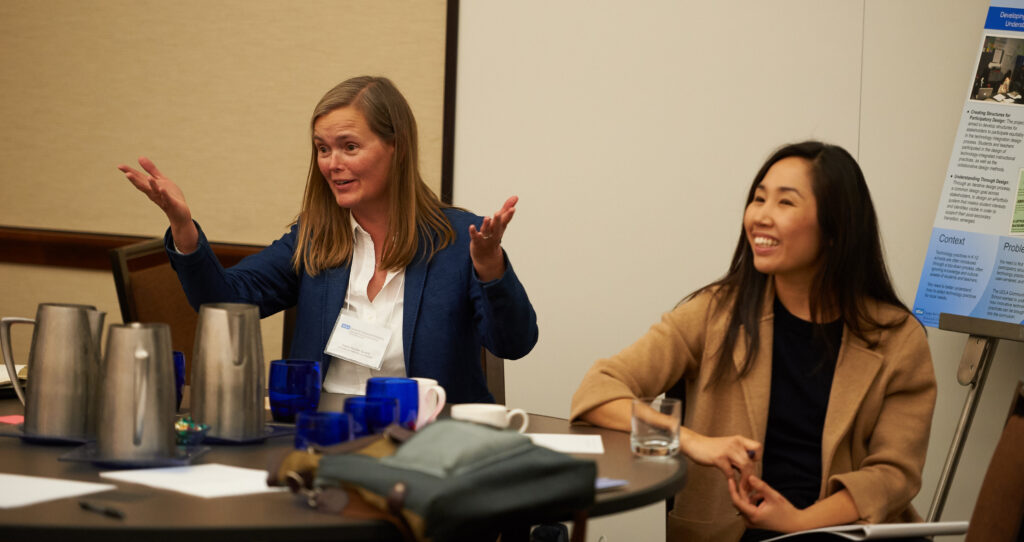
“The work Karen has done to advance community schools and University-Assisted Community Schools is substantial and inspirational. She is an exemplary leader in community-engaged research that makes a real difference in the lives of all the participants,” says Cory Bowman, associate director of the Netter Center for Community Partnerships at the University of Pennsylvania and the Director of University-Assisted Community Schools and Regional Training Centers program.
Bowman says that a key to her impact is that Hunter Quartz works with partners over a long period of time, incorporates their knowledge and priorities as core to the research, and uses a democratic, collaborative problem-solving process. And while her findings are based on local research, they’re applicable to other settings nationally and globally.
“She is also so kind, curious and generous,” Bowman adds. “I not only learn from Karen but also enjoy working with her and trust her as a thought partner. She’s always been there to help me think it through.”
With Hunter Quartz’s leadership, the Center for Community Schooling has also become a partner in California’s $4.1-billion-dollar initiative to expand community schools across the state through the California Community Schools Partnership Program. In partnership with the Sacramento County Office of Education, Californians for Justice, and the National Education Association, the UCLA Center for Community Schooling provides support to grantees across the state as the State’s Transformational Assistance Center. From over 400 schools funded in 2022 in the first program year, the initiative has grown to nearly 2,500 schools across the state. Participation now spans more than 500 local educational agencies and reaches communities in every region of California—from major urban centers to rural counties.
“Increasingly, the work of the UCLA Community Schools is lifted up statewide, nationwide, as a powerful example of what a community school can and should be,” says Saunders.
The foundation of that Saunders says is what Hunter Quartz and partners at the UCLA community schools helped to build, reminding folks at every level of implementation that this work is about teaching and learning–not solely about the provision of important wrap-around supports and services.
“The UCLA Community Schools stand as a reminder that this work goes beyond supports and services, it must involve educators and reach deeply into the classroom,” says Saunders. “The partnership between the UCLA Community Schools and the Center for Community Schooling is grounded in supporting educators and advancing community-based learning, elevating the assets of communities, bringing those assets into the classroom, and honoring students, families and educators alike. I think that is all Karen.”
As Hunter Quartz retires from UCLA there is little doubt about her impact.
“Karen has played a pivotal role in the renewal of a vibrant community school movement in Los Angeles and across the nation,” says Professor Rogers, who serves as associate dean of research and public scholarship for UCLA Ed&IS. “She not only has been the leading force behind the development of UCLA’s community schools, but she established an entire new field of scholarship and practice–university-assisted community schools.”
“For me, Karen’s commitment to the UCLA community school changed what scholarship truly means,” adds Priselac. Jeannie Oakes wrote the article, “Making the Rhetoric Real.” Karen made it come alive. With her vision and dream of this community school, and real engagement with people at every level in that work, she made it come alive.”
Hunter Quartz leaves behind a treasure trove of scholarly work and countless examples of public scholarship. She has published research on teacher development and retention and community schooling in journal articles, books and book chapters, and dozens of other publications and media. She has also demonstrated a career-long commitment to community-engaged research and public scholarship, producing dozens of user friendly publications about teaching and community schools, including the creation and editing of the open-access multi-media journal, “Community Schooling,” to inform the growing community schools movement and emphasize for the field the importance of seeing and supporting teachers as public intellectuals.
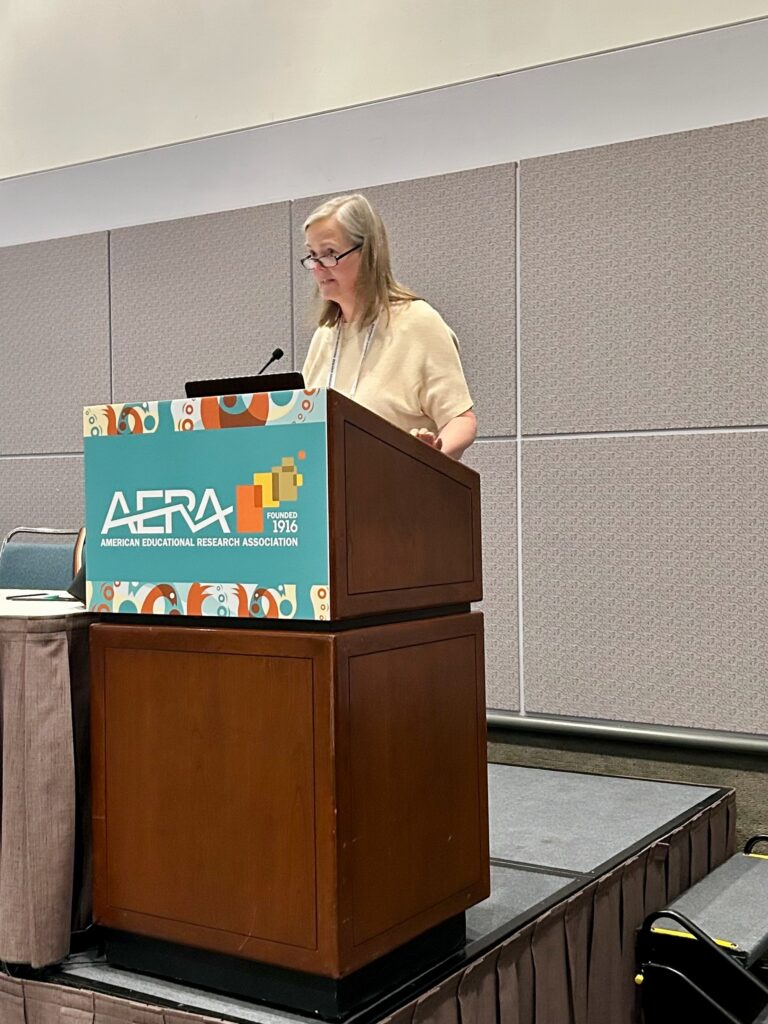
Hunter Quartz has also shared her research and insights in countless academic presentations and educational and community events, including reporting on the promise and progress of the UCLA Community Schools to the UC Board of Regents. Her scholarship, publications and teaching have received multiple awards including the American Educational Research Association Outstanding Book Award, American Association of Colleges of Teacher Education Outstanding Writing Award, National Teacher-Powered Schools Initiative Advancement in Research Award, the UCLA Department of Education Outstanding Teaching Award and the UCLA Chancellor’s Award for Community-Engaged Scholars.
“Karen is such a humble leader that I think sometimes she maybe doesn’t even have a sense of the incredible impact she’s had on the children of Los Angeles and really on California and the movement for community schools writ large,” says Sophie Fanelli, president of the Stuart Foundation.
“She is that rare pairing of intellectual vigor with an incredible researcher who has never separated community schools from the need to focus on high quality teaching and learning. She understands that if you want to transform the educational experience of young people and their families, you need to be hyper focused on teaching and attend to the needs of the whole child in a welcoming environment where students and teachers can learn together.”
As she leaves UCLA, Hunter Quartz is already working on her next project. She has a contract and is writing a new book for Oxford University Press, tentatively titled, Community Schooling: Lessons in Democracy, Justice and Education, based on her research over the past 15 years at the UCLA Community School and early scholarship on the culture of school reform.
But maybe the most important the contribution she has made is in the relationships she has built and the example she set in what she values and how she approaches her work.
“I have tremendous respect for people who do journal articles and research articles, and I’ve contributed to that world,” says Hunter Quartz. “But there’s something about writing things with people that work in schools. I just want to make things that are helpful and useful, and I want to do that with people that know more than I do because they’re in the classroom all day. There’s an opportunity to scholarship that is grounded in real schools. That’s a really an important thing to me because I think it’s a shame in our culture that teachers aren’t seen as the powerful intellectuals that they are.”
Looking back, Hunter Quartz says, “It’s relationships with people that matter. I think that if you develop really caring and collaborative relationships with creative people, you can make up great stuff together. It’s a joy, and, and you can make things happen.
“I think that that’s the great thing about universities, they can be very creative, inspiring places where people are debating and dreaming up ideas. Jeannie taught me to think I could change the world. I say, be bold, dream it up, print the letter head, figure it out, have some fun, get it done.”